
In recent years the rapid growth of large language models (LLMs) has brought fresh attention to questions of transparency and accountability around machine generated writing.
Regulators in multiple jurisdictions have begun requiring clearer signals that distinguish synthetic text from human authored material, particularly as these systems move into everyday use across creative work, education, journalism and software development.
One of the more concrete responses to those pressures appeared this week from Anthropic, the company behind the Claude family of models.
On 14 August 2026 Anthropic published a detailed explanation of a text watermarking system that will be built into future versions of Claude.
The change is driven largely by the European Union's AI Act, which from early August 2026 obliges providers serving the European market to mark AI generated content in a machine readable way.
Anthropic, along with other major developers, signed the related EU Code of Practice on Transparency of AI Generated Content in July.
Because no durable technical method yet exists for restricting the mark to a single geographic region, the company is applying the watermark globally from the outset.
The technique itself exploits a quiet feature of how LLMs already work.
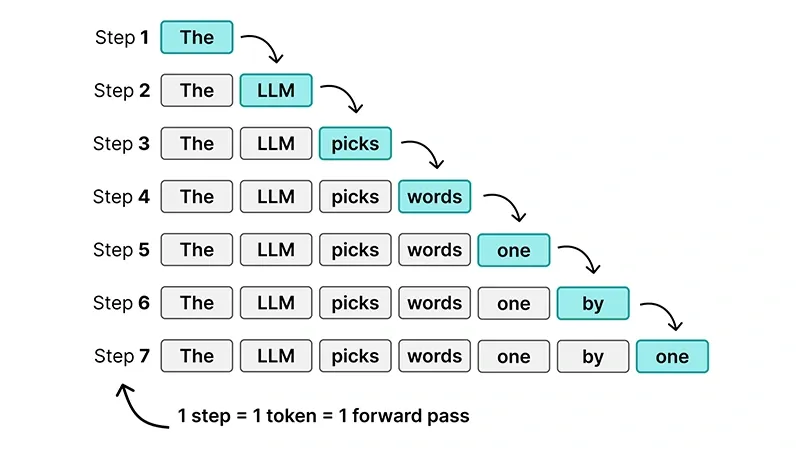
Claude, just like other text-generating LLMs, produces text one word at a time. At each step the model ranks a list of plausible next words according to the preceding context.
This method is commonly called the autoregressive (next-token prediction) generation.
Using the method, when attempting to generate the text word, when several candidates are roughly equally suitable, an ordinary random number generator normally settles the choice.
Watermarking simply replaces that arbitrary source of randomness with a different one derived from a secret cryptographic key together with a short window of the words that have already been written.
"When watermarking is used, choices are still made at random, but the source of the randomness is different. Instead of using an arbitrary random number generator to pick the next word, watermarking uses the key and a few words that come before to settle what word the model should pick," said Anthropic in a post on its website.
The result is still a perfectly ordinary looking sentence; the words remain natural and the overall meaning is unchanged.
Yet the sequence of decisions now carries a faint statistical signature that can be recovered later by anyone who holds the matching key.
Detection therefore returns a probability score rather than a binary yes or no, indicating how likely it is that Claude participated in producing the text.
Anthropic describes its implementation as a version of the SynthID Text method that Google DeepMind published in Nature in 2024, itself building on an earlier theoretical proposal by Scott Aaronson.
Nothing is inserted into the finished string; there are no invisible characters, zero width spaces or other steganographic tricks.
The mark lives entirely in the pattern of word choices and therefore travels with the text when it is copied and pasted. Internal testing and the earlier DeepMind evaluation both found no measurable effect on quality, creativity or readability.
The process adds negligible computational cost and does not increase the number of tokens generated.
However, this method has practical limits.
Short passages offer fewer low stakes decisions and therefore weaker signals. Highly constrained factual or technical writing, where only one or two words are correct, leaves little room for the patterned choices.
Code tends to be sparsely watermarked for the same reason, although comments and less rigid sections still carry the mark. Light human editing usually leaves enough of the original pattern intact for detection, but thorough rewriting can erase it.
The detector cannot distinguish Claude from other models that might use different keys or different watermarking schemes, nor can it prove that a piece of text was never touched by a human. It only speaks to the likelihood of Claude’s involvement.
Alongside the text watermark, Claude will attach cryptographically signed provenance metadata to supported file types such as images and vector graphics, following the open C2PA standard.
Anthropic has said a public detection API for the text watermark will follow in due course, allowing third parties to check material themselves. Older models already in circulation are scheduled for a gradual rollout over the coming months so that the same protections eventually cover the entire Claude product surface.






















































































































































































































































































