Google Now's list of cards has been expanding. With 40 third-party partners unveiled early in 2015, an additional 70 is added to the Google app on April 30th, 2015, bringing Now's partners up to 110.
The Google Now app, with its cards, is one of the easiest way to summarize information from various of apps installed on a mobile device. Existing original cards can update weather in the user's area, inform traffic condition and suggest web pages based on interests.
The search engine's Now app creating steps in opening its service to others, was already an exciting news: it was the first time Google first publicly opened Now to users' favorite apps in ways that developers could control and manage. With more services added, Now is getting even more useful.
Google that is keeping details about developer participation close, announced 70 new apps to the Google Now in its blog post, and is rolling rolling them out progressively. The company also set some examples on the Google Now landing page.
The lineup of the third-party developers include Runtastic, Hootsuite, Zipcar, Zillow, Spotify, The Guardian, The Economist, Instacart, Shazam, and others. This second group is much larger than the first, and Google is happy to continue the staged rollout of third-party Now integration, rather than opening the doors wide open to everyone who might want to apply.
In its post, Google explained that third-party cards are a good alternative to either opening their dedicated apps, or relying on notifications that can clutter users' mobile experience.
With apps now can populate the Now's interface, they can lineup pretty fast if the user installed many of the partnered apps. Google doesn't say explicitly how to prevent that thing from happening, but users can manage those cards with the option to switch them off if they aren't needed.
To get the cards from these new third-party partners, users are required to download the latest version of Google app, and the new updated versions of the respective partners' apps.
A Deck of Cards to Shuffle and Play With
Google Now was first revealed during 2012's Google I/O event. Introduced as an intelligent personal assistant that enhance Google's Search feature in its services.
Using natural language user interface to answer questions, make recommendations, and perform actions by delegating requests to a set of services, Google Now is created to make its user's life easier.
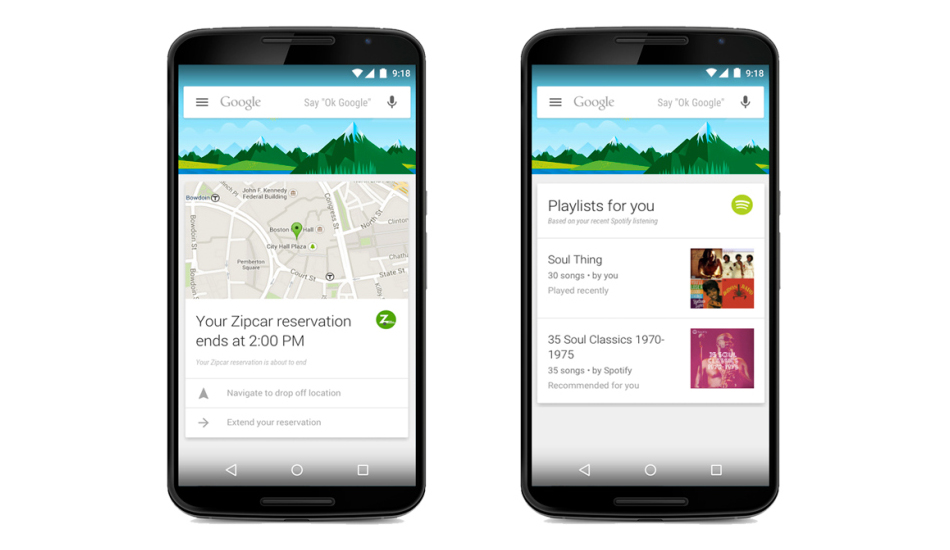
With the 70 new partners, Google showed that Now can recommend playlists and stations from Spotify, TuneIn and YouTube, based on the user's preference and tastes. The user can also get recipes from Allrecipes, or keep up with news from ABC News, Circa or feedly. Users can also monitor their fitness goals with Runkeeper, Jawbone and Adidas cards, and pay for meals using OpenTable.
Although partners are mostly coming from the U.S., there are huge range of other apps that are supported. Like for example, GetTaxi service that covers the UK.
Google, the Place to Start Everything
Google, with Now, is essentially becoming a dock (deck) to apps (cards). The platform that is entirely Android Wear's interface, is becoming more important to mobile devices. Its primary purpose, as Product Manager Aparna Chennapragada said, is to show everything you need to see every time you look at your device.
"You're on the go, you have maybe thirty seconds to look at your phone," she said. "How can we get that information to you before you have to ask?"
Google Now is becoming a mix of everything that people need when they're mobile. With contents coming from reminders, news, actionable info and others, Now is giving its users what they need when they need, wherever they are.
For Google, this is all about data. "The services of the future have to do the heavy lifting for you," said Chennapragada. "It's almost unsexy, because, like, we need to do more work."
With over a hundred services integrated, Google also wants Now to be the first thing people do when they see their device. It wants to be first place people go to do everything. By constantly learning about its user, how it learns depend heavily on how much (or how willingly) the user wants Now to access. The more apps are given the access to your information, personal data and activity, the more the app can "power" the user's life.
But when it comes to privacy, everyone has different opinions. The more you want Now to be helpful, the more you need to give what's necessary for it to learn. The more you want to keep you privacy to yourself, Now won't be as useful as it's meant to be.