In a historic political comeback, Donald Trump has been elected as the 47th President of the United States, marking his return to the White House after a tumultuous first term and a dramatic defeat in 2020.
Trump's victory over Kamala Harris in the 2024 election was decisive, securing 295 electoral votes to Harris's 226.
This win makes Trump the first leader in over a century to serve non-consecutive terms since Grover Cleveland's re-election in 1892.
Trump's return to power has been met with mixed reactions, but one area where his influence is already being felt is the cryptocurrency market.
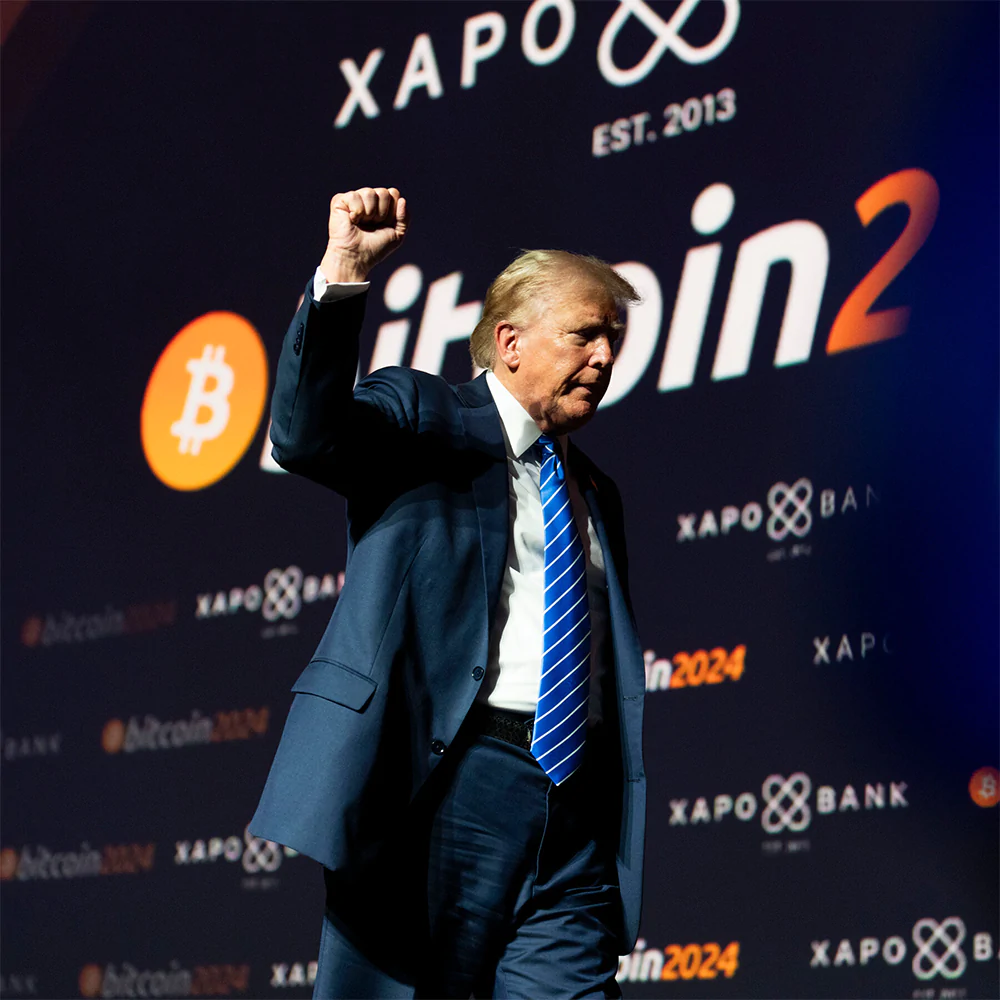
Since his election victory, Bitcoin has surged to new heights, reaching an all-time high of over $106,000. This remarkable increase in Bitcoin's value can be attributed to several factors, including Trump's pro-crypto stance and the anticipation of a more favorable regulatory environment for digital currencies under his administration.
Read: Bitcoin Reaches $100,000 Is Making It Enter Unchartered Territory With Known Consequences
Bitcoin has long been considered one of the most powerful and transformative innovations in the financial world, largely due to its deep connection with the internet.
It was born in 2009, at a time when the internet was rapidly changing how people interacted with the world.
Satoshi Nakamoto, the pseudonymous creator of Bitcoin, leveraged the power of the internet to create a decentralized digital currency that allows peer-to-peer transactions without the need for intermediaries like banks. This was a groundbreaking concept that harnessed the internet's ability to connect people globally, enabling a financial system that operates without central authority.
Bitcoin's most revolutionary feature is indeed its decentralization.
Bowered by a blockchain, which is a distributed ledger that is maintained by nodes (computers) all over the world, this network, powered by the internet, makes Bitcoin accessible globally without geographic restrictions or governmental control.
Anyone with an internet connection can participate in the Bitcoin economy, whether by trading, investing, or using it for transactions.
Because of this, Bitcoin represents a departure from traditional financial systems, challenging long-established institutions.
By operating outside of government control and central banks, Bitcoin provides an alternative to traditional currencies (fiat) and financial systems.
For many, this has made Bitcoin an attractive store of value or "digital gold", and a hedge against inflation or instability. The internet allowed Bitcoin to reach global audiences and sparked an ongoing financial revolution—introducing ideas of decentralized finance (DeFi), smart contracts, and further applications of blockchain technology.
Not to mention the creation of other cryptocurrencies, and a flourishing market worth trillions of dollars.

Bitcoin’s power comes from its internet-based, decentralized nature, making it a transformative financial tool that continues to challenge traditional financial systems.
Its revolutionary potential to decentralize money, create global access, and operate outside the influence of central authorities has made it one of the most significant and influential financial innovations in history.
And here, Bitcoin and many other cryptocurrencies are seeing a strong uptick in price, following Trump administration's potential plans to create a U.S. national Bitcoin reserve, which has further fueled optimism in the market.
This strategic move, akin to the country's oil reserve, could significantly bolster Bitcoin's value and stability, attracting more institutional investors and solidifying its position as a mainstream asset6.
Moreover, the inclusion of companies like MicroStrategy in the Nasdaq 100 Index has also contributed to Bitcoin's bullish trend.
MicroStrategy's aggressive Bitcoin acquisition strategy, led by CEO Michael Saylor, has set a precedent for other corporations to follow suit, further driving up demand and prices.
Not to mention that Trump has made billionaire Elon Musk one of his closest allies.
Trump has announced that Musk is planned to lead the Department of Government Efficiency (DOGE), which is also an backronym referencing to a popular internet meme and a cryptocurrency Musk supports.
"For too long, our government has violated the cardinal rule that every Bitcoiner knows by heart: Never sell your Bitcoin," Trump said in July.

Donald Trump and the internet weren't the best of friends.
At least during his first presidential term, where he had a rather contentious relationship with the internet. His administration's stance on net neutrality, social media regulations, and frequent clashes with tech giants like Twitter and Facebook often put him at odds with the digital world.
Despite this, his use of social media as a direct communication tool was unprecedented and reshaped political discourse online.
Trump's tweets became a hallmark of his presidency, often sparking controversy and debate.
His unfiltered and immediate communication style bypassed traditional media channels, allowing him to directly reach millions of followers.
This approach, while effective in rallying his base, also led to numerous conflicts with social media platforms, culminating in his eventual ban from Twitter and other networks following the Capitol riot in January 2021. Trump's being banned from various social media platforms forced him to create one for himself, in order to maintain his megaphone for the internet
The tension between Trump and the internet was further exacerbated by his administration's efforts to repeal net neutrality, a move that was met with significant opposition from internet freedom advocates.
These actions highlighted the complex and often adversarial relationship between Trump's policies and the digital landscape, setting the stage for ongoing debates about the role of government in regulating the internet.
Read: Donald Trump, The First Country Leader Permanently Banned From Twitter

As Trump prepares to take office in January 2025, all eyes are on him, with every word he speaks being closely documented.
His views on cryptocurrency are contributing to its growth and gaining increasing attention.
The combination of his administration's crypto-friendly policies and the increasing institutional adoption of Bitcoin suggests that that the cryptocurrency market is may be entering a new era of financial innovation and digital asset integration.
However, the price of Bitcoin plummets soon after Federal Reserve's Chair Jerome Powell said the central bank is not looking to hold Bitcoin.
"We’re not allowed to own bitcoin. The Federal Reserve Act says what we can own, and we’re not looking for a law change," Powell said. "That’s the kind of thing for Congress to consider, but we are not looking for a law change at the Fed."






















































































































































































































































































