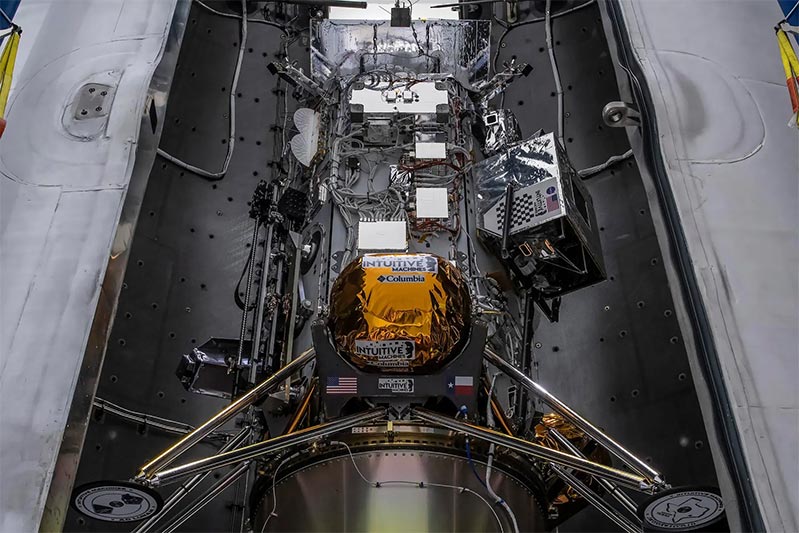
Florida-based startup Lonestar Data Holdings launched the "Freedom Data Center" to the Moon aboard a SpaceX Falcon 9 rocket, integrated with Intuitive Machines’ Athena lunar lander.
Despite the lander experiencing a sideways landing on March 6, Lonestar reported that the Freedom payload remains intact and operational, successfully surviving the descent.
This initiative marks the first physical data center deployment on the lunar surface. The project aims to provide off-world data storage solutions, offering protection against Earth's cyber threats and natural disasters. Lonestar's efforts signify a significant step toward practical applications of lunar-based data infrastructure.
In other words, The Freedom Data Center serves as a disaster recovery and resiliency-as-a-service (RaaS) platform, providing secure, off-world backup for critical information.
The data center is equipped with 8 terabytes of Phison’s Pascari enterprise-grade solid-state storage (SSDs), designed to endure the Moon's extreme conditions, including cosmic radiation and temperature fluctuations for over a millennium.
It utilizes Microchip’s PolarFire FPGA System on a Chip (SoC), enabling edge computing capabilities directly on the lunar surface. Powered by solar energy and naturally cooled, the system eliminates the need for mechanical cooling systems.
Because the system is designed for harsh environment, it's equipped with radiation monitoring tools, including an ARMAS radiation sensor developed by Environmental Technologies, providing real-time monitoring of the lunar environment.
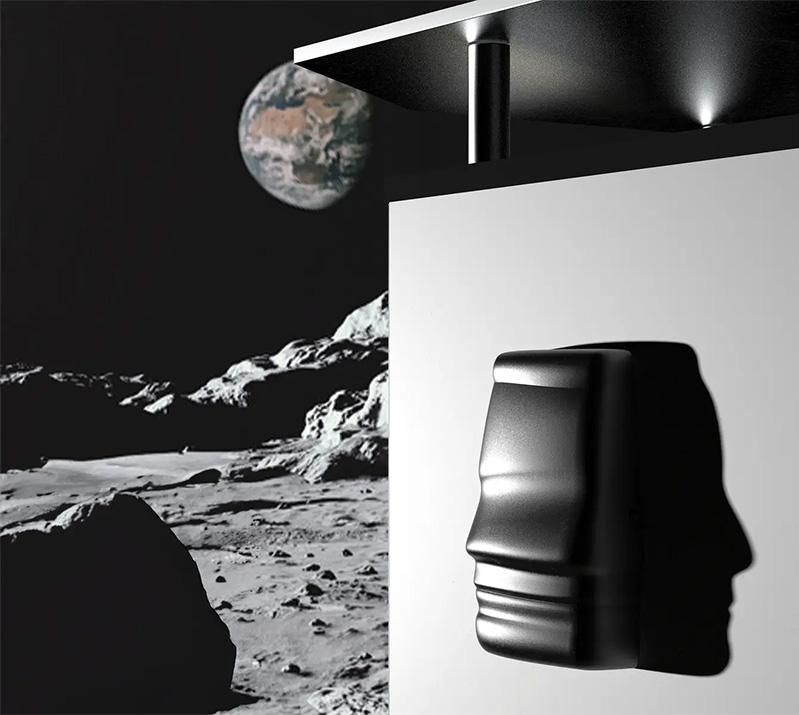
On the outside, the system is encased in a 3D-printed shell designed by Bjarke Ingels Group (BIG), with the structure built specifically to endure harsh lunar conditions.
At lunar sunrise and sunset, it casts shadows forming silhouettes of Apollo astronaut Charlie Duke and spacewalking artist Nicole Stott, symbolizing the past and future of lunar exploration .
Freedom's mission is not only technical but also cultural.
It stores a diverse array of data, including government records, business information, and cultural artifacts. Notably, clients such as the State of Florida, the Isle of Man government, AI firm Valkyrie, and the band Imagine Dragons have entrusted their data to this lunar repository.
With those onboard, the mission encompasses several technological demonstrations, like space-based networking and radiation sensing, streaming a music video from space, establishing the first digital post office on the Moon, and issuing a digital stamp in coordination with the Isle of Man Post Office.
This venture marks a significant step toward establishing resilient, space-based data infrastructure, highlighting the potential of lunar installations in the evolving landscape of data security and preservation.
These developments illustrate the progression from conceptual discussions to actual implementation, highlighting the growing interest and investment in lunar data storage capabilities.
It's worth noting that the concept of establishing a data center on the Moon has evolved over time, transitioning from theoretical proposals to tangible initiatives.
Back in 2012, Ouliang Chang, a graduate student at the University of Southern California, proposed building a nuclear-powered supercomputer on the Moon. The idea aimed to alleviate the anticipated data traffic congestion of NASA's Deep Space Network by processing data directly on the lunar surface.
Chang envisioned placing the supercomputer in a cold lunar crater to leverage natural cooling and efficient superconductive materials.
Although the project was estimated to cost between $10–20 billion, it garnered attention for addressing real space communication challenges.






















































































































































































































































































