It's again man against the machine.
The machine was once victorious, and kept the winner's title for years. But not for far longer, because humanity reacquired it. Humanity is once again superior in the game of Go.
Before, humanity has created AI capable of defeating world Go champions, fair and square. Then, DeepMind's AlphaGo learned the game Go from scratch.
Then, researchers created an AI that can learn how to play board games by self-play, and an AI that can play and win board games by also learning the rules by itself.
As newer generations of AIs are introduced, it may seem that computers advance further to become a lot smarter in a way that humanity can no longer compete with it at certain fields. But as humanity created them, they realized that AIs do have weaknesses unique to them that can be exploited.
And by exploiting that, humanity is once again victorious in the game of Go.
This happens seven years after AI managed to defeat world-class Go player.
Since 2016, AI-powered systems have won games after games, and reached milestones after milestones.
It was Kellin Pelrine who managed to stop AI's winning spree in the game of Go.
Pelrine, an American Go player who is only one level below the top amateur ranking, managed to deliberately defeated an AI-powered Go-playing machine by turning its weakness against itself.
What happened here is that, Pelrine took advantage of a previously unknown flaw that had been identified by another computer.
Before this, a computer program was developed and designed to look at AI systems' weaknesses. And during the analysis, it was found that Go-playing AIs have a "blind spot."
“It was surprisingly easy for us to exploit this system,” said Adam Gleave, chief executive of FAR AI, the Californian research firm that designed the program.
Gleave, whose software played more than 1 million games against KataGo, one of the top Go-playing systems, found the blind spot. That information was then delivered to Pelrine, who then took advantage of.
The winning strategy revealed by the software "is not completely trivial but it’s not super-difficult."
And by understanding the pattern, even Pelrine who is still an "amateur," can use that to exploit the weakness of the machine.
The strategy has once again put a human back on top on the Go board.

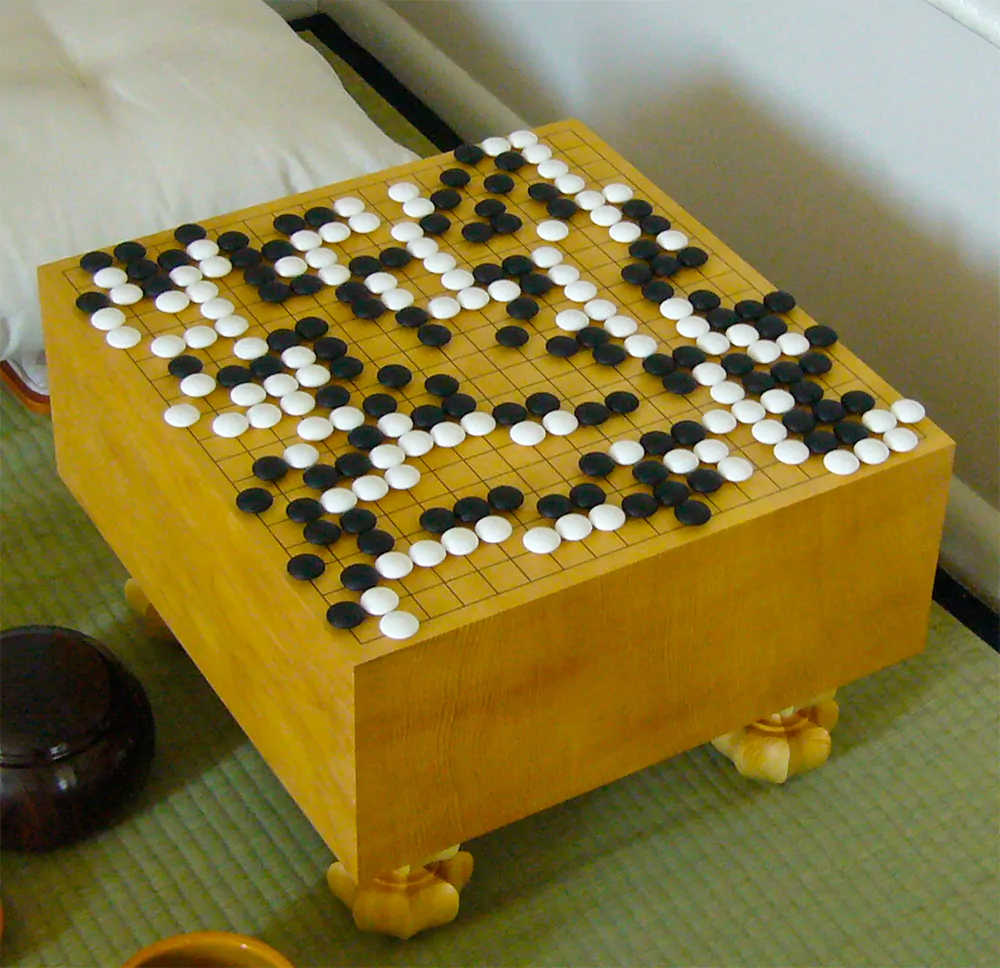
In the game of Go, two players alternately place black and white stones on a board marked out with a 19×19 grid, seeking to encircle their opponent’s stones and enclose the largest amount of space.
What Pelrine did here, was to slowly stringing together a large "loop" of stones to encircle one of his opponent’s own groups. This simple strategy is not popularly used by human Go players because professional Go players can spot this very easily. But for AIs, they cannot.
The strategy puts Pelrine in an advantage.
This is because the move can distract the AI, which made its subsequent moves focus on other corners of the board.
The Go-playing bot didn't notice the strategy, even when the encirclement was nearly complete, Pelrine said.
“As a human it would be quite easy to spot,” he added.
Besides defeating DeepMind's AI, Pelrine said that he also used the same method to winagainst another top Go system, Leela Zero.
What happened here is that, according to the researchers, Pelrine used a strategy that is rarely used.
Because the AI was not trained with sufficient data about the strategy, the AI couldn't get the idea that it was vulnerable.
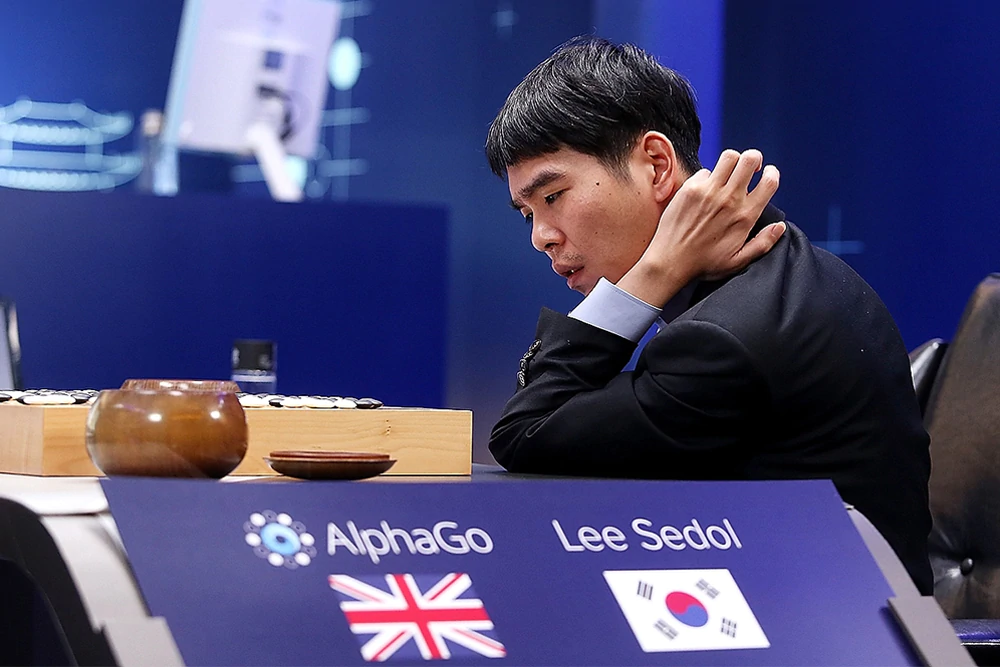
The decisive victory, albeit with the help of tactics suggested by a computer, comes seven years after AI appeared to have taken an unassailable lead over humans at what is often regarded as the most complex of all board games.
AlphaGo, a system devised by Google-owned research company DeepMind, defeated the world Go champion Lee Sedol by four games to one in 2016. Sedol attributed his retirement from Go three years later to the rise of AI, saying that it was "an entity that cannot be defeated".
It's worth noting though, that AlphaGo is not publicly available, but the systems Pelrine was pitted against, is accessible, and is considered a par with DeepMind's.
It's also worth noting that the head-to-head confrontation in which Pelrine won 14 of 15 games, was undertaken without direct computer support.
Go is one of the oldest board games in the world, and that the discovery of a weakness in some of the most advanced Go-playing machines points to a fundamental flaw in the deep learning systems that underpin most advanced AI.
Researchers have pointed out, that humanity have been far too hasty to ascribe superhuman levels of intelligence to machines.
Pelrine's victory also highlights a weakness that is shared by most of today’s widely used AI systems, including the OpenAI's ChatGPT chatbot.






















































































































































































































































































