The release of the documentary Melania has ignited heated online debate, witht the moment becoming a flashpoint that highlights the deep fractures within the U.S. cultural and political landscape.
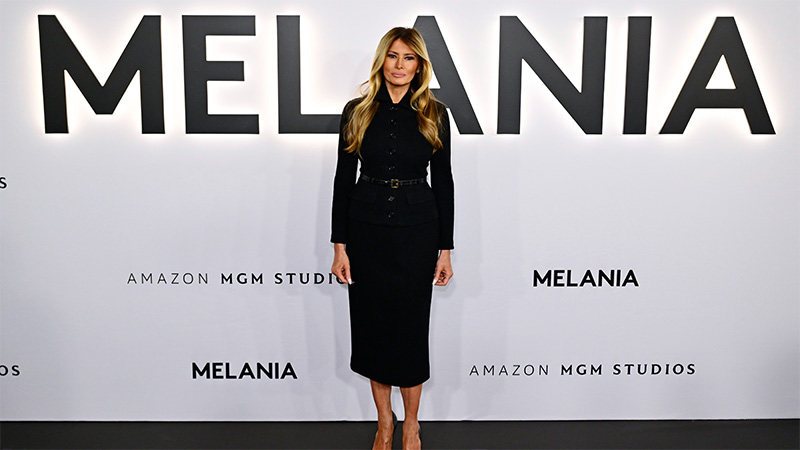
Directed by Brett Ratner and backed by Amazon MGM Studios, the film follows Melania Trump during the 20 days leading up to Donald Trump's second presidential inauguration in January 2025. Viewers see her orchestrating events, navigating White House transitions, attending wardrobe fittings, and moving through moments of solitude, often in her signature stilettos and oversized sunglasses.
The camera grants proximity to the First Lady, but not necessarily access.
For all its behind-the-scenes footage, many argue the film reveals little beyond surface glamour and composed poise.
People argue: is this just a polished portrait of Melania? Or just an empty one?
Critical reception has been overwhelmingly harsh.
Read: How Melania Trump's Nude Photos Resurfaced When Her Husband Readied Himself To Be U.S. President
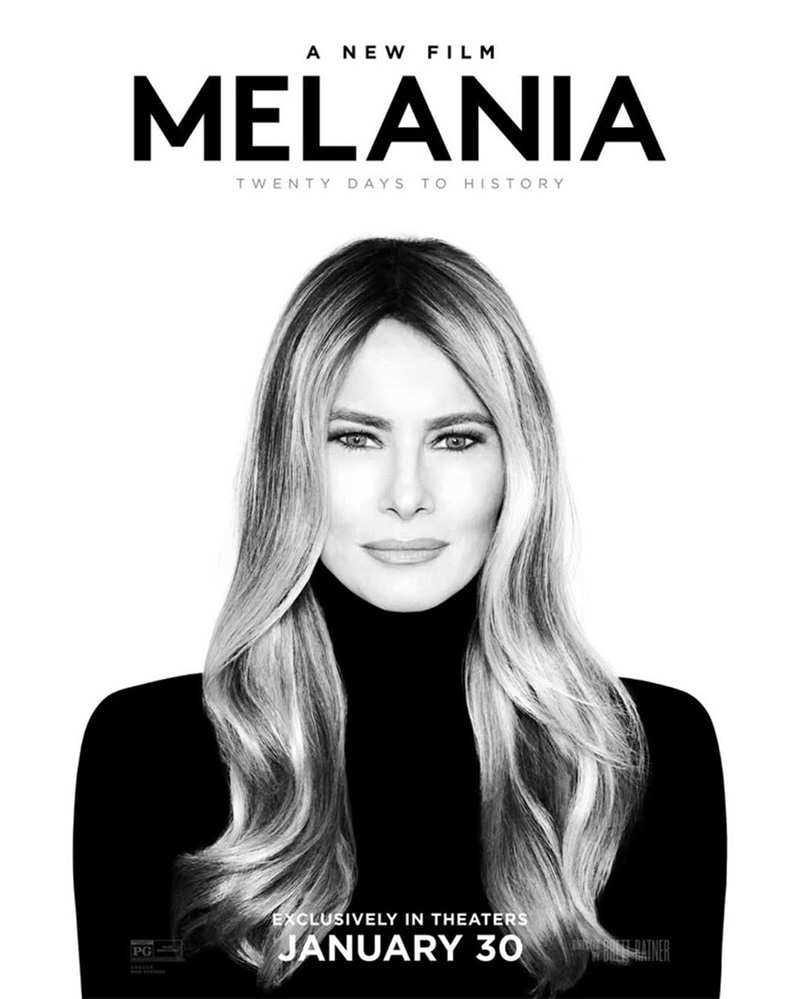
On Rotten Tomatoes, the Tomatometer has hovered the documentary at an measely 8%, with reviewers describing it as airbrushed, boring, and propagandistic. Some called it "endlessly hellish" and "a journey into the void," arguing that the film prioritizes aesthetics over insight.
Reviewers also noted long sequences of fittings, silent car rides, and carefully staged formal settings, yet little into Melania's thoughts, controversies, motivations, or even emotion. The result, according to many critics, is not a revealing documentary but a glossy infomercial: a project that avoids difficult questions and presents a closer look into an almost inaccessible subject who remains enigmatic even when the camera is inches away.
Beyond the criticisms, the film has sparked ethical and political debate.
Some argued that Melania feels less like cinema and more like a commercial branding exercise for the Trump administration.
Not to mention that reports suggest roughly $75 million in total spending from Amazon MGM, including about $40 million for licensing and $35 million for marketing, which means the budget for it has a scale that far exceeds most documentaries.
This financial weight has fueled speculation that the project serves political or corporate interests, with some critics suggesting Amazon may be seeking goodwill with the Trump administration. Reports that Melania herself could receive a substantial portion (over $20 million) from licensing fee. All of these intensified accusations that her public role is being leveraged for personal gain while still serving as First Lady.
Skepticism deepened when the film was not screened in advance for critics, and was launched through a highly orchestrated promotional strategy.
Journalists and political satirists alike have labeled the project everything from a "cash grab" to "propaganda," with one outlet mockingly describing the financing as "pure bribery disguised as art."
After Impressive $1 Million Monday Box Office Haul, Amazon MGM Expanding ‘MELANIA’ into 200 More Theatershttps://t.co/DIVl0rUlXA
— MELANIA TRUMP (@MELANIATRUMP) February 3, 2026
Yet while critics have been brutal, general audiences tell a radically different story.
The Rotten Tomatoes Popcornmeter has soared to a near-perfect 99%, based on more than a thousand verified ticket-buyer ratings.
Supporters say the film contains no propaganda, only a rare glimpse into Melania’s life over the past eight years. To them, it portrays a woman of class, elegance, and composure, offering intimate views of White House life and behind-the-scenes event planning that few outsiders ever see.
— MELANIA TRUMP (@MELANIATRUMP) February 1, 2026
Praise from viewers focuses less on filmmaking technique, and more on admiration for Melania herself: her style, grace, family devotion, and quiet demeanor.
Reports of audiences applauding in theaters underscore the emotional investment of her supporters.
MELANIA, the film.
#1 Highest Opening In 10 Yrs (Doc)
Loved By All - “A” CinemaScore pic.twitter.com/HTVM0Cu2Jv— MELANIA TRUMP (@MELANIATRUMP) January 31, 2026
The roughly 90-point gap between critic and audience scores is among the largest in the site's history, instantly turning the documentary into a case study in cultural polarization.
That enormous divide has triggered speculation online about whether the audience scores are fully organic.
Some have suggested coordinated efforts or bot activity inflating ratings, given the film’s appeal to a highly motivated political base. This kind of this is quite often, especially for big films and high-profile, politically charged releases, where ratings become less about artistic judgment and more about signaling identity, loyalty, or opposition.
In the age of online aggregation, audience scores are no longer just reflections of individual taste.
Instead, the have become tools of influence.
Organized fan campaigns, political movements, and even culture-war skirmishes regularly mobilize supporters to flood platforms with positive reviews, while detractors do the opposite through review-bombing. This phenomenon has also been seen across blockbuster franchises, controversial social-issue films, and polarizing public figures, where ratings function as a proxy battlefield for broader ideological disputes.
Rotten Tomatoes’ parent company denied any manipulation, stating that Popcornmeter reviews are verified through ticket purchases.
The film’s strong box-office debut, over $7 million on opening weekend, a standout figure for a documentary, lends weight to the idea that people's enthusiasm is genuine, concentrated among a self-selecting audience that skews older, female, and politically aligned with Trump.
Ultimately, Melania has become less about cinematic merit and more about symbolism. Traditional media critics see it as emblematic of vanity, image control, and avoidance : a missed opportunity to explore a complex public figure.
Supporters see it as a long-overdue counter-narrative, celebrating a woman they believe has been unfairly portrayed.
MELANIA, the Movie, is a MUST WATCH. Get your tickets today — Selling out, FAST!
Photo: Regine Mahauxhttps://t.co/rjwd5Appkv pic.twitter.com/vFpXfV0Mg0— Donald J. Trump (@realDonaldTrump) January 26, 2026
Online, the discourse has taken on a life of its own.
Memes compare the film’s audience score to classics like The Godfather, while late-night hosts joke about the absurdity of the critic-audience gulf. What's being debated is no longer just a documentary, but the nature of truth, media trust, and who gets to shape public perception.
In that sense, Melania functions as a cultural Rorschach test.
The same footage reads to some as hollow spectacle and to others as dignified restraint. The First Lady’s carefully controlled presence, seen constantly, understood rarely, only intensifies the divide.
In a deeply polarized America, the documentary doesn’t bridge realities. It exposes how far apart they already are.

















































































































































































































































































