There are nights in the outer edges of Tulsa, a city in Oklahoma, when the air hangs heavy and still, the kind of summer darkness that settles over quiet streets and modest houses as if nothing beyond the ordinary could ever break through.
Porch lights glow against the humidity. Somewhere a dog barks once and falls silent.
Inside one of those houses a woman sits alone with her phone, the blue light of the screen the only movement in the room.
She is not performing for an audience yet. She is simply deciding, after weeks of private knowledge and official paperwork, that silence is no longer possible.
Sara Gilson, a 43-year-old hairstylist by trade and a modest TikTok creator with just over 30,000 followers, spent her days with joys and ordinary work of raising choldren.
She opened up about something so haunting to her.

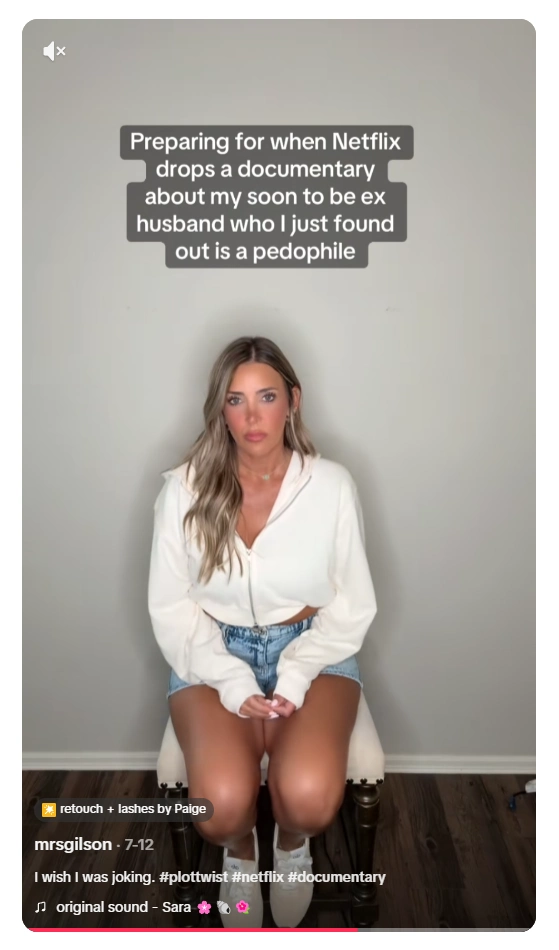
On the 11th of July, Sara opened the camera and recorded a short clip that used a popular trend meant to look like a Netflix documentary interview.
Looking steadily into the lens she typed the words that would soon travel farther than she could have imagined: "Preparing for when Netflix drops a documentary about my soon to be ex husband who I just found out is a pedophile."
Beneath the video she added only one more sentence: "I wish I was joking."
The clip spread with the strange speed of the internet.
Within days it had been watched by millions.
Viewers saw a woman who appeared calm, almost resigned, naming the man she was leaving and the reason she said she was leaving him.
That man was Jeremiah Shawn Duffey, 48, her estranged husband and the coach of a traveling youth girls' basketball team.
Twelve days after the video went public, both of them were dead.
Police in Owasso say Duffey entered the home where Sara was staying in direct violation of an active protective order, fatally shot her, and then killed himself.
One of their children made the 911 call. Officers arrived to find both bodies.
The deaths were ruled an apparent murder-suicide.
The path that led to that night had begun more than a month earlier.
On the June 9th, a fifteen-year-old girl and her parent walked into the Owasso police station and reported that Duffey had engaged in inappropriate sexual contact with the girl during a basketball event at an elementary school gym the team had rented.
Another coach who witnessed the incident also came forward.
Investigators later stated that similar conduct involving the same juvenile had allegedly occurred over an extended period across multiple states and jurisdictions.
Because the June 9 incident took place on tribal land and Duffey is a member of the Osage Nation, the case was referred to the U.S. Attorney’s Office for possible federal prosecution.
Local police jurisdiction ended.
No criminal charges had been filed against him by the time of the shootings.
Police informed Sara of the report.
The next day, June 10, she filed for and was granted an emergency protective order.
Duffey was ordered out of the home they had shared and required to stay at least one hundred yards away from her at all times. Court records show she told the judge he possessed a firearm, had threatened suicide, and had gone on the run.
The same day the mother of the fifteen-year-old also sought a protective order against him, alleging he had kissed and inappropriately touched the girl, sent her messages, invited her to his hotel room on a team trip, and offered money to keep quiet. Sara’s order was later extended through late August.
Court files also reveal she had sought two earlier protective orders against the same man in 2021; both were dismissed after she failed to appear at the hearings.
In the weeks that followed, Sara moved forward with divorce proceedings.
Her previous husband and the father of her two children, Lyle Landers, has said he spent years urging her to leave Duffey, describing a relationship that felt controlling and unsafe from the beginning.
He has spoken of how she loved her children fiercely, how she worked long hours as a stylist to provide for them, and how the decision to speak publicly about what she had learned seemed to him an act of protection that ultimately cost her everything.
On the night of July 23, the protective order failed.
Around 11:15 p.m., dispatchers received a 911 call from the residence.
They heard a woman screaming and crying, then the sound of a gunshot.
A second call came from one of the children reporting that his stepfather had shot his mother.

When officers reached the house they found Sara and Duffey dead of apparent gunshot wounds to the head.
Police have stated that Duffey shot Sara and then turned the weapon on himself.
The child was briefly placed in protective custody before being released to a parent who was not involved in the incident.
A fundraiser was quickly launched to help support the two children left without their mother.
In the days since, friends and family have gathered in Collinsville to remember Sara as a devoted mother, a warm presence, and a woman who tried to warn others even as she tried to free herself. The federal review of the June allegations continues. No charges have been announced. The protective order that was supposed to keep Duffey away proved, in the end, to be only paper.
The video Sara made still circulates, its quiet accusation now inseparable from the silence that followed.
What remains is the record of a woman who discovered something she believed put children at risk, who went to court, who spoke on camera, and who was killed inside the home she had asked the law to protect.






















































































































































































































































































