Before Baby Shark or any of MrBeast's videos, or Psy's Gangnam Style, or Cristiano Ronaldo overtaking pretty much everybody to become one of biggest channels on planet, there was Me at the Zoo.
The 18-second clip was uploaded by Jawed Karim featuring himself standing in front of elephants at the San Diego Zoo, explaining their trunks. Though simple, this video marked the beginning of what would become the largest video-sharing platform in the world.
YouTube was founded on February 14, 2005, by three former PayPal employees—Chad Hurley, Steve Chen, and Jawed Karim—in San Mateo, California. The idea for YouTube reportedly stemmed from their frustration with the difficulty of sharing videos online. Inspired by the growing popularity of social media platforms and file-sharing services, they envisioned a simple website where users could upload, share, and watch videos easily.
Fast forward to 2025, YouTube celebrates its 20th birthday with huge announcements.
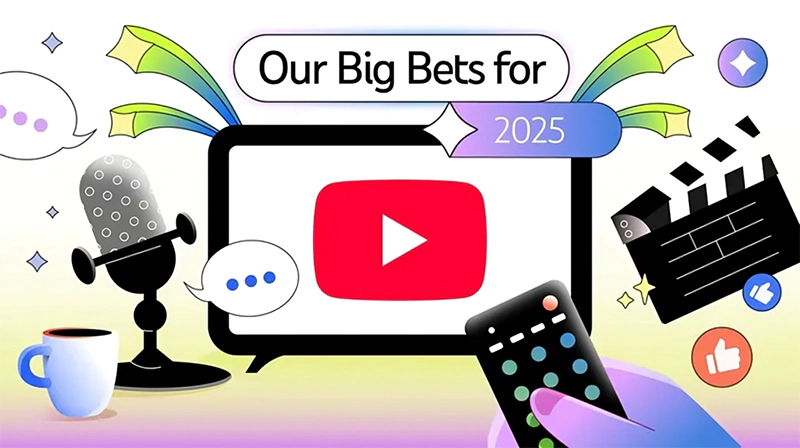
In a blog post by Neal Mohan, CEO YouTube:
In the platform’s annual letter, Mohan revealed that viewers are watching more than 1 billion hours of YouTube content on their TVs every day.
For the past two years, YouTube has maintained its position as the most-watched streaming service in the U.S., according to data from Nielsen — and for good reason.
This is because the company has made some significant changes and tweaks to its TV app that make the platform look like a full-blown streaming service.
Smart TVs, or TVs connected to set-top boxes, game consoles, Blu-ray devices, streaming devices, and those utilizing HDMI cables connected to an internet-capable device, can use YouTube in all its glory.
More reach means more audience, and this means more creators, and more viewership, and more advertisers.
"Our growth on connected TVs is also attracting new advertisers and we continue to introduce formats that work particularly well on the big screen, like QR codes and pause ads. Our subscription services are seeing a lot of momentum, too: YouTube TV has more than 8 million subscribers and YouTube Music & Premium has more than 100 million subscribers (including trials). We’ll continue to improve fan-favorite YouTube TV features, like Key Plays and multiview, and bring new benefits to YouTube Premium subscribers.
With innovative features, diverse content, and growing subscription services, we’re defining the television experience for a new generation."
YouTube first made traction back in November 2025, when it attracted millions of new users.
The platform's rapid growth caught the attention of investors, leading to a $3.5 million investment from Sequoia Capital. The site's popularity skyrocketed, and in October 2006, Google acquired YouTube for $1.65 billion in stock, a move that solidified its dominance in the online video industry.
Under Google's ownership, YouTube expanded rapidly, introducing features such as high-definition video, live streaming, monetization programs for creators, and later, YouTube Shorts to compete with TikTok.
Now, YouTube is a global phenomenon, with no digital media entity currently close to what it has become.