Temperature plays a critical role in technology and computation, affecting performance, reliability, efficiency, and the design of hardware systems. And high temperatures are computers' worse enemy.
This is because high temperatures can cause components like CPUs, GPUs, and memory chips to throttle performance to avoid overheating. This reduces computational efficiency and speed. Then, prolonged exposure to high temperatures can also cause physical expansion in materials, leading to wear, cracks, or warping of components.
Excessive heat also accelerates the degradation of electronic components, increasing the likelihood of system failures.
This is why computers utilize various methods to lower the temperatures of their systems down, like through using passive cooling, which uses heat sinks, thermal paste and airflow, as well as active cooling, which uses fans, liquid cooling and thermoelectric cooling systems.
But quantum computers, which use more advanced and experimental hardware, require much more than just this. It needs a working environment that is much, much colder.
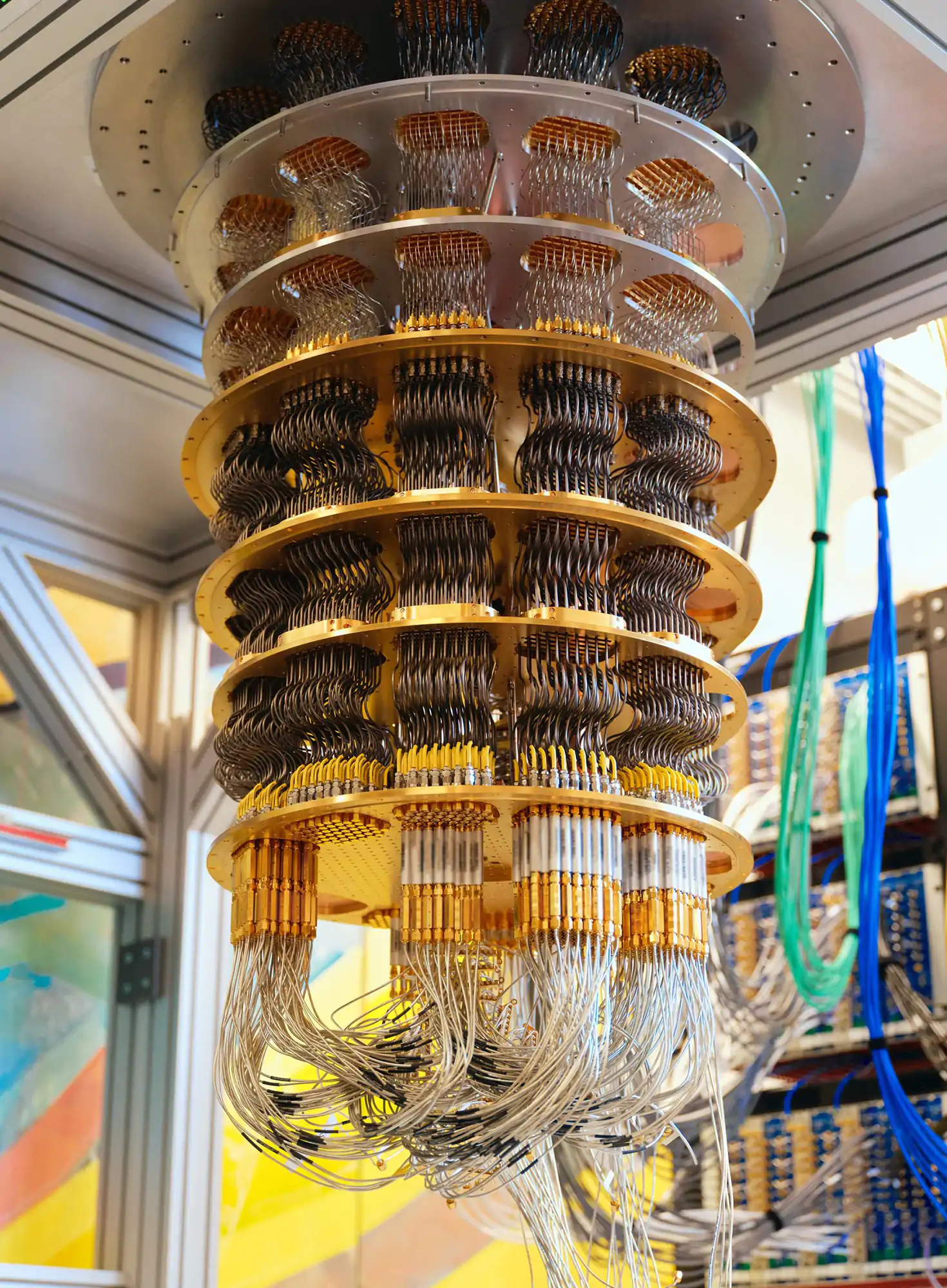
One of the first biggest reasons why quantum computers aren't yet fully practical, is the sheer size the its complexity.
The next big reason, is because they make too many errors.
Due to utilizing qubits instead of bits, the basic unit of information in quantum computing, these computers are much more sensitive to heat.
Because of this, their optimal operating temperature is heavily reliant on the temperature it is operating at.
This happens because qubits, which are the key components of this type of computer, can heat up very quickly when they get too energetic. And this can end up in the computer in an erroneous state, before the calculation even begins.
And one of the known way to decrease the error rates, or to "reset" it, is by lowing the operating temperatures of the system to as low as possible, all the time during operation.
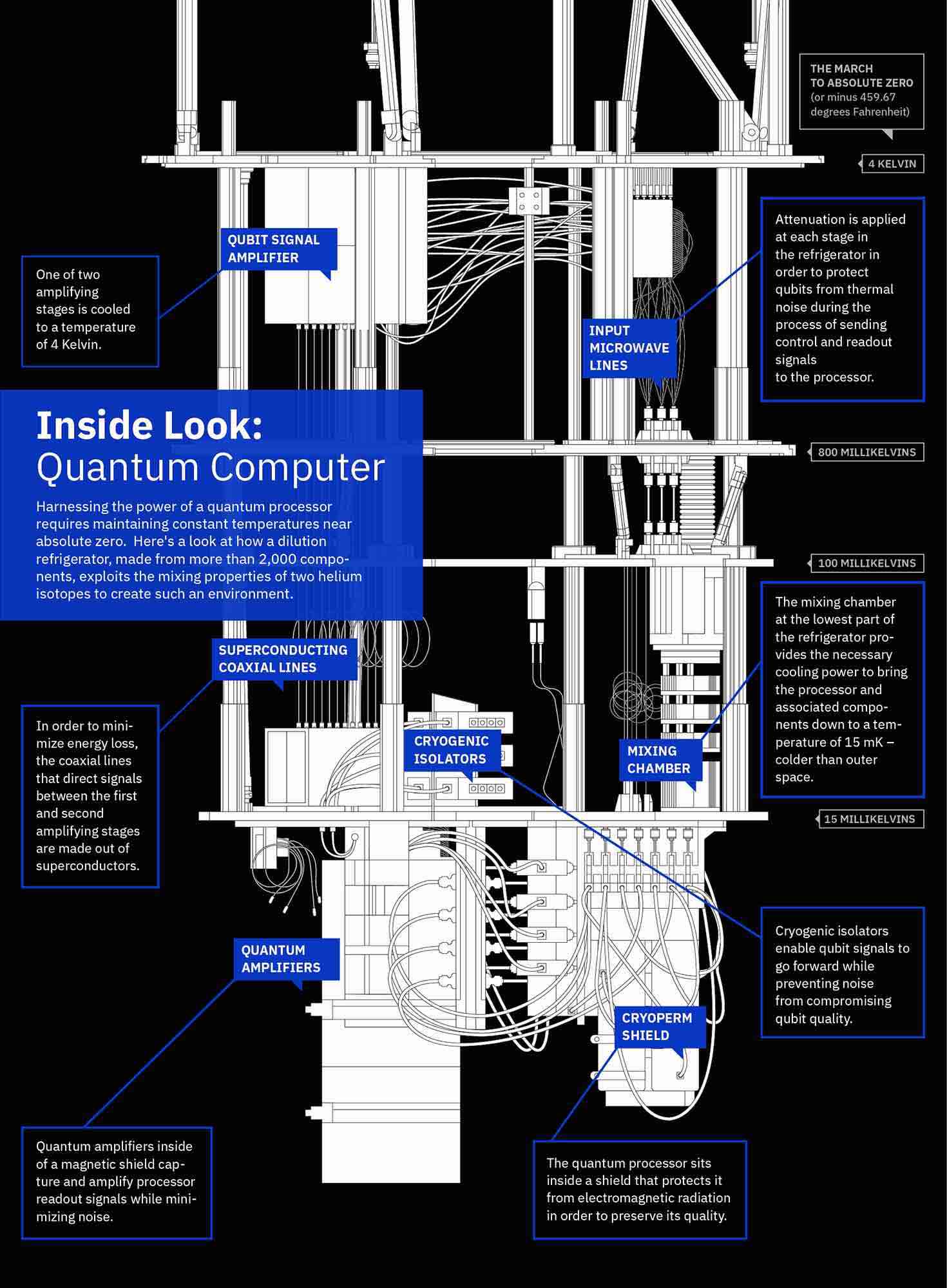
This is why quantum computing systems use cryogenic cooling, which is able to cool the superconductors to almost absolute zero using liquid nitrogen or helium.
By reduce temperatures to approximately 50 millikelvin (just above -273.1°C), quantum computers can ensure that their qubits remain at their lowest energy state, or also known as ground state, which is essential for initiating error-free calculations.
While cooling a quantum computer that lives inside a protected laboratory is viable, it's not practical for commercial use.
It's also not scalable.
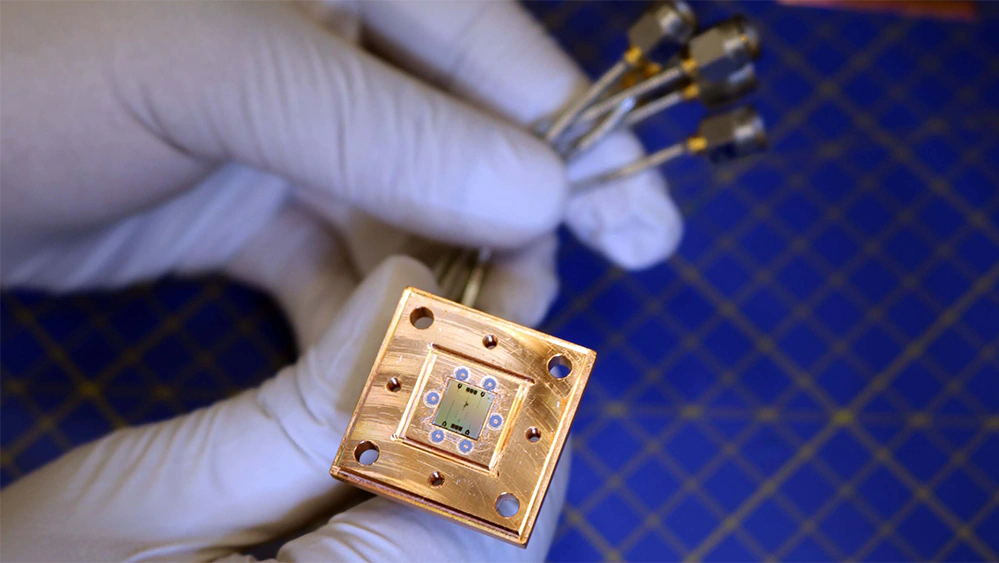
This is where researchers at Chalmers University of Technology, Sweden and the University of Maryland, U.S. managed to create a tiny cooling device that can lower the temperature of quantum computers, automatically.
Simone Gasparinetti at Chalmers University of Technology in Sweden and his colleagues have invented what they call an autonomous quantum "refrigerator."
The novel approach is by designing the warmer environment as the thermal energy source, to automate the whole cooling process.
When heat energizes one of the quantum refrigerator’s qubits, the system transfers heat away from the heated qubit to another qubit, which is cold. This cold qubit that has warmed up is then connected to a colder thermal bath, which dissipates the heat within, ensuring the target qubit stays at ultralow temperatures.
They then engineered the interactions between the components to ensure that when the target qubit had too much energy, which caused errors, to have its heat automatically transferred to the next qubit.
This lowered the target qubit’s temperature and reset it, without even requiring any external feedback.
"Energy from the thermal environment, channeled through one of the quantum refrigerator's two qubits, pumps heat from the target qubit into the quantum refrigerator's second qubit, which is cold. That cold qubit is thermalized to a cold environment, into which the target qubit's heat is ultimately dumped," explained Nicole Yunger Halpern, NIST Physicist and Adjunct Assistant Professor of Physics and IPST at the University of Maryland, U.S..
Long story short, the refrigerator operates by exploiting interactions between qubits, powered by only the natural temperature difference between two thermal baths.
And because this process is designed to be autonomous, the mini fridge is novel.
In fact, the cooling system is simple, and that it requires less hardware than conventional cryogenic cooling methods, yet it yielded better results.
And best of all, installing this refrigerator doesn't require any significant quantum computer redesign, or having to introduce new wires. And once installed, the quantum computer's qubit’s starting state is instantly correct 99.97% of the time.
In contrast, other reset methods typically only manage 99.8%, the researchers said.
Improving correction by only a fraction of one percent may seem like a small difference, but when performing multiple computations, especially at a quantum scale, even a miniscule improvement can compound into a major performance boost in the efficiency of quantum computer
Quantum computers have the potential to revolutionize key sectors such as medicine, energy, encryption, artificial intelligence, and logistics, thanks to using qubits.
Whereas classical computers use bits that are strictly 0 or 1, quantum computers' qubits can exist in a state of both 0 and 1 simultaneously, a phenomenon known as superposition. This capability allows quantum computers to perform parallel calculations, unlocking immense computational power.
However, quantum computing faces significant challenges, including the prevalence of errors, as qubits are highly sensitive to environmental disturbances.
These advanced computers aren't only sensitive to changes in temperature, because even a minor electromagnetic interference can randomly flip a qubit’s state, introducing errors that hinder quantum computations.
This kind of advancement is crucial, and represents more than just a technical achievement.
If humanity is ever to experience a world where quantum computers can address problems currently beyond grasp, they need to make the computers scalable and available to more people.
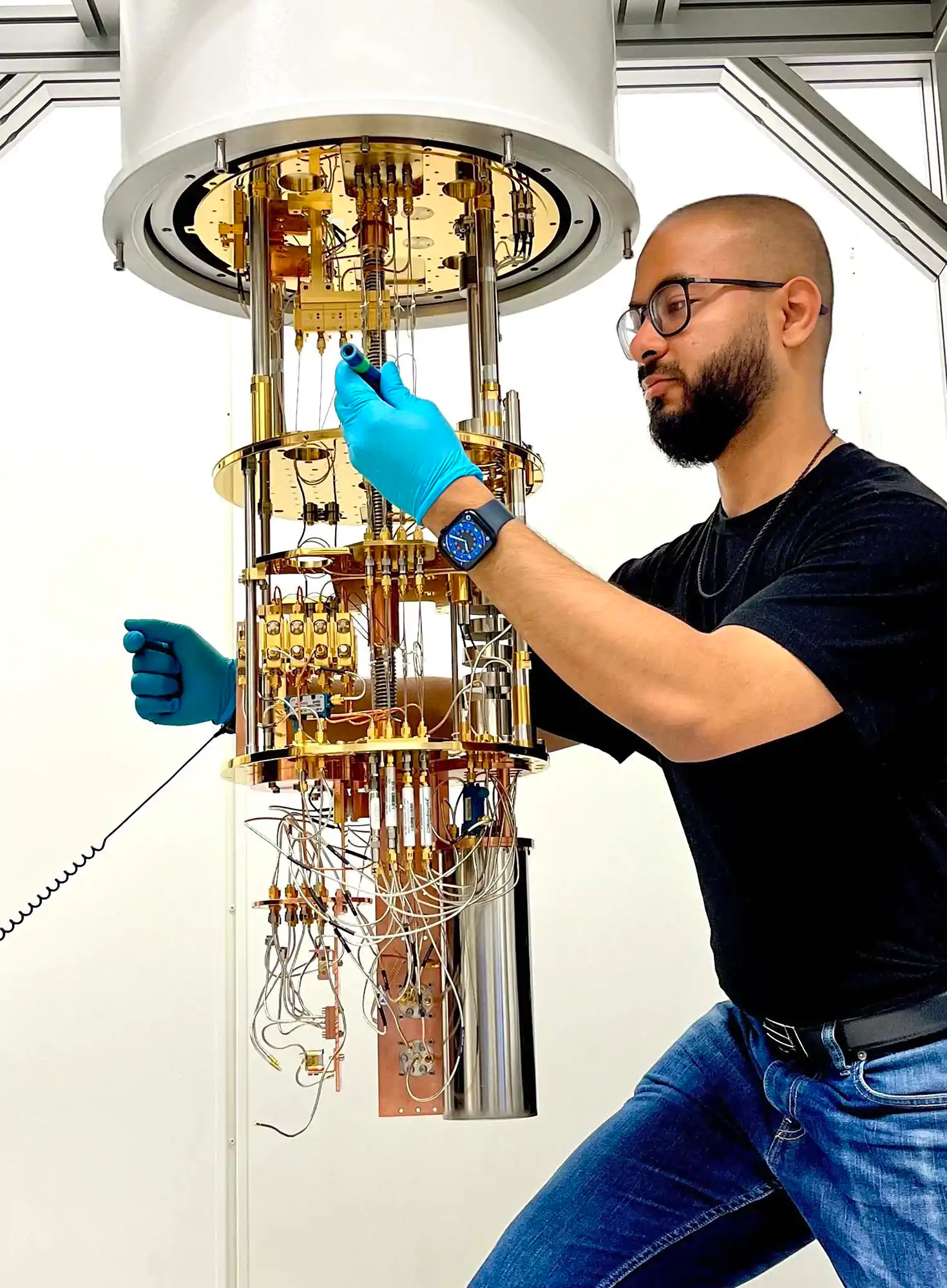
This prototype refrigerator created at Myfab, Chalmers University of Technology’s state-of-the-art nanofabrication laboratory in Sweden, should be considered a beacon of hope.
"Our work is arguably the first demonstration of an autonomous quantum thermal machine executing a practically useful task. We originally intended this experiment as a proof of concept, so we were pleasantly surprised when we found out that the performance of the machine surpasses all existing reset protocols in cooling down the qubit to record-low temperatures," said Simone Gasparinetti.














































































































































































































































































