Apple is heading into its September hardware event with iOS 27 already in late beta, after three months of testing that began at WWDC in June.
While most of the conversation has focused on a rebuilt Siri and claims of faster app launches, a smaller change, listed only as a line on a crowded feature slide at the time, has since drawn attention from people who keep more than one iPhone.
The company is adding a capability that lets a single phone number move between two handsets instead of staying locked to one.
It is called 'iPhone Handoff,' and it can be useful to those people who have more than one iPhone, but wish to switch a daily driver.
Unlike the Continuity feature that has long let users pick up a Safari tab or Mail draft on a nearby Mac, this feature lives in the cellular stack.
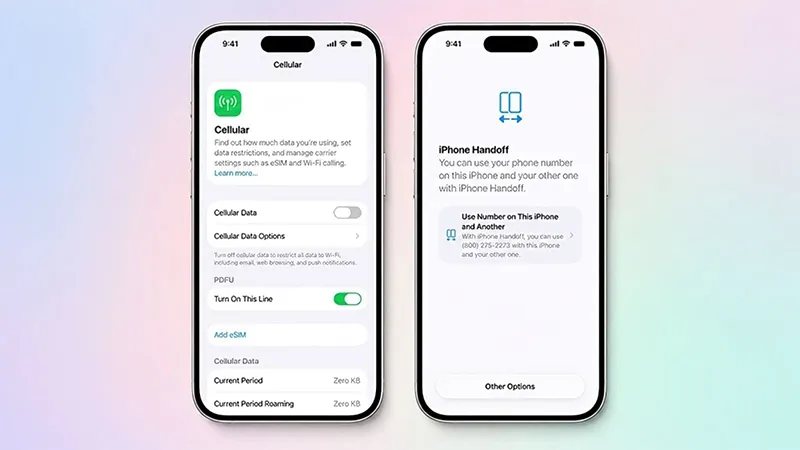
When using this feature, users can have one iPhone designated as their main device, and keeps the original eSIM.
The second becomes a companion and receives a linked companion eSIM issued through the carrier's provisioning system.
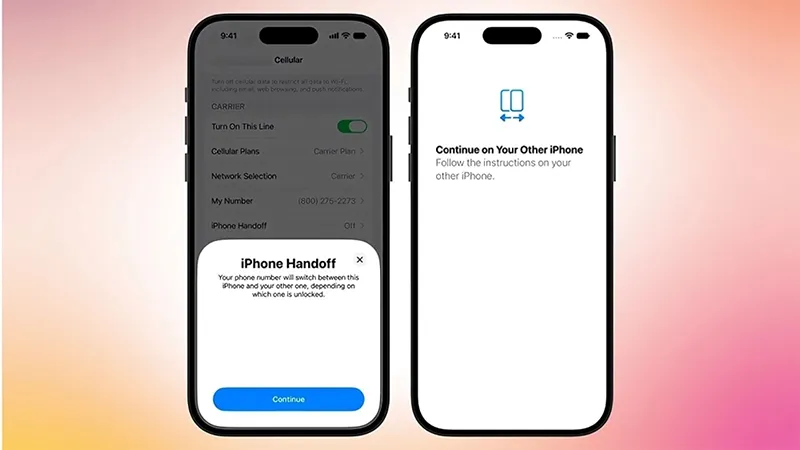
Both profiles share the same number. Only one is active at a time. When users unlock the other phone, the line follows. A Dynamic Island notification appears as the service transfers.
Cellular settings stay under the control of the main phone.
Location sharing updates to whichever device currently holds the number.
Setup starts in Settings under Cellular, often from the second phone, and uses the same kind of bottom sheet already familiar from eSIM transfers.
The screens walk through pairing, confirmation, and a transfer step.
Both phones must run iOS 27 and sit on the same carrier account. A physical SIM is not enough. The companion profile is a real eSIM with its own identifiers, delivered by the carrier’s SM-DP+ servers using the same remote provisioning standards that already handle ordinary eSIM downloads.
That is why Apple cannot turn the feature on by itself. The network has to recognize the second device and route calls and texts to it.
The arrangement is closer to how a cellular Apple Watch already shares a number with an iPhone than to carrier Multi-SIM products that ring two devices at once. It is a sequential handoff, not a clone.
The companion phone can remain a working cellular device even if the main iPhone is powered off at home. That matters for anyone who keeps a large or expensive phone on a desk and a smaller one in a pocket, or who reviews hardware and needs the same number on two units without paying for a second line or swapping cards.
The feature will not appear, or will sit grayed out, until a given carrier finishes the backend work.




















































































































































































































































































