Pornography has always been one of humanity's most resilient and lucrative industries, driven by the fundamental truth that human desire, curiosity, and fantasy are infinite resources.
Throughout history, explicit visual content has consistently outperformed almost every other consumer medium because it targets primal human drives directly, bypassing normal consumer hesitation and creating instantaneous, highly repeatable demand. The market for explicit media does not need to manufacture artificial desire; it simply builds digital highways directly to existing human biology, ensuring an endless pool of willing buyers regardless of cultural shifts or economic downturns.
The rise of the internet completely dismantled the legacy pornographic industry, shifting the power away from corporate adult studios, talent agencies, and physical distribution networks into a decentralized digital free-for-all.
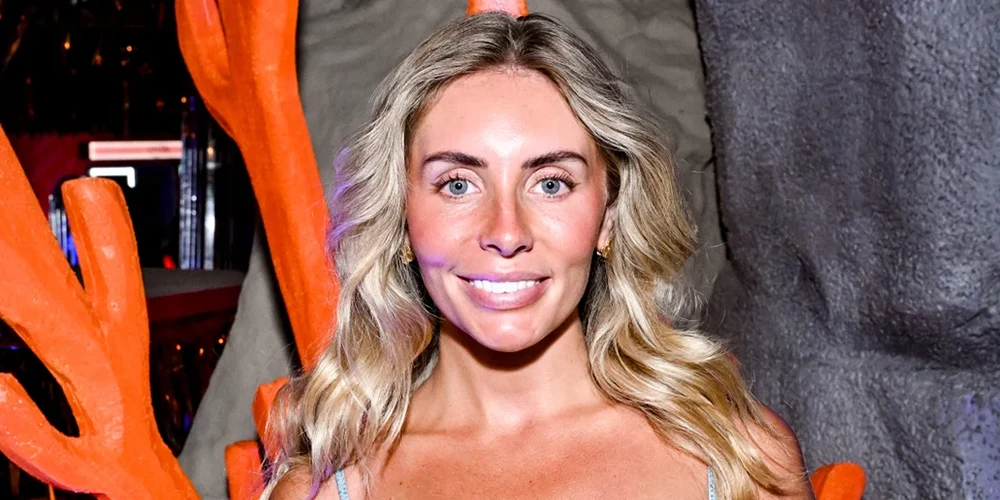
In response to this hyper-saturated post-internet landscape, figures like Bonnie Blue represent a dramatic evolution in how explicit media is created, marketed, and consumed.

Bonnie Blue operates as a masterclass in modern digital notoriety, weaponizing sheer shock value to convert extreme social outrage into a multi-million-dollar empire.
Speaking with Ella Ding in the 9Podcasts, she said that:
It's not necessarily that I think differently to sort of everybody else, but in terms of especially the industry I'm in. As the biggest difference between me and everyone else, I'm a slut but I'm a slut with a brain. A lot of people in this industry are just slut, and that's no problem. You're in you're definitely in the right industry.
But there's clearly a marketing aspect.
There's clearly a business behind it as well. And that's very much what I understand. I didn't do this job because I'm stupid and I don't understand other things.
Her reason is that, rather than existing as an anonymous contractor working under traditional studio bosses or answering to corporate overlords, Bonnie Blue operates as a completely independent media brand.
By cutting out middle management and middle platforms, she constructs her own distribution pipelines and operates under zero structural oversight, taking complete ownership over her output, pricing, and public narrative.
She recognizes that in an era of free content, the actual product being bought is no longer the explicit material itself, but the chaotic, unscripted personality behind it.
She refined this modern economic reality by turning her personal life into an extreme, weaponized spectacle of digital infamy, recognizing that extreme shock value generates more organic traffic than any traditional advertising strategy ever could.
From her claimed record-breaking viral stunts where she slept with 1,057 men in 12 hours to international headlines detailing her deportation from Bali, and so on and so forth, her public identity is engineered to generate perpetual public debate and moral outrage.
As a matter of fact, she once spent months wearing a fake silicone bump to stage her initial viral pregnancy stunt, after a "breeding mission" where she slept with hundreds of men during a viral challenge.
Later, she claimed that actually did give birth to a baby, which she then used for another massive rage-bait marketing cycle.
In late September 2026, she posted videos claiming she was auctioning off the naming rights of her newborn to ensure the child was "rich from day one". Shortly after, she announced the winning bid was £1.2 million ($1.59 million) from an online crypto casino and sports betting platform.
The porn performer and new mother later posted a video of herself holding a baby, while promoting sexual content, which gained even further ciriticms.
However, public consensus and industry analysts lean toward it being a sponsored ad campaign and hoax rather than a genuine.

Everything she did, generates attention. It doesn't matter to her how people see her or judge her. She is there for the attention.
And in the digital world where time is finite but content is way to abundance that they compete for engagement, every attention she is getting, she is able to turn that into money.
Bonnie Blue, whose real name is Tia Billinger, openly articulates this reality, acknowledging that a cold, calculated business strategy sits directly behind the media frenzy.
By directly managing high-touch subscriber interactions like personalized video calls and steering her own public controversies, she proves that modern creator independence relies on transforming oneself into an inescapable, self-governing brand that turns sheer notoriety into absolute financial control.
This calculated detachment stands in stark contrast to the human collateral generated along the way.
In the quiet moments between her marketing spiels, the cracks in the armor show, such as when she acknowledges the emotional toll of an ongoing divorce while trying to maintain the shield of a ruthless digital entrepreneur.
She insists on retaining total hands-on control over direct-to-fan interactions like personalized video calls, boasting that AI could never replicate her specific style of engagement.
Ultimately, her career exposes the raw blueprint of today's digital landscape: in a hyper-saturated ecosystem where public outrage carries more currency than approval, cultivating an infamous brand produces far greater financial yields than attempting to be liked.