DuckDuckGo recently shared an update about its Duck.ai service.
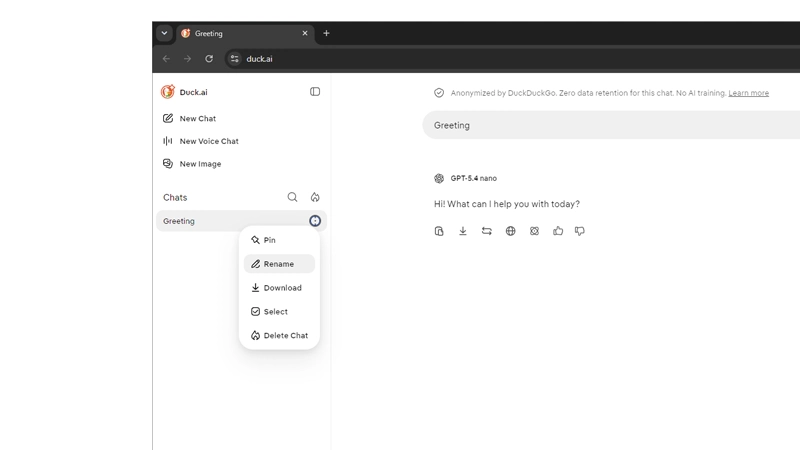
According to the announcement, a private AI chat option can now automatically assign names to conversations for easier reference. Users can still choose their own titles through a simple menu option if they prefer something different.
Duck.ai generates chat titles automatically by using the underlying large language model (LLM) to summarize the initial user prompt or the early part of the conversation.
Rather than relying on a generic label such as "New Chat," the system processes the content and creates a concise, descriptive title that captures the main topic.
Automatic naming helps organize multiple chats without forcing users to input titles every time, which could otherwise become tedious during extended use.
At the same time, the ability to edit those names preserves user control over how their conversations are labeled and stored locally or temporarily.
Duck.ai service itself operates without requiring any account, keeping interactions anonymized and free to access.
In an environment where many platforms tie chat histories to user profiles for personalization or advertising, an option that avoids accounts altogether reduces the amount of persistent data linked to individuals.
It may appeal to those concerned about long-term tracking, though it also means features like cross-device synchronization depend on manual exports or other workarounds rather than seamless cloud accounts.
For everyday users, the change streamlines workflows without adding complexity.
Someone researching topics over several sessions can more quickly locate past exchanges based on the generated titles, such as references to specific events or questions.
Yet the overall design continues to prioritize short-term, private exchanges over building detailed user profiles, which sets it apart from services that rely on extensive data retention for refinement.
In practice, features like this highlight ongoing efforts to make privacy-focused AI more approachable.






















































































































































































































































































