 Google is facing another, and yet endless antitrust charges. After the European argues about how the company is conducting its Search business, the European Commission has also informed Google of its breach of EU antitrust rules by abusing its dominant position by imposing restrictions on Android device manufacturers and mobile network operators.
The Commission's preliminary view is that Google has implemented a strategy on mobile devices to preserve and strengthen its dominance in internet search, which is its core and main business.
Google's Android is the world's dominant mobile operating system. Its dominance, at least in Europe and the United States, is almost absolute. When licensing Android, Google requires smartphone makers and vendors to load 11 core Google apps onto their phones before customers could ever buy them.
The apps included are: Gmail, Google Chrome, Google Drive, Google Hangouts, Google Maps, Google Play Movies, Google Play Music, Google Photos, Google Play Store, Google Search and YouTube.
By having others to pre-load those apps, Google can drive all those users to play a big part in driving traffic and advertising dollars to the company.
Formally, the European Union first began investigating the Android antitrust case in April 2015. Announcing the investigation back then, It was said that Google is forcing smartphone makers to pre-load Google apps onto their phones and this could force out any competition. The "rule" that Google is giving has made wireless companies and smartphone makers to dislike Google's core apps being loaded onto their phones from factory.
This is mainly because many of their own apps have fallen out of the equation, enable to compete with Google's pre-installed apps.
The Rule For Using Android
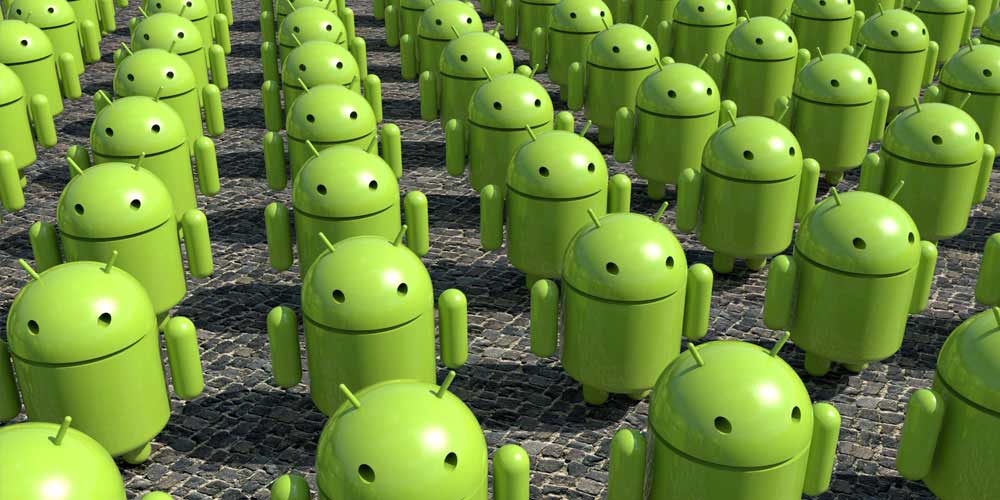
Android by Google offers is available in two versions:
First is the core operating system called the Android Open Source Project (AOSP). It is open-source, free for anyone to use, change, modify or adapt for practically any purpose. This Android is available from smartphones and tablets, to embedded devices such as sensors, fridges, cars, industrial machines and many others.
Second is the Android that goes along with AOSP, This Android also offers its suite of apps and services, which includes the Google Play Store and other apps. While AOSP is free to use for any purpose, Google's app suite isn't. It comes with a series of conditions that must be met by device manufacturers before Google can give them the license to use it. This suite of apps include the 11 core apps previously mentioned.
So here is the story:
Android is a notable player in the mobile industry. By having more than 80 percent of the European market, people can conclude those 80 percent of the European mobile users are familiar with Android. For mobile device manufacturers, those people represent potential customers and powerful source of income. To use Android on their devices, manufacturers must pre-install all the 11 Google apps.
Google does not restrict manufacturers from pre-installing any other apps. For example. Samsung has pre-installed some of its own apps and Microsoft’s Android apps on its Galaxy smartphones. But the 11 Google apps must be installed. If not, Google won't license the use of Android to them.
The next problem that rises after Google's 11 apps are installed is when users have multiple apps that can handle the same task. For example, accessing emails. Android will ask the user which of the apps they have installed to be used to perform the task. In the case of Samsung as an example, tapping on a link on one of the Galaxy phones that have Samsung's native browser installed, Android will still ask whether the user wants to open the link in Google Chrome or Samsung's browser, and whether they want to use the same app for all future links.
When that is not enough, Google also sets a other few requirements. Any Android smartphones or tablet should have the Google Search box widget to be on the home screen when the device is booted up for the first time. The shortcut icon for Google Play and a folder with Google’s other apps are also necessary.
While those apps are needed to be on the home screen, users may remove them anytime when they purchased the device. But still, they must be there to start with. And to make things a bit more complicating, the apps can't be uninstalled, unless rooted which will of course, void warranty.
The European Commission's complaint against Google is that the company will not allow manufacturers to include the Google Play Store, which has the largest collection of third-party Android apps available, without including both Google's Search app, Chrome browser and having Google Search set as default.
And as for Samsung as the example, the Korean conglomerate company have tried to loosen Android's grip. But the efforts have yet to be successful.
Europe In Breaking Google's Android Dominance
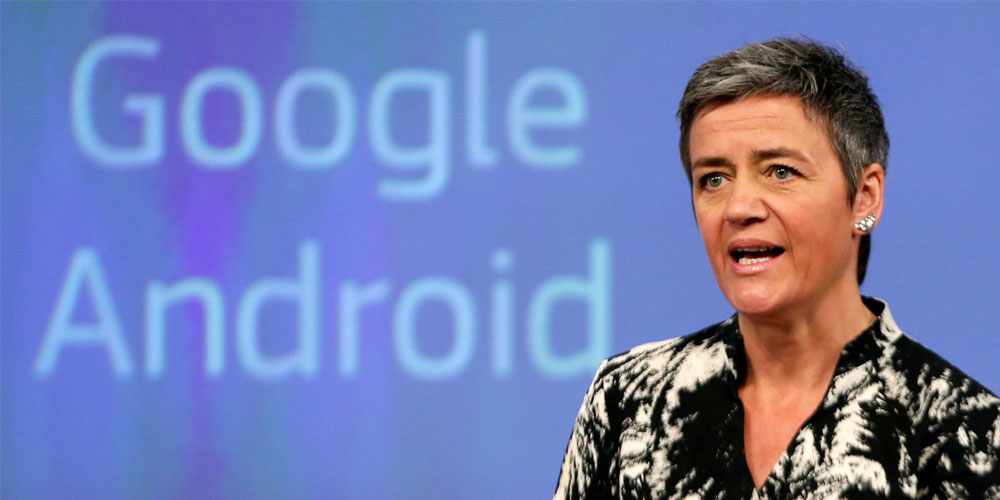
Google in doing what it's doing with Android, Europe sees it to illegally abusing its market dominance. Android is particularly popular in Europe, and by powering more than 80 percent of mobile operating systems in Europe, Google is having a strong position in the market.
At this stage, the Commission considers that Google is dominant in the markets for general internet search services, licensable smart mobile operating systems and app stores for the Android mobile operating system.
Google generally holds market shares of more than 90 percent in each of these markets in the European Economic Area (EEA).
In addition, Europe also sees Google to harm consumers by stifling competition and restricting innovation in the wider mobile space.
The Commission's concerns are outlined in a Statement of Objections addressed to Google and its parent company, Alphabet. Sending a Statement of Objections does not prejudge the outcome of the investigation.
Margrethe Vestager, the European Union's antitrust chief, said:
"A competitive mobile internet sector is increasingly important for consumers and businesses in Europe. Based on our investigation thus far, we believe that Google's behavior denies consumers a wider choice of mobile apps and services and stands in the way of innovation by other players, in breach of EU antitrust rules. These rules apply to all companies active in Europe. Google now has the opportunity to reply to the Commission's concerns."
"If a company is dominant, that's fine. But if that dominance is abused, then we have an issue."
The Commission believed Google had broken the law by:
- Requiring manufacturers to pre-install Google Search and Google's Chrome browser and requiring them to set Google Search as the default search service.
- Preventing manufacturers from selling smartphones running on competing operating systems based on the Android open source code.
- Giving financial incentives to manufacturers and mobile network operators on condition that they exclusively pre-install Google Search on their devices.
In response, Google general counsel Kent Walker said the company would "demonstrate that Android is good for competition and good for consumers."
"We take these concerns seriously," he said. "But we also believe that our business model keeps manufacturers' costs low and their flexibility high, while giving consumers unprecedented control of their mobile devices."
The European Union's case against Google is similar to its antitrust case brought against Microsoft a decade ago. That time, Microsoft was found to have abused its dominant position in the desktop operating system market by forcing Windows PC makers to pre-load Internet Explorer onto their computers.
As a result of the lawsuit, Microsoft had to present European customers with a selection of competitors' internet browsers to choose from.
Other players that Europe is having its eyes on include: Amazon and Facebook that dominate Europe's 500 million people use digital services, social media, online movies and e-commerce.
And as for Google, this isn't the only antitrust case Google is facing in Europe. The company is also fighting the European Commission on separate charges that it promotes its own results over rivals' in search results. If Google loses the Android battle, it faces an additional $7 billion fine.