 The internet is growing and social media is a one of which that benefits its massive netizens. With mobile devices in practically in everyone's pockets, Facebook that is the largest social media around, is looking forward to blend more of the digital social-sphere into reality.
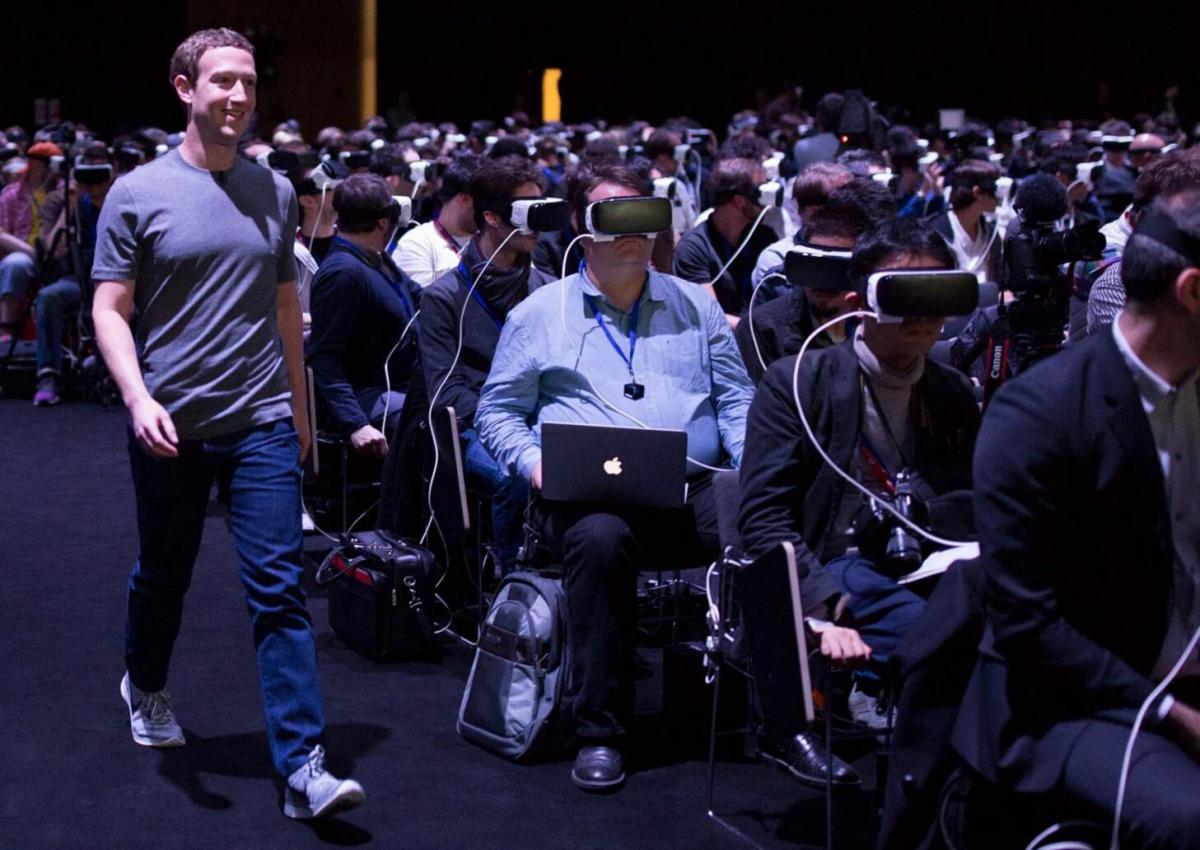
On February 21st, 2016, a picture of Facebook's Mark Zuckerberg walking in a room full of people wearing virtual-reality headset went viral. The image is like showing the rise of what will become a way of the industry to market a dystopian technological future. And at the same time, Facebook also made an announcement of Telecom Infra Project (TIP).
TIP is a partnership between Facebook and 30 initial members including Deutsche Telekom, SK Telecom, Intel, and Nokia. They're all participating to help in building the next generation of wireless networks.
While some people are still stuck with 3G networks on many developing nations, the world is already seeing 4G and the faster LTE connections. Now people are talking about how long before the next generation of connection will arrive.
"Every day, more people and more devices around the world are coming online, and it’s becoming easier to share data-intensive experiences like video and virtual reality," said Jay Parikh. "Scaling traditional telecom infrastructure to meet this global data challenge is not moving as fast as people need it to."
The 5G is still under heavy development with some smaller test networks being built. Here, Facebook and its TIP partners are taking their roles to speed up that process by making the designs of wireless networking equipment open-source.
This is their hope for others to share and help its development process. With more people on board, they're hoping to build the new networks faster.
Against The Odds
Facebook is a giant social media that thrives on the internet. As the largest around, it has succeed in getting over a billion users using its service. While Facebook is finally came against the growth of the internet itself, the company already has an answer to the problem: Internet.org and its renamed to Free Basics app that deliver free internet to places where internet is still limited and/or expensive.
While Facebook got its success early in its life due its ability in giving what people are expecting on the web: the social internet, Facebook is still limited to what its doing.
Humans interact with others in many ways and Facebook has just given a small portion of it.
A social-media company working on mobile telecommunication is kind of odd, but Facebook's Open Compute Project that was started in 2011, provides a successful precedent. Here the company has an early start.
Founded in 2011, Open Compute took the designs of of the data centers and large-scale networks Facebook was building, and published them for anyone to use. The result was a massive acceleration of cheap, efficient networking infrastructure.
Looking at its previous successful attempt, Facebook saw this potential by engaging TIP that aims to quicken the arrival of 5G wireless, a protocol that is said to be 100x faster than the already available 4G.

The TIP's technology companies and hardware makers will work together to contribute designs for products like wireless radios and optical fiber gear to better manage, store, and deliver intensive data. Telecommunication companies will then use those designs in practice.
But Facebook realizes that it came to a crossroad. On one side, people that are enjoying 4G networks are mostly those that are comparatively rich and live in developed countries. They're making a huge portion of Facebook's user base, but they aren't Facebook's attempt to get more out of. Most of Facebook's potential users come from places that are still developed. Internet.org has made its way, and TIP is also setting a bigger aim there to improve connectivity around the world, including rural and developing regions.
"This will result in significant gains in cost and operational efficiency for both rural and urban deployments," said Jay Parikh, Facebook's global head of engineering and infrastructure.
As its first attempt, the group is starting a small connection at a small village in the Philippines and a rural section of the Scottish Highlands.
As Facebook sees it, it’s all part of virtuous cycle that serves both its customers and its business interests: as connectivity improves and gets faster for people no matter where they are, telecommunication companies will get more customers, and many of those people will also use Facebook.
So the sooner 5G networks are available, Facebook is hoping to get more users (adding up to its attempt at Internet.org). And with faster connection, high-resolution video and VR will then certainly come to a rise.
In anyway people see it, everything leads back to Facebook. As the most widely-used social media network, high-speed connection equals to more users. And as the owner of Oculus VR from its $2 billion acquisition, 5G can translates to more VR goggles around.
So expect Facebook to soon have more users, and more "human's social interaction" ability through VR. All those are from, by, and "sold" by Facebook.