Most people who have used AI tools to make video are used to a certain rhythm: they have to write a description to instruct what the AI should do.
After that, they must wait for a finished clip to appear, and then after that, they have to decide what needs to change for the next attempt. The waiting is short by older standards, yet the person still sits outside the scene while it is being made.
Pika's research preview called 'Enact,' which tries to keep the person inside the process.
The system generates both picture and sound in short pieces that arrive faster than the video plays, so the scene can keep running while someone adjusts it. A creator can move actors or objects with a mouse, speak or type notes to the characters, and steer the camera, all while new frames continue to appear.
The idea is that the video should respond the way a small set might respond when a director gives an instruction.
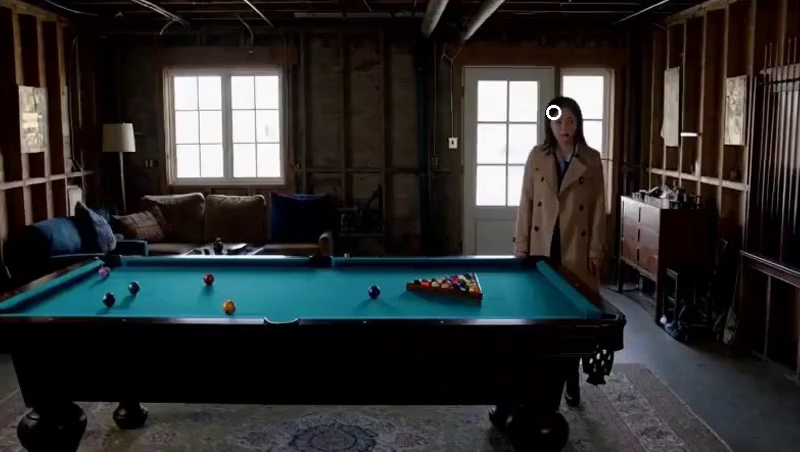
In the staging mode, a person can click and drag a figure or an object to a new spot while the rest of the scene continues.
The system is trained so the character adjusts posture and weight rather than sliding rigidly, and the lighting and shadows update to match the new position without leaving a hard outline.
The video keeps generating during the drag itself.
On the hardware they tested, the response arrives in under half a second, including the time needed to decode the frames.
The model receives a stream of mouse positions along with a map that shows where the cursor is holding something, and it produces short causal chunks of video, typically around seven tenths of a second long, or shorter when lower latency is needed. It holds onto the original prompt, the starting video, and a few recent chunks so the scene does not forget what it already showed.
The direction mode lets someone talk to the characters the way a director talks to actors.
Notes such as asking someone to move closer or to explain why they are upset are turned into structured instructions about action, dialogue, emotion, and gaze.
The characters remember earlier notes across the session.
When the person is still rehearsing, the system holds the scene with small idle motions such as breathing or blinking. Once the person calls for a take, the system rewrites the accumulated notes into one continuous performance that starts from the first frame.
The same underlying model generates both the picture and the matching sound, again faster than real time, so the conversation and the result can stay close together.
Camera control works without needing an existing video to start from.
Someone provides an appearance reference and a simple three-dimensional motion guide, then moves the mouse to pan, dolly, or orbit.
The system generates the new view and the accompanying sound from that input.
On a node with eight high-end accelerators, the first frames arrive in about half a second, after which the generation runs roughly one and a half times faster than the video plays.
The model keeps an anchor frame from the opening so faces and the room stay recognizable, and it reuses information about the static appearance across chunks so it does not recompute everything from scratch each time.
All three modes sit on top of Pika's H3 Flex model, which had already been trained to produce video and synchronized audio in fewer steps than the original base model.
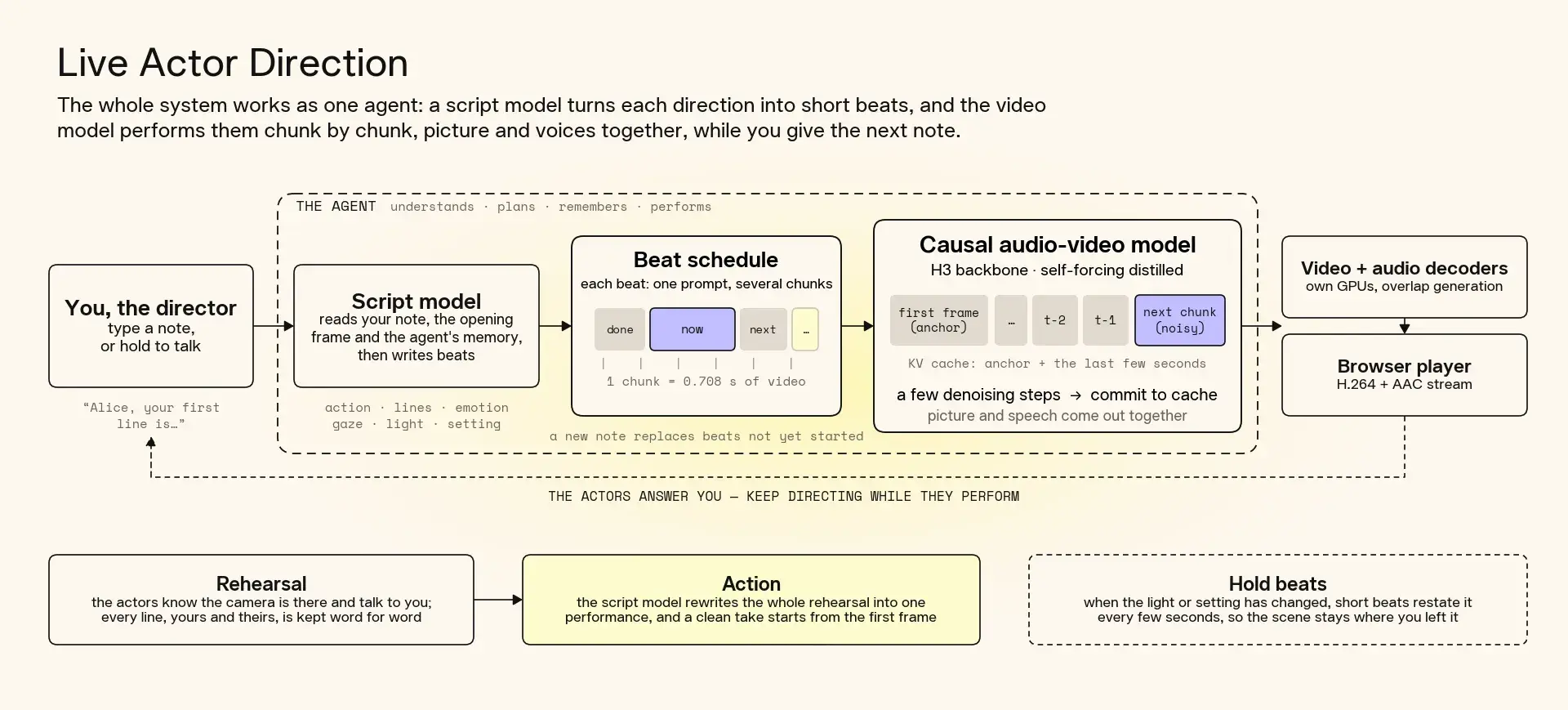
For Enact, the team added lightweight modules that inject the live mouse signals, the spoken or typed notes, and the camera path.
Training data for the interactive behaviors came from simulation.
For staging, a physics engine moves a stand-in along drag paths and renders matching target video.
For camera work, an automated pipeline records multi-angle moves inside a virtual soundstage along with the corresponding frames and spatial audio. A distillation process then trains a faster student model that can run in short chunks while still tracking the live inputs.
Sessions can continue for a long time because the system keeps a sliding window of recent context and periodically resets positional information so the cost stays fixed. When nothing is happening, the model can hold the scene with subtle motion rather than freezing.
The whole arrangement is still a research preview.
Pika only announced Enact, and that there is no public release date or pricing has been set.
What the work demonstrates is a version of video generation in which decisions and results stay closer together in time, closer to the pace of adjusting something that is already in motion.
With Enact, users can really become a director of a project, by making it feel as if they're actually there on set, behind the camera, in front of the actors.