The rapid progress in generative video has moved systems beyond isolated clip creation toward coordinated production of longer sequences and structured projects.
Runway has participated in this shift through successive model releases and, more recently, through an agent interface that orchestrates the steps from initial description to assembled output.
When the company introduced its first Agent, users described a desired video in ordinary language, after which the system proposed a concept, developed story beats, and established a visual direction informed by any reference images or parameters supplied at the start.
It then generated a multi-shot video that incorporated voiceover, dialogue, and music before handing the result to an integrated timeline editor for final adjustments.
With 'Agent 2.0,' things go beyond that.
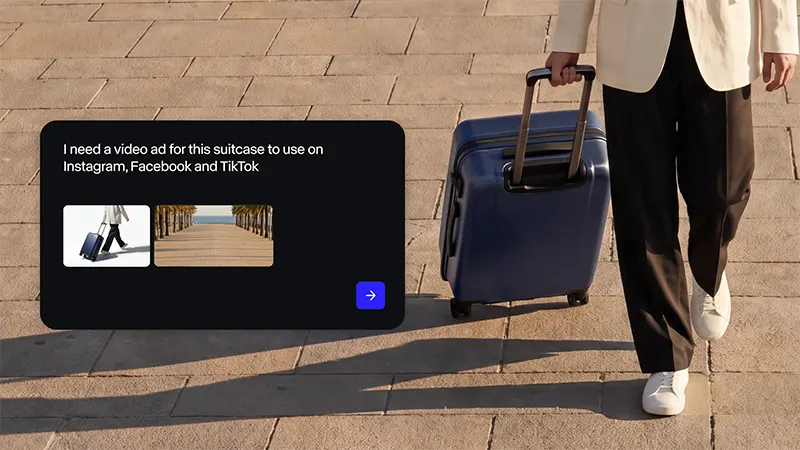
Introducing Agent 2.0Go from a simple prompt to fully realized marketing briefs and campaign assets right inside of Runway Agent. You can also easily analyze your performance data to improve your creative and scale it across platforms, formats and markets.Agent is being built… pic.twitter.com/VZINWuEA7U — Runway (@runwayml) June 25, 2026With Agent, the workflow suited brand campaigns, social content, product videos, and early-stage work for film or television, compressing cycles that once required multiple specialists and repeated exports into a single conversational thread. With the introduction of Agent 2.0, Runway broadens the same interface to address the full loop of marketing production. In addition to creating individual videos, the updated agent accepts campaign objectives, product details, audience descriptions, or performance metrics from platforms such as Meta, TikTok, or YouTube. It reviews the supplied context, asks clarifying questions when needed, and collaborates with the user to define positioning, generate structured briefs, and produce corresponding visual and audio assets. Once assets exist, the system adapts them to the technical specifications of different channels by preparing versions in the required aspect ratios and, when requested, localizing copy and imagery for additional markets. A session might open with a description of an upcoming product launch or a paste of recent ad results. The agent interprets the data to highlight patterns in what has performed well or poorly, suggests refined angles, and proceeds to build the necessary deliverables as a coordinated set rather than disconnected pieces. Generation draws on Runway’s Gen-4.5 model for the core video work, with supporting models selected automatically for specific subtasks to maintain character and scene consistency across shots through identity-locking methods. Audio components rely on dedicated generation tools added to the platform in the same period, capable of producing speech, sound design, and music up to two minutes in length. After the initial assembly, users retain direct control. They can open the timeline to trim, reorder, or layer additional material, or they can continue issuing instructions to the agent for targeted changes. This arrangement keeps the conversation as the persistent record of decisions while allowing human oversight at points where judgment remains essential. A set of quick-access skills introduced shortly afterward lets users invoke common tasks, such as building an ad campaign or localizing existing creative, through concise commands instead of extended descriptions. .embed-container { position: relative; padding-bottom: 56.25%; height: 0; overflow: hidden; max-width: 100%; } .embed-container iframe, .embed-container object, .embed-container embed { position: absolute; top: 0; left: 0; width: 100%; height: 100%; } The practical effect is a reduction in the number of separate tools and handoffs previously required to move from performance review to new creative to resized and localized variants ready for testing. Context from prior results and brand guidelines stays available throughout the exchange, supporting faster iteration without restarting the process for each variation or format. Runway has indicated that future work will focus on deeper connections to advertising platforms, allowing the agent to draw live signals and propose or generate follow-up assets with less manual prompting. In its present state, Agent 2.0 already illustrates how an agent layer can coordinate planning, data interpretation, asset creation, and distribution adaptation above the underlying generation models, offering teams that produce regular cross-channel video a more consolidated environment for maintaining output volume and responsiveness.
Published






















































































































































































































































































