Mobile operating systems have shifted from passive foundations that simply run software into active layers that observe what happens on a screen.
For years, app developers built around predictable boundaries where an application could keep its own data isolated from neighboring programs and background processes.
Those boundaries are becoming harder to maintain as system-level assistants gain broader visibility into everyday activity.
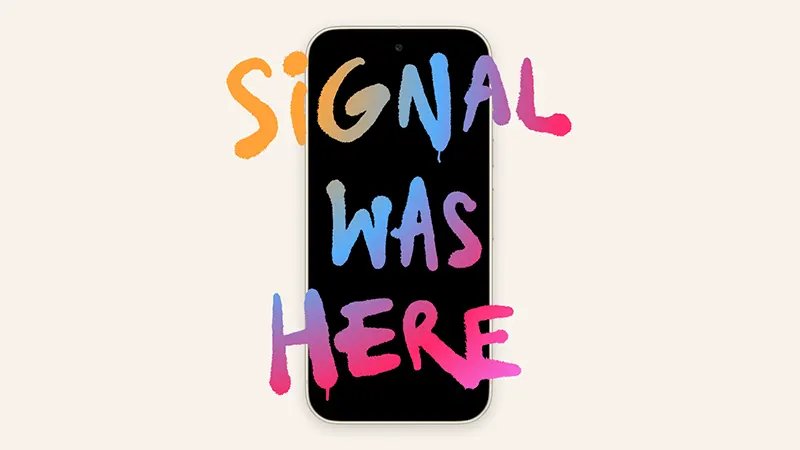
A post from the privacy-focused messaging app Signal focuses on how deep operating system integration of agentic AI affects application privacy.
Systems such as Siri's onscreen awareness on Apple platforms and Gemini intelligence on Android read displayed content so assistants can answer questions or carry out tasks across apps.
Signal compares this to how Windows Recall captures periodic screenshots and runs optical character recognition to build a searchable history, noting that once visible text is captured by another layer on the device, it can end up in local stores or remote services outside the messaging app's controls.
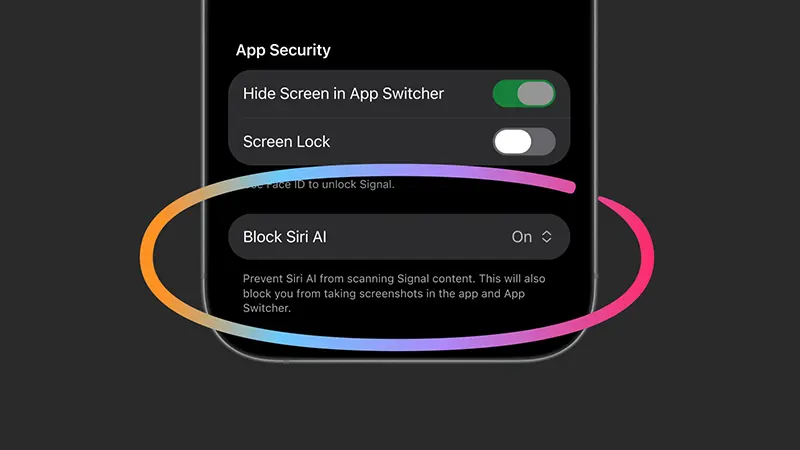
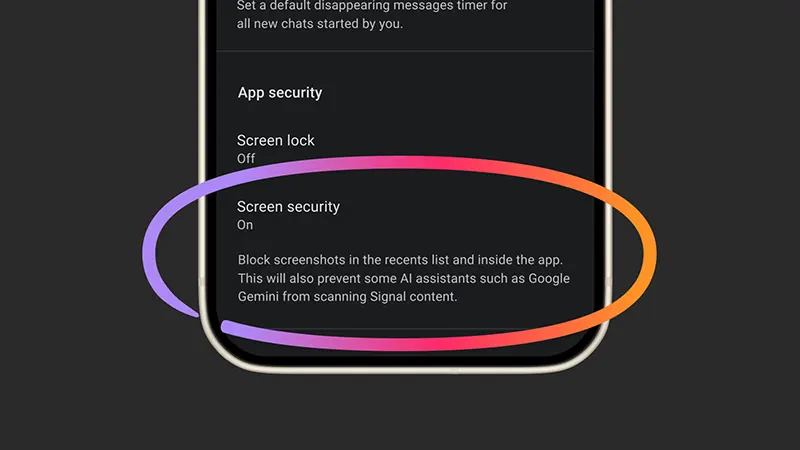
To push back against screen captures through the display layer, Signal announces in a blog post that it is blocking screenshots in its iOS 27 app and turning on screen security when AI screen reading is detected on supported Android versions.
Users who still want to take screenshots can turn the restriction off in app settings, though doing so removes that barrier for everyone in a thread.
Signal also points out that screenshot blocking is only a partial measure because other avenues, such as filesystem access or accessibility permissions granted to third-party agents, can expose information even when screen capture is restricted.
Platform differences make uniform protection difficult across devices.
On Android, vendor variations mean reliable detection of every attempted screenshot is uneven, so Signal focuses on detecting assistant screen access and enabling screen security automatically when spotted.
On macOS, Signal notes that it cannot reliably block screenshots because clear APIs for that purpose are lacking, leaving users to manually exclude the app under Siri settings on macOS 27 if they want to limit proactive access.
Beyond immediate workarounds, the argument centers on how operating system vendors design and document these features.
Signal is asking major platform makers for straightforward opt-out mechanisms covering screen reading, filesystems, notifications, and system frameworks without breaking normal app functionality, along with clearer technical documentation on how assistants process data.
It also argues that confidential computing on its own does not resolve the issue when platform providers still set the terms of data access, making clear standards and developer controls a broader question for software ecosystems as a whole.
Signal has also indicated that it is in ongoing discussions with companies like Apple and Google to address how system-level assistants interact with privacy-sensitive applications.
While these conversations continue, the organization points out that it is not alone in raising these concerns, noting parallel efforts by digital rights groups such as the Electronic Frontier Foundation to secure clearer app exclusion controls.
How platform makers respond will likely shape how independent applications operate on consumer devices in the years ahead.
For developers whose software relies on strict containment, the central question remains whether operating systems will preserve clear boundaries at the application layer or treat on-screen activity as broadly accessible to built-in assistants by default.