AI image tools have become common for quick visuals, but they often fall short on everyday production needs.
Readable text inside posters or menus can come out garbled, sets of related images tend to drift in style or subject, and high resolutions usually require a separate upscale step that softens details. Designers and marketers have worked around these limits for years by generating pieces one by one and fixing them later.
Kuaishou's Kling AI released 'Kling Image 4.0.'
Available in the company's Creative Studio and through its developer API, the model is built on what the company describes as a Native Unified Understanding and Generation Architecture, a single autoregressive system that handles both visual understanding and image creation rather than treating them as separate stages.
The main technical changes focus on three areas.
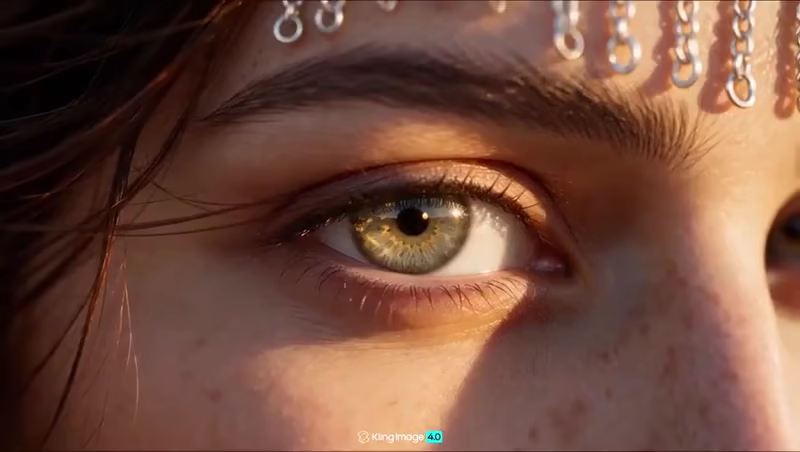
The model generates images natively at 2K, 4K, or 8K resolution instead of upscaling a lower-resolution output.
Independent tests have confirmed output around 9,984 by 6,656 pixels for an 8K request, roughly 66 megapixels. At normal viewing sizes the results look photographic, with coherent lighting and surface detail.
At full magnification the finest textures can appear slightly painterly rather than optically sharp.
Text handling has also expanded.
The model can place up to 2,000 characters inside a single image across seven languages: Simplified Chinese, Traditional Chinese, English, Japanese, Korean, Spanish, and Portuguese.
It includes more than 70 preset commercial fonts, and users can upload a reference image to guide lettering style.
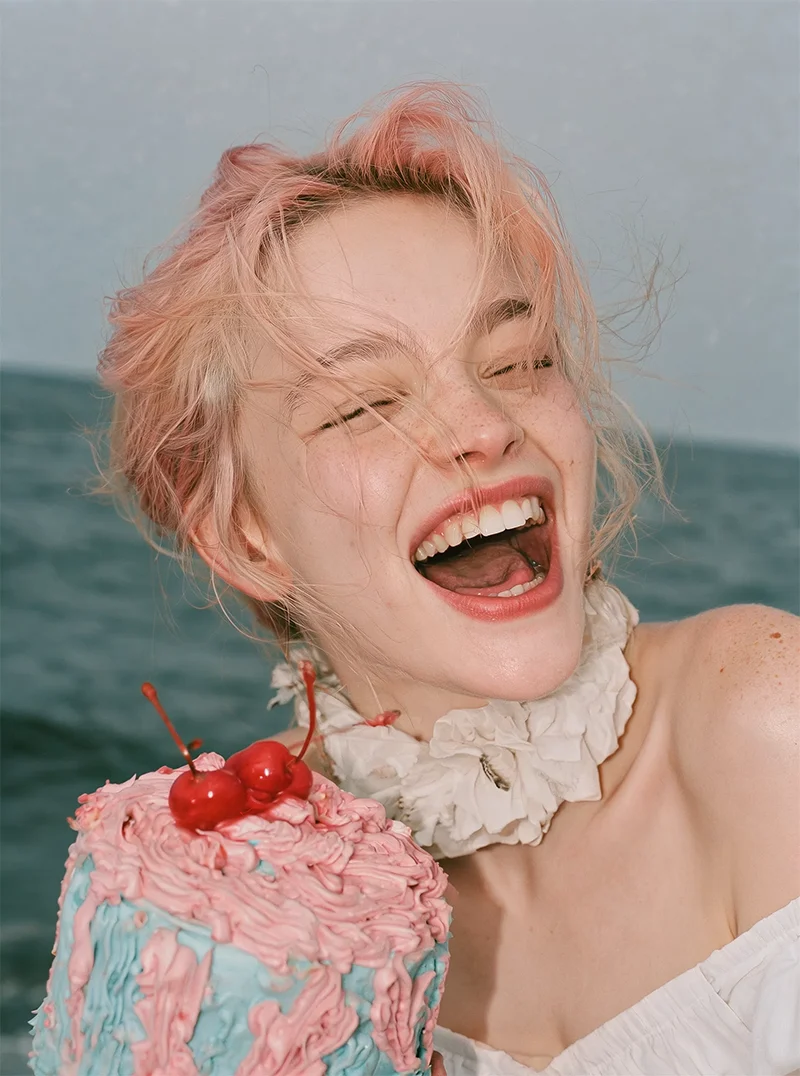
After generation, the text and font choices can be edited without regenerating the whole picture.
Early tests with dense posters containing several hundred to more than a thousand characters showed mostly accurate rendering of body copy, headings, and layouts, though occasional small errors still appear in micro-labels or tightly packed sections.
A third capability is the generation of consistent image sets.
From one prompt the model can produce up to 10 images that share the same subjects, clothing, lighting, and overall style while varying composition or angle. It can also plan the content of each frame in the set. The same system supports long-form outputs intended for product detail pages or website layouts, delivered as a single tall image.
Prompts can run up to 15,000 tokens, and up to 10 reference images can be supplied to guide content, color, or typography.
In the Creative Studio, free accounts are limited to 2K output, so higher resolutions sit behind paid tiers.
Through the API, independent checks around the launch date put typical costs near six cents for a 2K image, $0.09 for 4K, and about $0.15 for 8K, with additional small charges for reference images.
Outputs include embedded C2PA content credentials that identify them as AI-generated.
These features address specific production bottlenecks that earlier image models handled inconsistently.