Maps have always invited a certain kind of daydreaming. Users can spin the globe, drop a pin somewhere unfamiliar, and for a moment the satellite view feels like a window rather than a photograph.
Google Earth has spent years refining that window, layering satellite photos, aerial shots, elevation data, and three-dimensional models until the planet starts to feel almost navigable from a laptop.
Unlike Google Maps, which prioritizes turn-by-turn navigation, traffic layers, and practical directions, Earth is built for exploration.
In many cities it constructs textured 3D buildings and landmarks by combining high-resolution aerial imagery through photogrammetry, stitching overlapping photographs into solid models that rise from the terrain.
Certain famous structures receive extra attention so they stand out with accurate proportions and surface details when the camera tilts.
Lately the company has been sliding generative tools into more of its products, and the latest addition follows a familiar pattern of simply trying something because the technology is already sitting there.
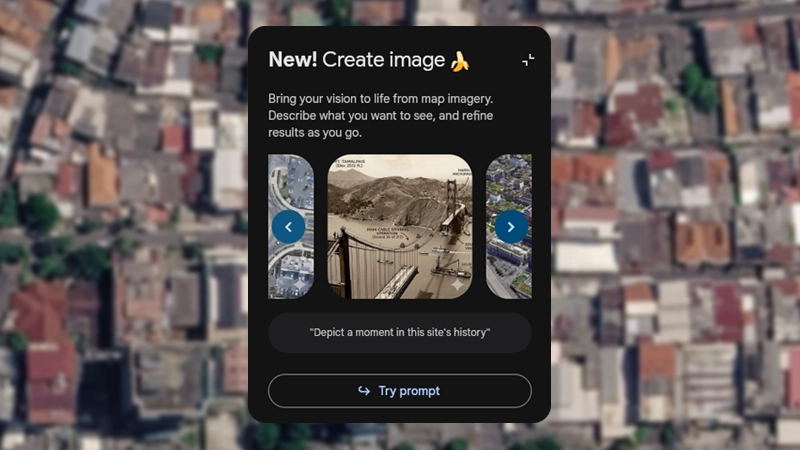
Nano Banana 2, the image model that has been improving inside Gemini, now works directly with those aerial, satellite, and three-dimensional scenes inside Google Earth on the web.
Zoom to a location, open the create-image option, and type a description.
"Have you ever looked at an empty lot in your neighborhood and imagined a community garden, or wondered what your city looked like a century ago? Now Nano Banana 2’s image generation capabilities in Google Earth can show you both — and so much more," Google said in a blog post.
The system essentially captures the exact view the user is looking at and feeds that imagery into Nano Banana as the foundation for a new picture.
The model then generates a fresh image shaped by the prompt while keeping the underlying landscape, buildings, and perspective as reference.
Google has floated a handful of example uses: generating an infographic about a landmark, reimagining an empty lot as a shopping district, visualizing a lakeside cabin before any construction begins, or reconstructing what the ruins of Pompeii might have looked like in the late first century.
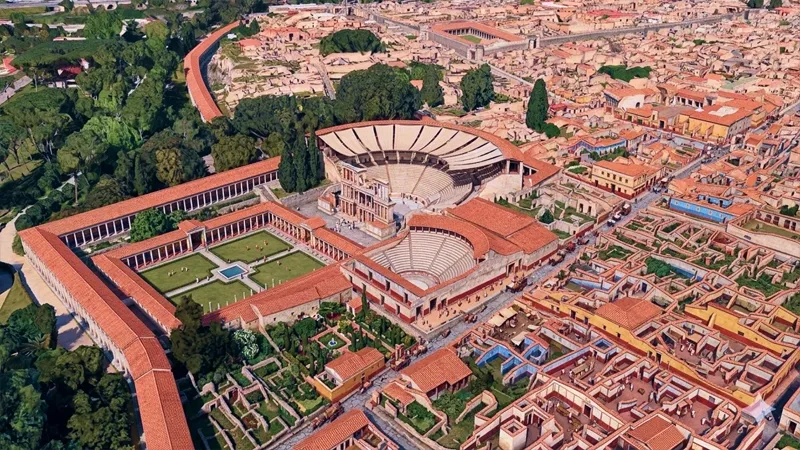
The historical mode is the one that draws the most attention.
Teachers and curious browsers can ask for a hyper-realistic street scene from nearly two thousand years ago, and the model will attempt to fill in architecture, clothing, and activity while tracing the outlines of structures that still exist. Similar prompts can push a neighborhood a century into the future or simply give a familiar park a different atmosphere for the sake of looking.
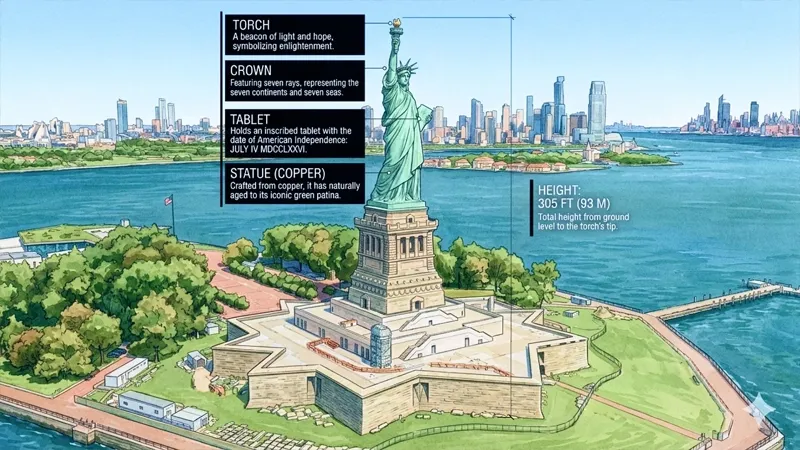
The same engine can also produce labeled diagrams that pull factual details about height, materials, or history and arrange them around the satellite image.
Early tests from outside Google have been mixed.
Some generated scenes capture a general period atmosphere without matching the actual buildings that once stood in a given place. Infographics sometimes rearrange the real layout or insert text that does not quite parse.
The Create Image button does not appear in Street View, so users who want that perspective often end up screenshotting and moving the image into Gemini instead.
Google notes that the model draws on web knowledge and training data, and in the case of ruins it can follow the remaining foundations, yet the usual limits of generative systems still apply.
Accuracy is approximate, structural feasibility is not guaranteed, and the results remain imaginative rather than documentary.
The feature is available now to anyone using Google Earth in a browser. It joins a growing list of places where Nano Banana has already appeared, from Photos and Messages to Chrome and Search.
This feature isn't groundbreaking, and may look like a novelty. Regardless, for the moment it simply sits there, another time, it can encourate people to look at the world and wonder what else it might become.




















































































































































































































































































