
For most of the few years, talking to a chatbot meant opening a window, stating a request, and watching the session end when you closed the tab. The industry has been trying to leave that pattern behind.
Persistent agents that keep a job running after you log off have shown up in several products this summer and fall, and during its DevDay in San Francisco, OpenAI put its own version into ChatGPT.
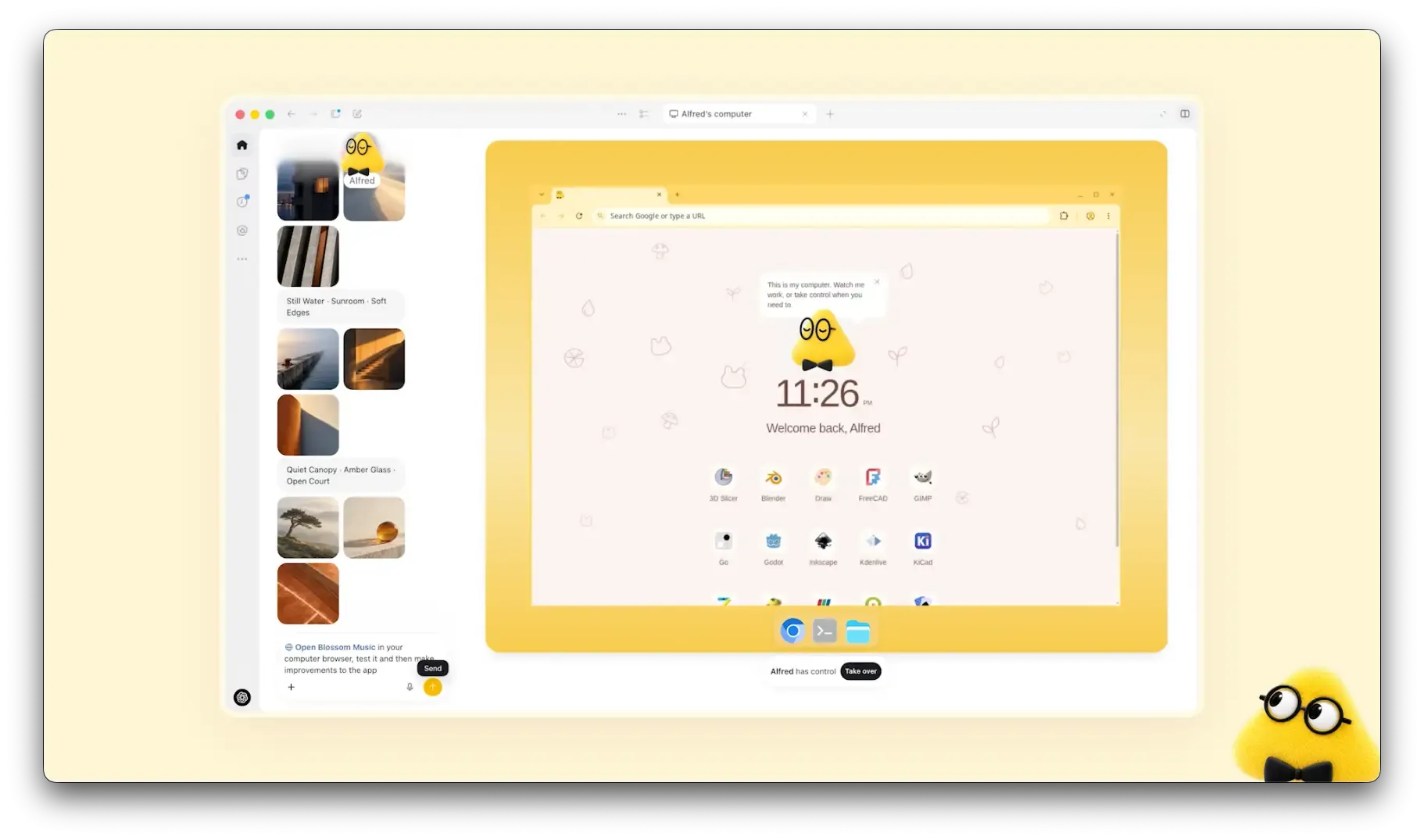
The product is called 'dots.'
According to the announcement post, each one is a personal agent running on GPT-6 Astra, the company's current frontier model for computer use, browsing, and multi-step professional work.
Instead of living only inside a chat thread, a dot gets an isolated cloud computer and browser of its own. It can keep working while you are offline, pick up context across ChatGPT, Slack, and Microsoft Teams, and, if you connect plugins, reach more than 4,000 apps.
OpenAI says the point is not a better reply. It is an agent that learns how you work and continues toward goals in the background.
Setup is narrower than the clip that accompanied the posts.
You create the first dot in the ChatGPT desktop app or a desktop browser. Mobile can talk to an existing dot later, but it cannot create one, and mobile web is out. After that, you name it, connect the plugins you actually want, and set Custom Rules for what it may do alone, what needs a check-in, and what is off limits.
An Activity View on desktop shows what it is doing, including background research. You can open the cloud machine and look at the work directly. Connecting your own laptop is optional.
The company is explicit that the agent’s environment stays separate unless you grant that access.
The examples OpenAI published are the usual mix of office and builder work: a developer watching feedback and preparing pull requests, a scientist rerunning analyses when new data arrives, a sales lead assembling a proof of concept, a creator turning a transcript into clips and posts. Internally, testers have used dots on procurement, invoices, email marketing, support, and contracting.
The company also describes specialist dots for companies, agents with their own identity, credentials, and system access, still in focused enterprise pilots.
A Microsoft Agent 365 integration is in development so those agents can sit under existing enterprise controls. Texting over iMessage or RCS is on a waitlist, not shipping with the first wave.
Who gets it is as important as what it does.
The first dot is included with ChatGPT Pro and Business Premium.
Conversations with the dot do not count against ordinary ChatGPT usage. Tasks it starts in Codex or ChatGPT Work still do. Enterprise, Edu, and Healthcare workspaces can turn on a beta, off by default until an admin enables it. Pro users in the European Economic Area, Switzerland, and the United Kingdom are excluded at launch. Business Premium is available in all supported ChatGPT regions.
Free and lower-cost consumer plans are not included. That last cut is already the loudest complaint in replies to OpenAI’s announcement posts. The company says it will expand later and that users will eventually be able to add more dots or pay to scale how much work each one can take on in a month.
For now, you get one.
Safety is the other half of the launch, published as a separate note the same day.
Astra is trained to refuse certain harmful requests and to stay inside permissions. Before actions that could change accounts or share information, an auto-review layer checks the plan against instructions, Custom Rules, and safety requirements.
Core controls sit outside the environment the agent can touch.
Proactive research runs read-only. Sending messages or files needs authorization, with tighter wording when the data is sensitive. Changing a password, moving money, deleting data permanently, or installing software from an unknown source is handed back to the person.
Purchases can use a saved card at a merchant, but only after approval.
Sign-in is designed so the model never sees the password. Saved credentials go through an encrypted service into the browser. Isolation, sandboxing, and monitoring that can pause a run if something looks off are the rest of the stack. OpenAI still says dots can make mistakes and that consequential work should be reviewed.
On privacy, OpenAI explained that connected apps use the same ChatGPT plugin permissions as the rest of the product.
Disconnecting stops new sharing.
What the agent already learned can stay in its context unless you reset it. Business, Enterprise, and Edu content is not used to train models by default. On personal plans, that choice sits in the existing “Improve the model for everyone” setting.
Background research threads and the agent’s notes are not trained on directly unless they later land in an eligible conversation or task.
Dots arrive in a crowded month.
Meta's Muse shipped earlier in September with its own secure cloud VM. Other always-on agents have been circulating on invite lists. OpenAI's advantage, if it has one, is distribution inside ChatGPT and the plugin catalog already attached to that account.
The risk is familiar: an agent with a browser, saved logins, and overnight initiative is useful in proportion to how tightly the gates hold. The product is live enough to try on paid plans in eligible markets.
The aftertaste of the announcement was not only the product.
By Tuesday night, people typing the shorter address into a browser were landing on a download page for Grok Bot, the always-on agent xAI launched in August with a similar pitch of a persistent cloud computer that works across a user's tools.
Public records show that Elon Musk’s company, now folded into SpaceXAI, took over dot.com in July, two months before DevDay, and that the closer name dots.com is still held by someone else, a leftover from a defunct clothing chain rather than either lab.
Neither company has said the redirect was aimed at OpenAI, and a typo grab for "bot" is a plausible boring explanation. The coincidence was still enough to turn a product launch into another round of the same rivalry.






















































































































































































































































































