Software design trends tend to move in cycles.
A visual idea introduced by one company can quickly become a reference point for others, especially when it is attached to a major operating system redesign. And at this around, Apple's Liquid Glass is now becoming one of those reference points.
Introduced with iOS 26 in 2025, Apple's design uses translucent materials, reflections, refraction, depth, rounded forms and interfaces that appear to float above the content underneath them.
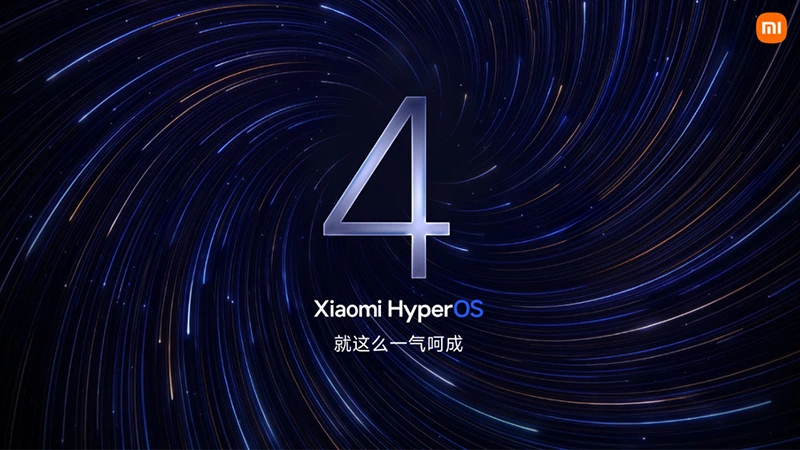
Xiaomi is now joining that trend with HyperOS 4, its next major software update based on Android 17.
The company has introduced a substantially revised visual style alongside new customization options, performance changes and additional AI features.
The beta rollout begins in China on August 14, with the first supported devices including models from the Xiaomi, Redmi and tablet ranges.
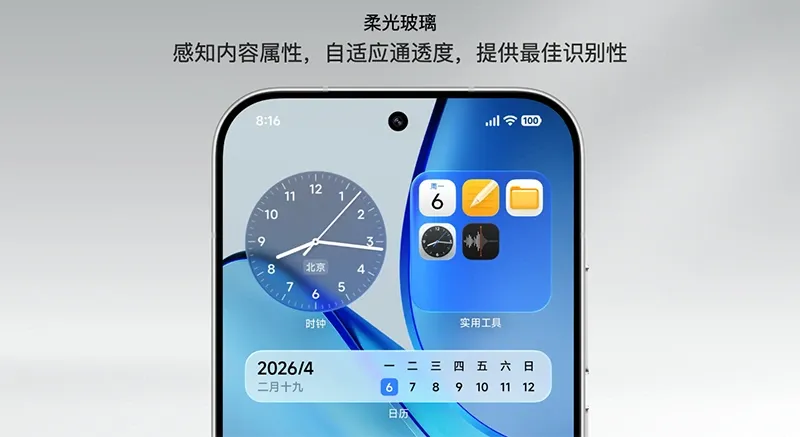
The most immediately noticeable part of HyperOS 4 is its new glass-inspired interface.
Xiaomi is using translucent layers, blurred backgrounds, lighting effects, reflections and rounded elements throughout parts of the system. Folders, widgets, the lock screen and other interface components receive more visual depth, creating an appearance that is considerably different from earlier versions of HyperOS.
The resemblance to Apple's Liquid Glass is difficult to overlook.
Apple describes Liquid Glass as a translucent and dynamic material that reflects and refracts its surroundings, with the appearance changing depending on the content beneath it.
Apple also uses the material across navigation elements, controls, widgets and app icons, with floating interfaces and rounded shapes becoming important parts of the overall design language.
HyperOS 4 does not reproduce every part of Apple's implementation, and Xiaomi has its own visual choices and system-level features.
Even so, the similarities are apparent at the design level.
Both systems place greater emphasis on transparent or semi-transparent surfaces, blur, layered interfaces, rounded controls, light effects and elements that appear to sit above the underlying content.
In that sense, describing HyperOS 4 as Liquid Glass-inspired is reasonable, even if the two systems are not technically identical.
Xiaomi is also not the only Android manufacturer moving in this direction.
Samsung's One UI 8.5 beta introduced several changes that have been compared with Liquid Glass, including floating navigation elements, rounded interfaces and additional transparency in some system applications.
OPPO has also introduced increasingly light-based and dimensional visual effects in ColorOS, while its own design materials describe a new approach involving natural light, shadows, glow and depth.
That makes Xiaomi's approach part of a broader shift rather than an isolated case.
The difference is that HyperOS 4 makes the glass-like aesthetic particularly visible across the system, making comparisons with Apple's redesign more immediate.
Other Android manufacturers have adopted individual elements or similar visual principles without necessarily reproducing the entire Liquid Glass concept.
This is also where Apple's influence on the wider smartphone industry becomes more noticeable.

Apple did not invent transparency, blur, rounded interfaces or glass-like digital materials.
Similar ideas have appeared in operating systems and software interfaces for years. What Apple did with Liquid Glass was combine those ideas into a clearly defined system-wide design language and put them at the center of a major iOS redesign.
That gave the aesthetic a much higher profile and made it something competitors could be compared against.
The result is that Apple appears to be setting another visual direction that other smartphone makers are responding to.
The same pattern has happened with other aspects of smartphone software before, although the degree of similarity varies from one manufacturer to another. In the case of Liquid Glass, the resemblance is especially easy to notice because the defining characteristics are highly visual.
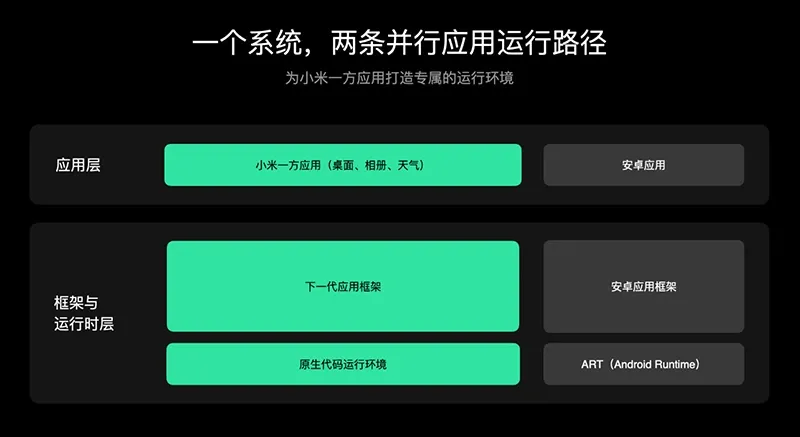
HyperOS 4 also goes beyond its appearance. Xiaomi is introducing Super AI Assistant 2.0, powered by its MiMo model, along with features for tasks such as voice transcription, note organization and device control.
The update also brings changes intended to improve system responsiveness and application performance.
Xiaomi says some applications can open up to 18% faster, although such figures are based on the company's own testing.
The beta rollout is being conducted in stages rather than reaching every supported device simultaneously.
Xiaomi has published an initial group of eligible devices, with additional models scheduled for later phases. This means the appearance of HyperOS 4 on a particular Xiaomi or Redmi phone will depend on its place in the rollout schedule rather than simply whether the device is part of the overall supported lineup.
For Xiaomi users, therefore, HyperOS 4 represents both a functional update and a significant visual change.
For the broader Android market, it is another indication of how quickly Apple's Liquid Glass design language has become a point of reference.
Xiaomi is not alone in adopting elements that resemble it, and the similarities do not necessarily mean that Android manufacturers are abandoning their own approaches.
But with HyperOS 4, the influence is visible enough to make one thing clear: Apple's latest redesign has already begun shaping what competing smartphone interfaces look like, even outside Apple's own ecosystem.






















































































































































































































































































