History has a way of repeating itself whenever a powerful new tool arrives. People once worried that the printing press would flood the world with dangerous ideas, that electricity would leave ordinary workers obsolete, or that personal computers would only ever serve the wealthy and the technically skilled.
In each case, those fears proved partly true and largely incomplete.
The tools spread, people adapted, and the centers of power shifted in unexpected ways. Today, we stand at a similar threshold, only the scale feels larger and the timeline more compressed.
The defining question of our age is no longer whether superintelligence will exist. Given the rapid pace of technological advancement, that outcome increasingly seems inevitable.
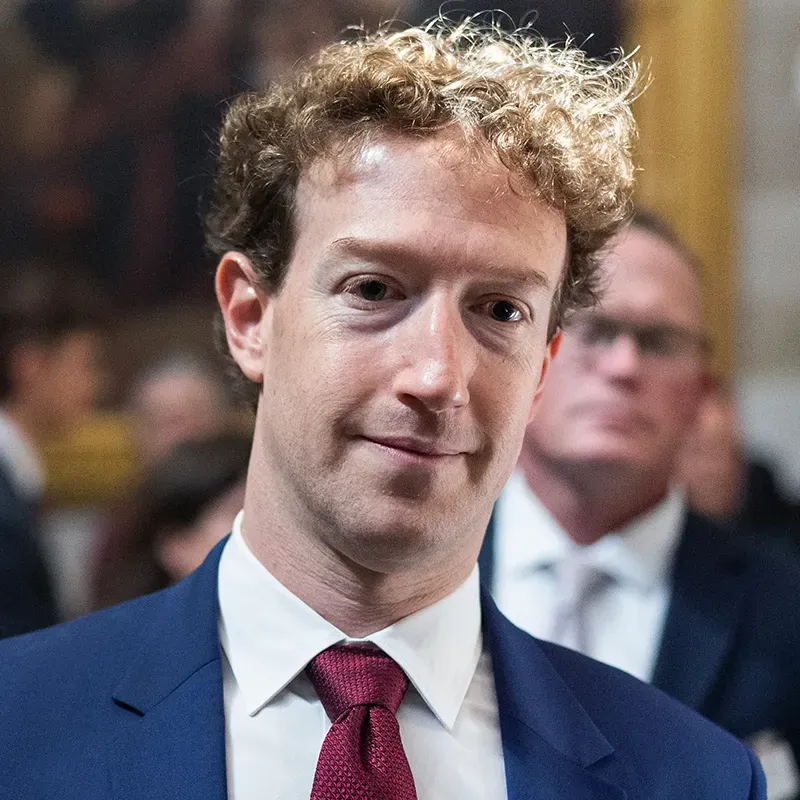
As Meta CEO Mark Zuckerberg argues, the more important question is who will get to use it.
Will the most capable systems remain locked inside a few corporations, governments, and laboratories, or will they become personal instruments available to individuals, small teams, and ordinary citizens?
Mark Zuckerberg laid out one clear answer in a Wall Street Journal essay.
Titled "The AI Future Is for Everyone," he said that:
We are fortunate to live at an incredible moment in history. In the next few years, people will be able to use superintelligence beyond human capacity to create and discover extraordinary new things, build new businesses, express our ideas, learn new concepts, and improve our lives, health, relationships and careers.
The defining question of our age isn’t whether superintelligence will exist, but who will have access to it. Will it be centralized and restricted to a few institutions, or will it be a tool that empowers everyone?
He argues that centralized control of superintelligence is the greater risk.
History, he writes, shows that absolute power, even when guided by the best intentions, rarely produces safe or prosperous outcomes. Novel ideas rarely come only from established institutions. They come from the brothers in a bicycle shop, the bookbinder’s apprentice, the kid in a garage.
Widely distributed intelligence, he contends, will multiply invention rather than merely automate existing work.
It will make it easier for more people to start businesses without raising vast sums of capital.
And it will create natural checks and balances: when everyone has a superintelligent lawyer, or researcher, or creative partner, no single institution can dominate the conversation.
And here, Meta presents itself as a company committed to individual empowerment, open inquiry, and a balance of power.
That vision sounds appealing on paper. Yet Meta has repeatedly demonstrated how difficult it is to keep powerful systems aligned with users' expectations of privacy and control.
Over the years, the company has faced a series of privacy and security controversies. Those episodes matter because they expose a tension at the heart of the access debate. Meta argues that concentrating superintelligence is dangerous, yet it also controls one of the world's largest concentrations of user data, attention, and computing resources.
The deeper question is not whether any one company is hypocritical. It is whether the institutions racing to build superintelligence can be trusted to decide who gets access once these systems become truly transformative.
AI is advancing faster than the social and political frameworks meant to govern it. Zuckerberg is right that the conversation has shifted from whether superintelligence will exist to who will have access to it. History may favor the diffusion of power, but the recent record of the companies making that argument shows how easily good intentions can collide with competitive pressure and incomplete safeguards.






















































































































































































































































































