As part of the Google's "AI for Social Good" program, the company launched "AI Impact Challenge."
The initiative would grant about $25 million globally to those humanitarian and environmental projects seeking to use artificial intelligence (AI) to speed up and grow their efforts. This will assess proposals that use AI to solve "some of the world’s greatest social, humanitarian and environmental problems," explained Google.
This includes, and may not limited to, solving big and pressing problems regarding issues around crisis relief, environmental conservation or sex trafficking.
And in addition to a portion of the $25 million prize, accepted proposals will receive Google Cloud credits for computing costs, as well as guidance from Google Cloud and DataKind, a data science nonprofit. The winners will also be given access to Google's technical resources, as well as be appointed an expert from Google to help develop their projects.
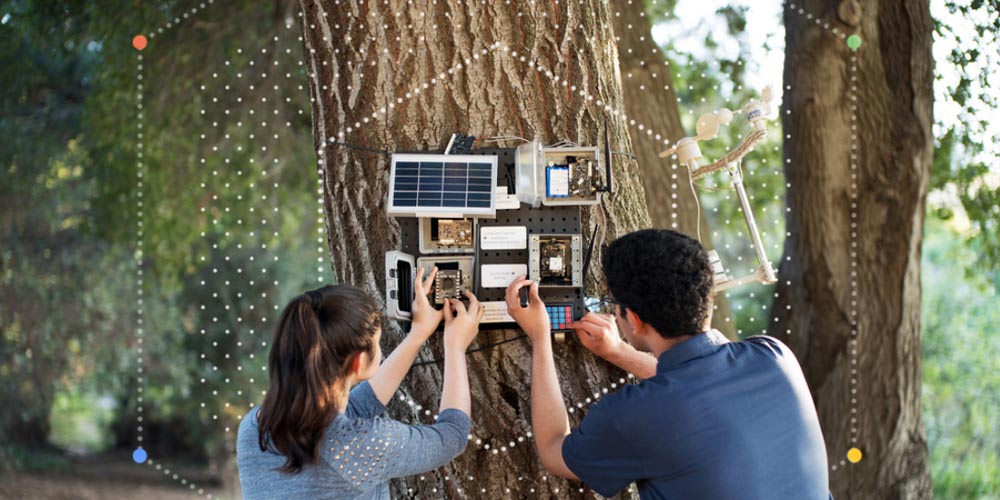
Interested individuals or companies don't have to be AI experts to apply.
Google has released a guide to help identify projects that might be worthy of a prize, as well as examples of AI projects that fall within the scope of what Google is hoping to see.
For example, the company has given some examples where good AIs have been used, that include: wildlife conservation, employment, flood prediction, wildfire prevention and infant health.
In addition to the competition, Google also announced a project for detecting humpback whales in recordings made over the last 15 years, meant to help marine researchers better understand whale populations and behaviors. Google said that it learned how to detect the singing of these whales with 90 percent precision from 170,000 hours of underwater audio recordings gathered by the U.S. government.
Showcasing this project, Google wants to inform those interested with something to inspire.
Google AI COO Irina Kofman said that thousands of employees are eager to work on "social good" projects, even though they do directly generate revenue.
With this initiative, Google is focusing more on humanitarian projects that leverage AI. It's also one strategy that could help Google in expanding its business by recruiting potential candidates, as well as aiding the company that received criticisms when it was interested in extending its AI business to other areas, such as military work.
With Project Maven, Google wanted to use AI to help the military and the U.S. Department of Defense. But employees challenged Google's decision to take part in this project, with more than 4,000 employees reportedly signed a petition addressed to CEO Sundar Pichai demanding the company to cancel the project.
After employee backlash, Google said it would not renew the deal to analyze U.S. military drone footage.
Google has also received criticisms for Duplex, which uses AI to book things like restaurant reservations and hair appointments through the Google Assistant. Duplex sparked controversies because the software speaks with a strikingly lifelike voice, complete with verbal ticks like "um" and "uhh."
Critics were worried about the software's ability to deceive people. Google later clarified that it would disclose calls that are automated.
"We're all grappling with questions of how AI should be used," said Google's artificial intelligence chief Jeff Dean, indirectly addressing these issues.