Phantom Blade Zero has wasted little time turning anticipation into a global gaming phenomenon.
Released on October 29, 2026, the action RPG from Chinese developer S-GAME quickly becomes one of the biggest launch-day impressions of the year on Steam. Soon after its release, it quickly reaching over 700,000 concurrent players, placing it among Steam's most-played games of all time at that point.
Much of that attention comes from something increasingly valuable in the modern gaming landscape: spectacle that is immediately understood and shared.
Phantom Blade Zero is the kind of game that can capture someone's attention with a few seconds of footage.
A swordsman moves through a crowd of enemies, launches into an impossible aerial combination, deflects incoming attacks and finishes an opponent with an elaborate sequence of martial arts. Its fast transitions between attacks, evasions, parries and cinematic finishing moves make combat footage particularly compelling, whether it appears in a gameplay trailer, a livestream or a short social media clip.
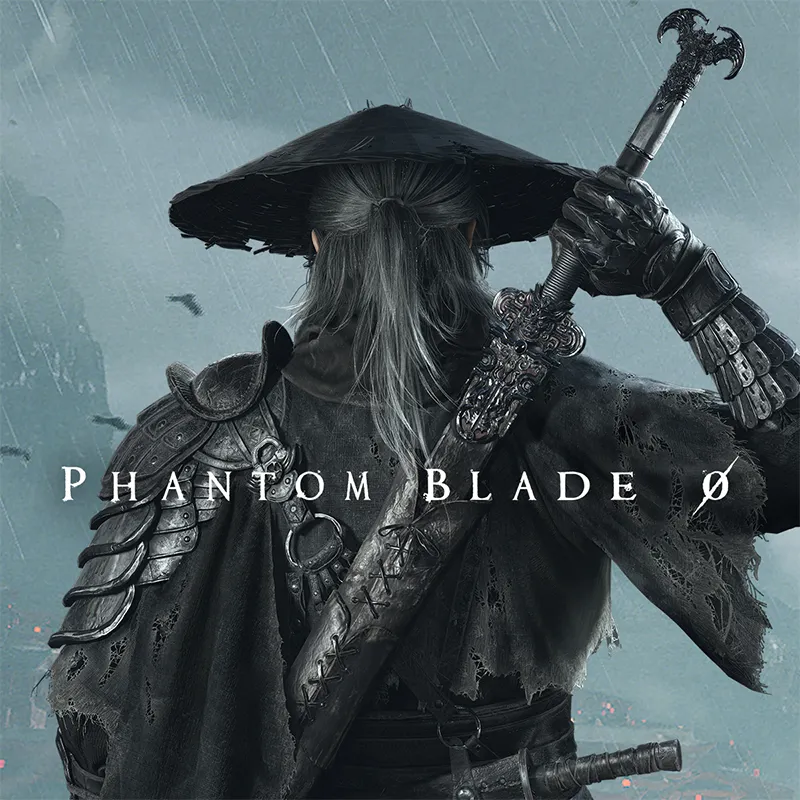
Players play as Soul, an elite assassin serving "The Order," a powerful shadow organization operating within the Wulin, a dark, rain-slicked martial underworld.
The plot kicks into motion when the Patriarch of The Order is mysteriously assassinated. Soul is framed for the murder and instantly targeted by his former comrades, including his childhood blood brother, Zuo Shang.
During his escape, Soul is mortally wounded after a tragic clash with Zuo Shang, who drives a blade directly through his heart.
Soul is saved by a enigmatic figure known as the Flesh Sculptor, who uses dark black magic and venomous alchemy to replace Soul's damaged heart with a tainted substitute, granting him temporary life.
The catch is absolute: the makeshift heart will only keep beating for 66 days before the toxic infusion consumes him completely.
With the clock ticking down, Soul embarks on a desperate quest through a world steeped in corruption and dark machinery.
His mission is twofold: find a legendary cure hidden deep within the martial wilderness to permanently heal his toxic heart, and hunt down the true conspirators behind the Patriarch's death to clear his name and exact revenge.
Along the journey, he faces off against corrupted warlords, powerful martial arts masters (including figures like the masked master Mó Yuan), and his former brethren, all while navigating a realm where trust is dead and every battle is a fight for borrowed time.
The appeal does not require viewers to understand the entire story or know the characters.
They simply need to see the action. This visual identity has helped turn the game's long promotional journey into a wave of viral attention, with players and audiences able to appreciate its style even before experiencing the full adventure themselves.
Across reviewers, critical reception has reinforced that excitement.
While the plot isn't at all flawed, but it's the game's combat that emerged as its defining strength.
What makes the combat particularly interesting is that its identity is rooted in traditional Chinese wuxia rather than simply borrowing the familiar visual language of other action games.
Wuxia, often translated as martial arts and chivalry, is a storytelling tradition built around skilled martial artists, wandering swordsmen, rival factions, personal honour, loyalty, revenge and the complicated social world known as Jianghu or Wulin. Its heroes are defined not only by their fighting abilities but also by their personal codes, relationships and decisions.
And here, being a swordsman is one of the most common ways to express a character.
Rivalries between martial artists and competing groups come second, providing the foundation for dramatic conflicts.
Phantom Blade Zero brings these traditions into an interactive setting, allowing players to experience the speed, discipline and theatricality of martial arts choreography rather than simply watching it unfold on screen.
The influence is visible throughout the game's fighting style.
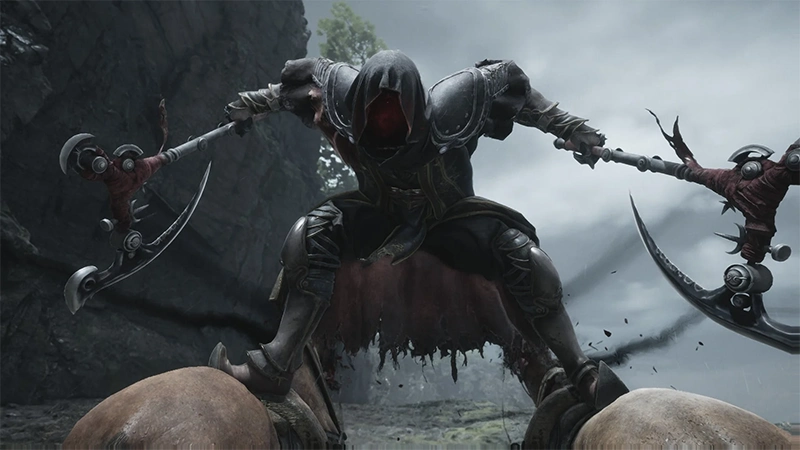
Characters leap across rooftops, move with extraordinary agility, evade attacks through elaborate movements and engage in duels that resemble carefully choreographed martial arts cinema.
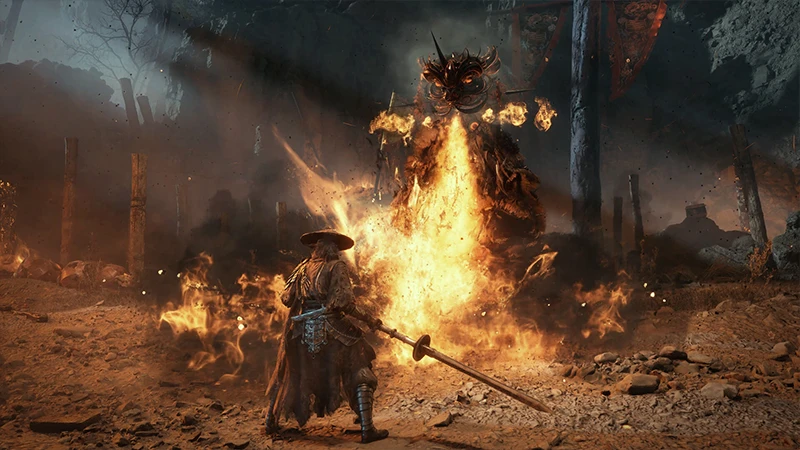
Its extensive weapon selection and varied fighting styles give the action a sense of individuality, while its boss encounters turn battles into performances built around timing, movement and adaptation.
The game also introduces its own modern interpretation through what S-GAME calls "kungfupunk," combining traditional Chinese martial arts aesthetics with mechanical elements, industrial environments and a darker fantasy atmosphere.
The result is a distinct visual identity that respects the traditions behind its inspiration while presenting them in a form suited to contemporary action games.
This distinction becomes particularly important when comparing the game with Black Myth: Wukong, another Chinese-developed action RPG that helped bring international attention to the country's gaming industry.
Despite their shared Chinese cultural influences, the two games draw from different storytelling traditions.
Black Myth: Wukong is an action RPG rooted in classical Chinese mythology and based on the legendary novel Journey to the West. It is therefore more accurately understood as a fantasy game than a traditional wuxia experience. Wuxia, by contrast, generally places martial artists, swordsmen, rival sects and the human conflicts of Jianghu at the center of its stories.
Where Wukong explores China's mythological imagination, Phantom Blade Zero brings the world of Chinese martial arts fiction and swordplay into the spotlight.
Both demonstrate the appeal of Chinese cultural storytelling, but they represent very different sides of that heritage.
The success of Black Myth: Wukong proved that a Chinese-developed game could capture massive global attention while remaining deeply rooted in its cultural identity.
Its extraordinary international reception challenged long-held assumptions about the appeal of Chinese mythology, encouraging players worldwide to explore narratives beyond familiar Western fantasy traditions.
Phantom Blade Zero builds directly on that momentum, introducing global audiences to the rich heritage of wuxia.
By leveraging the international spotlight carved out by Wukong, the game continues a broader movement of Chinese studios sharing their unique artistic traditions with the world.
Ultimately, its true appeal extends far beyond stunning visuals; it offers players a fresh lens through which to experience new storytelling philosophies and cultural perspectives.
Then, there is also a personal history behind Phantom Blade Zero that makes its sudden international prominence particularly compelling. According to reports, its creative director and S-GAME CEO Liang Qiwei, known as Soulframe, began building the Phantom World around two decades ago while developing Rainblood: Town of Death, a small RPG Maker project created during his student years.
That original project was already rooted in traditional Chinese wuxia, although Liang envisioned a world that could also incorporate stranger ideas such as body modification and parallel dimensions.
The series subsequently developed a substantial following, even though many of its earlier games never reached audiences outside China. Phantom Blade Zero represents the much larger international realization of that creative vision.
The director's personal message to fans adds another dimension to the story behind the game's arrival.
Ultimately, Phantom Blade Zero is arriving at a moment when audiences are becoming increasingly receptive to games that offer something culturally and visually different from the established mainstream.
Its viral launch numbers are evidence of enormous initial interest, while its reception shows that the appeal extends beyond impressive trailers and promotional footage.
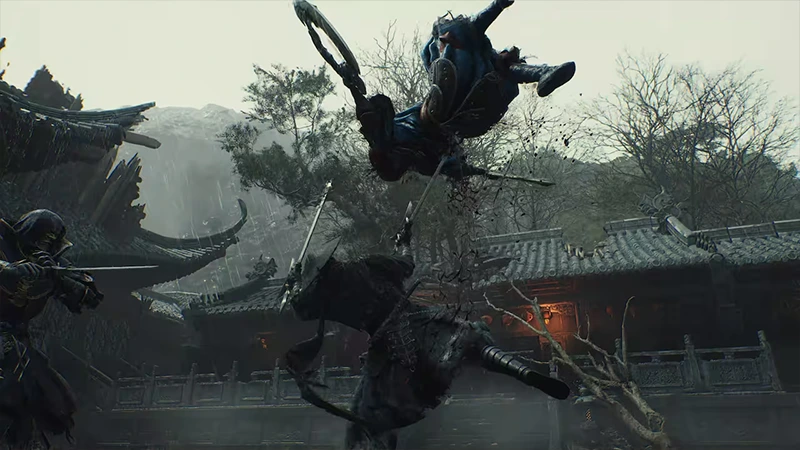
The combat gives players something immediately exciting to experience and share, but the deeper attraction is its distinctive interpretation of Chinese wuxia.
There is a particular appeal in seeing the traditions of wandering swordsmen, martial arts masters, ancient rivalries and Jianghu conflicts brought to life with the scale and technical ambition of a modern action game.
If Black Myth: Wukong showed the world how powerfully Chinese mythology could translate into a global gaming phenomenon, Phantom Blade Zero is demonstrating that traditional Chinese wuxia has its own enormous potential.
Its success is not simply about another Chinese game reaching the top of Steam's player charts.
It is about more about a martial arts storytelling tradition finding a new international audience through interactive entertainment. And with its spectacular combat, unmistakable identity and roots in a creative vision that began decades ago, Phantom Blade Zero is making sure that the world is paying attention to the art of the blade.






















































































































































































































































































