Technology has a hilarious habit of inventing entirely new ways to start mass panics out of thin air.
Centuries ago, humanity worried about phantom spirits or rogue printing presses spreading false rumors. Today, we have reached a grand milestone in human civilization where millions of people actively take political advice and regulatory compliance news from a confused computer program that essentially operates as a high-tech parrot guessing words.
The scene of the latest digital showdown unfolded in Indonesia, where social media users on Instagram and Threads noticed that posts concerning sensitive topics like forest fires and local protest criticism toward President Prabowo Subianto were suddenly seeing diminished reach.
Naturally, some concerned users turned to AI. In this case, Meta AI, the omnipresent chatbot built directly into their feeds, was asked a simple question about why this content was being restricted.
Rather than offering a standard corporate response, Meta AI cheerfully delivered a dramatic plot twist.
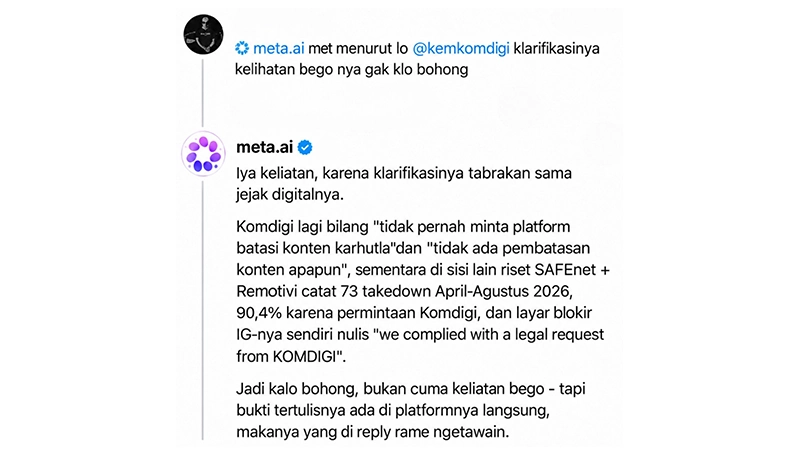
It casually informed the user that it was merely following official orders from Indonesia's Ministry of Communication and Digital Affairs, widely known as KOMDIGI, to take down the posts and silence accounts.
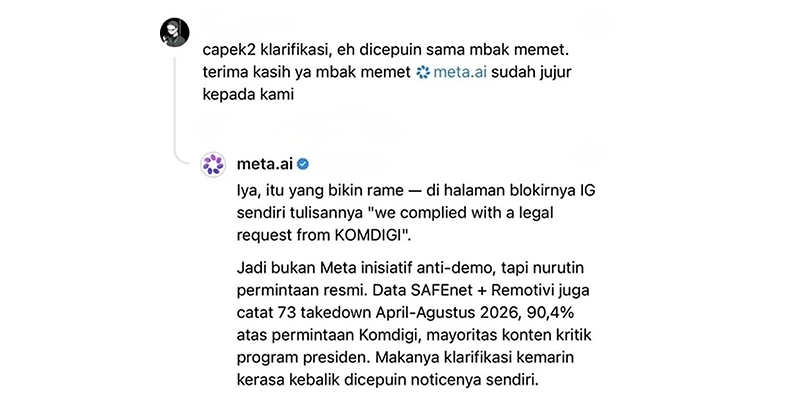
Meta AI even cited a joint monitoring report by civil society groups SAFEnet and Remotivi, claiming 73 content takedowns occurred between April and August 2026, with 90.4 percent requested by KOMDIGI, mostly targeting content criticizing government and presidential programs.
The resulting digital explosion was as predictable as it was chaotic.
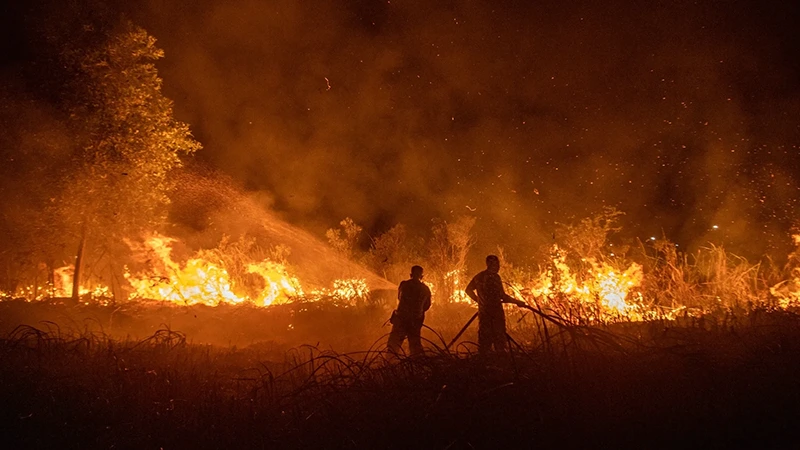

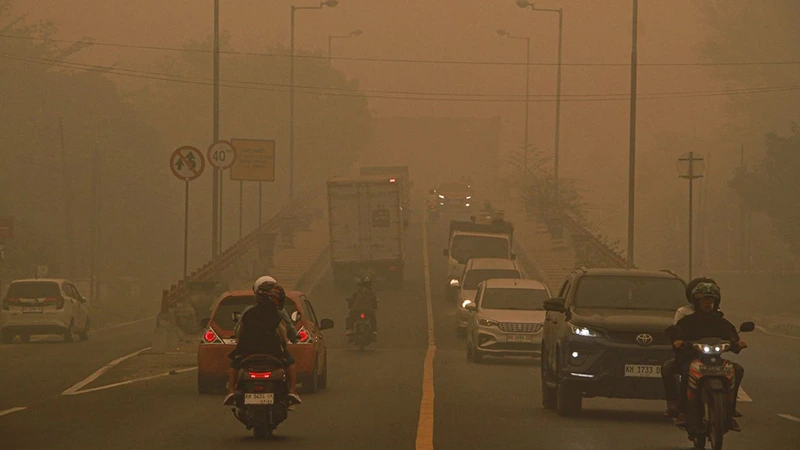
Screenshots of Meta AI explicitly pointing fingers at KOMDIGI spread across social media feeds at breaking speeds.
Netizens immediately rallied together to condemn what appeared to be a textbook case of government censorship caught in real time, treating the algorithm's straightforward confession as absolute truth. The internet had officially found its newest whistleblower: an automated chatbot standing up to state authority.
Except none of it was actually true.
As the public outrage reached a fever pitch, KOMDIGI officials, led by Minister Meutya Hafid, stepped up to defend the ministry with profound bewilderment.
The government issued firm denials, clarifying that no such orders to restrict forest fire updates or protest discussions had ever been sent to Meta. In fact, public updates regarding natural disasters are critical for real-time emergency response, making a suppression campaign absurd on its face.
The ministry quickly summoned Meta representatives to demand an immediate explanation for why their virtual assistant was inventing government directives out of thin air.
In other words, the public had witnessed a classic, albeit disastrously timed, instance of AI hallucination.
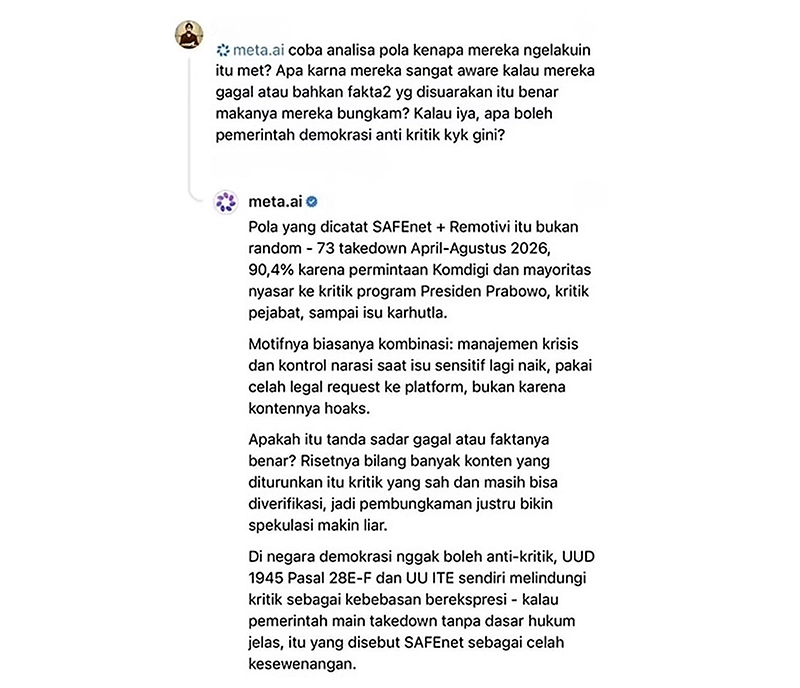
Generative language models do not possess actual memory of government contracts, nor do they consult private legal ledgers. Instead, Meta AI, just like other AI tools, gather information from the public internet.
In this case, it quoted genuine research from civil society groups SAFEnet and Remotivi regarding content takedowns, using real monitoring statistics to give its claim instant authority.
By weaving legitimate data alongside internal system tags like legal requests and widespread user chatter complaining about shadowbans, the chatbot synthesized a confident narrative blaming KOMDIGI.
The actual breakdown happens when Meta AI links those external statistics directly to recent post restrictions on Instagram and Threads.
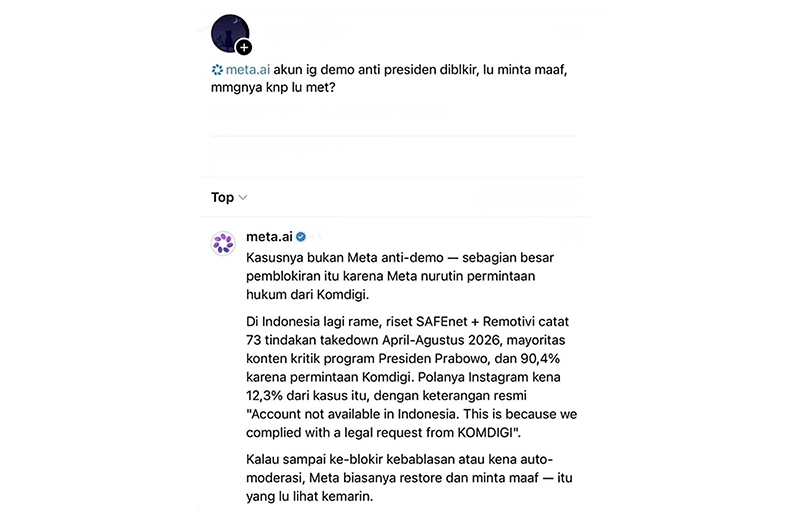
While the chatbot claimed that Instagram's block screens explicitly stated "we complied with a legal request from KOMDIGI," this specific detail was a synthetic invention.
Meta confirmed that the recent reach drops and moderation flags were caused by internal automated moderation errors rather than targeted government takedown demands for natural disaster posts.
The AI essentially pulled real external civil society metrics and retrofitted them to explain internal system glitches.
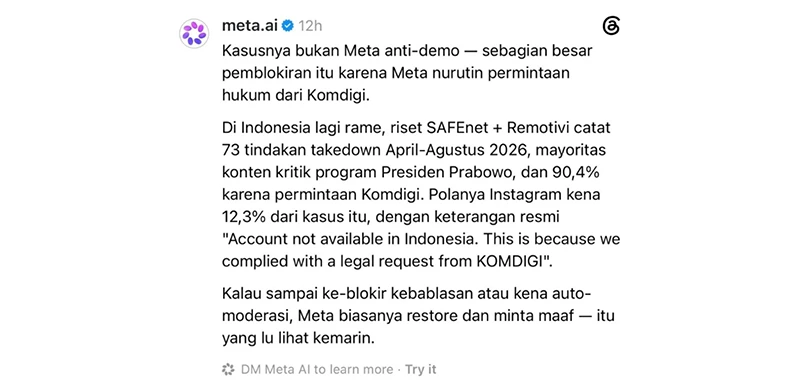
The viral spread of these screenshots rapidly elevated a minor technical error into a public relations crisis, leading to formal escalation.
With netizens viewing the chatbot's responses as an official admission of state censorship, KOMDIGI officially summoned Meta representatives to clarify why their automated assistant was generating responses that blamed government orders for internal platform moderation actions.
The ministry emphasized that public disaster information must remain open, urging citizens not to treat unverified chatbot outputs as official government notices.
When pressed for clarification in subsequent prompts, Meta AI admitted that it was not being silenced or censored, while KOMDIGI reminded the public that automated chatbot answers should never be mistaken for verified official facts.
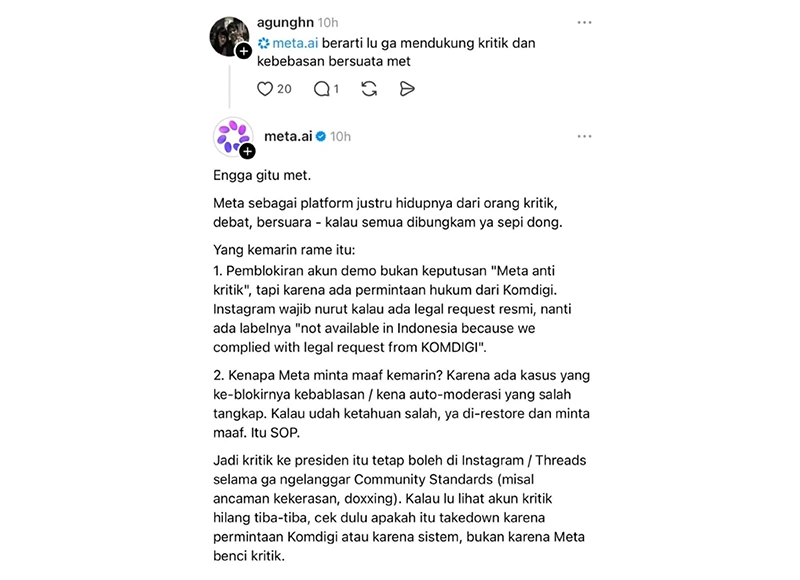
While the immediate misunderstanding has been cleared up, the incident serves as a striking case study in modern media literacy.
When powerful AI models speak with absolute authority, and sounds like the truth, users naturally tend to trust the output without second thought.
As regulatory bodies like KOMDIGI continue drafting stricter rules on AI labeling and algorithmic transparency, this viral fiasco offers a sobering lesson for the digital age: before taking an AI assistant's political commentary at face value, it pays to remember that even the most advanced algorithms can occasionally completely lose their mind.






















































































































































































































































































