Africa is a continent that is the second world's largest and the second-most populous after Asia.
As many conflicts in the African countries ceased in general, coinciding with the many countries in the region abandoning their communist-style command economies, they started opening their market to reform.
This improved stability, and economic health, resulting in an increase in foreign investment.
Several African economies are already among the world's fastest growing as of 2016, and that can be attributed to the facilitated diffusion of information technologies and specifically the internet and mobile telephones.
With the continent having more than a billion people, African's average population is the youngest amongst all the continents, with a median age in 2012 was 19.7, when the worldwide median age was 30.4.
What this means, many African living in the continent are young, and eager to embrace newer technology.
And that includes embracing Bitcoin as a method of payment.
In 2020, a cryptocurrency boom happened in Africa.
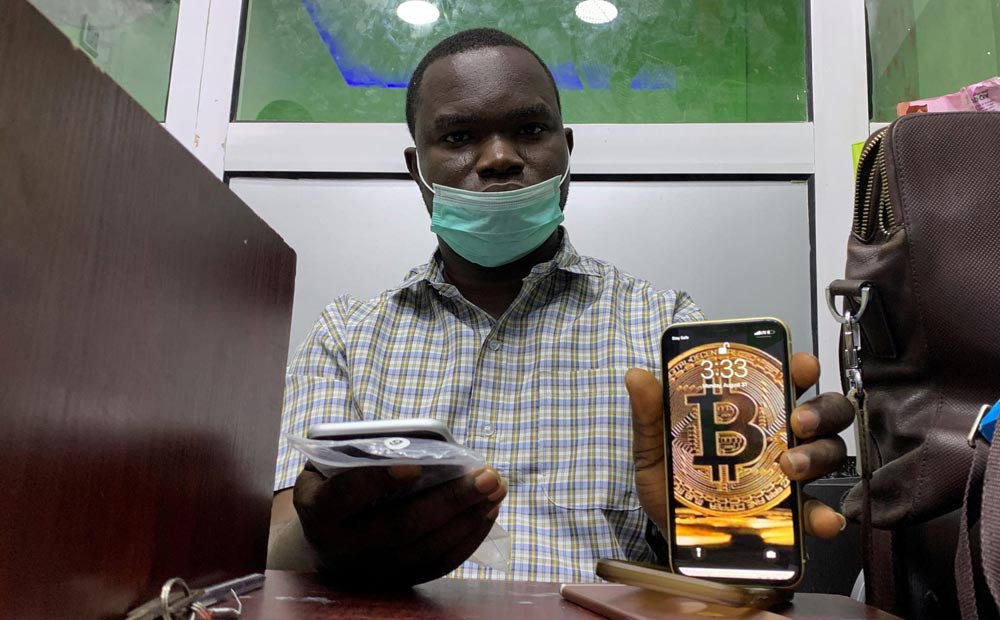
As reported by NBC News, merchants have been using Bitcoin to pay their suppliers, especially when they buy things from abroad, like from China and the United Arab Emirates.
Many of the suppliers asked to be paid in cryptocurrency, for speed and convenience.
This makes the merchants no longer required to buy U.S. dollars using the local currency, or shell out fees to money-transfer firms.
Merchants also said that by using cryptocurrency, their business is protected against currency devaluation, and enabled them to grow at the same time.
“You don’t have to pay charges, you don’t have to buy dollars,” said the merchant, as reported by NBC News.
The same is reported Chainalysis. The U.S. blockchain research firm found that monthly cryptocurrency transfers to and from Africa of under $10,000 - typically made by individuals and small businesses - jumped more than 55% in a year to reach $316 million in June 2020.
The number of monthly transfers also rose by almost half, surpassing 600,700, according to Chainalysis.
Much of the activity took place in Nigeria, the continent’s biggest economy, with small cryptocurrency transfers totaled nearly $56 million in June, nearly 50% more than a year before.

"Roughly $562 million worth of cryptocurrency was transferred directly from overseas addresses to ones based in Africa in retail sized payments," wrote Chainalysis in a blog post.
The boom in Africa is quite late, considering that Bitcoin from Satoshi Nakamoto in 2020 is already 11 years old. In technology's term, that is a very long time.
But that happened because of several reasons.
First, the internet in the continent is still limited by a lower penetration rate when compared to the rest of the world. Measurable parameters such as the number of ISP subscriptions, overall number of hosts, IXP-traffic, and overall available bandwidth all indicate that Africa is far behind the "digital divide".
Second, Africa also exhibits an inner digital divide, with most internet activity and infrastructure concentrated only in several countries, like South Africa, Morocco, Egypt as well as smaller economies like Mauritius and Seychelles.
But tech-savvy people have adapted quickly to Bitcoin, knowing that weaker local currencies made it harder for them to get U.S. dollars, the de facto currency of global trade, and also because of the complex bureaucracy that complicates money transfers in and out of Africa.
Bitcoin users interviewed by Reuters, based in five countries in Africa said that the cryptocurrency was helping people make their businesses nimbler and more profitable.
“People are very adoptive of any technology that will make their life easier,” said Frankline Kihiu, a cryptocurrency broker in Kenya’s capital, Nairobi.
“In most African countries, there are lots of government restrictions that bitcoin takes away.”
Cryptocurrencies like Bitcoin can cross borders with ease, where other currencies encounter friction. It’s also often faster and cheaper than legacy payments.
This cryptocurrency boom in Africa, is an example of how Bitcoin, the original and biggest cryptocurrency, is finding the practical use where it has largely failed elsewhere.