Every few months, the internet seems to hold its breath over a new doomsday prophecy.
Whether it is a predicted solar flare, a rogue asteroid, or a coordinated cyberattack, modern digital anxiety has a way of turning routine calendar dates into viral panic.
Throughout November 2026, social media feeds across TikTok, X, and Telegram were flooded with ominous warnings that the modern world was about to go completely dark.
And at this time, at the center of the storm, was a chilling, robotic voice delivered from behind a familiar smiling mask, urging millions of viewers to "prepare yourselves" for an imminent global blackout.
The viral rumor promised nothing short of a digital apocalypse.
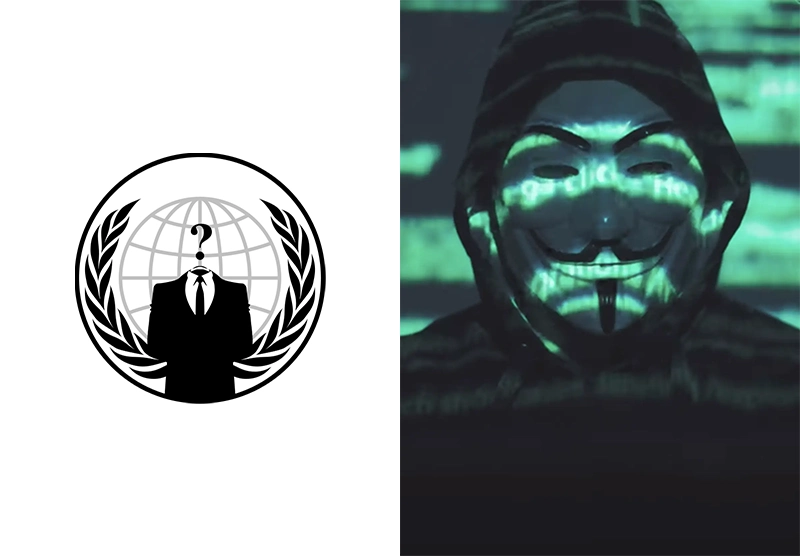
According to the posts circulating online, a massive, coordinated shutdown was slated to begin in November, cutting off electricity and knocking out the global internet for up to 90 days.
More extreme versions of the theory claimed hackers would wipe major bank accounts to zero while an advanced AI resets global systems. The masked figure also urges viewers to stockpile water, canned food, and emergency supplies.
What made this particular rumor feel unusually plausible to everyday users was a string of real-world technical disruptions that happened in November.
For starters, on November 12, a massive Microsoft 365 outage took down Outlook, Teams, and related services for millions of users worldwide, caused by an internal networking gateway defect rather than a cyberattack.
That disruption was quickly followed by a nationwide aircraft ground stop on November 13 due to a telecommunications failure, and temporary software glitches at major American banks like Chase and Bank of America on November 16.
Conspiracy theorists stitched these isolated technical failures together with a 2023 episode of The Simpsons titled "It's a Blunderful Life," which featured a fictional blackout on November 17, and pointed to a scheduled United States Emergency Alert System test on November 17 as proof that authorities were preparing to pull the plug.
In reality, the Federal Emergency Management Agency and the Federal Communications Commission had announced months earlier that the November 17 broadcast was merely a routine, one-minute test on television and radio that would not even buzz cellphones.
Adding fuel to the panic was the visual branding of the viral video itself, which leaned heavily on the imagery of Anonymous.
For nearly two decades, the figure wearing the stylized Guy Fawkes mask, popularized by the graphic novel and film V for Vendetta, has served as one of the internet's most recognizable symbols of digital rebellion.
Whenever a video features that pale, mustachioed face speaking in a synthesized monotone against a dark background, it immediately commands attention.
Because the Anonymous banner has historically been associated with high-profile data leaks and disruptions, bad actors and clickbait creators frequently borrow the aesthetic to manufacture fear, spread terror, or drive engagement for financial gain.
As the blackout video racked up millions of views, prominent Anonymous-affiliated social media accounts stepped in to set the record straight.
They swiftly debunked the viral warning, clarifying that the clip was not an authentic Anonymous statement at all, but rather a speculative, sensationalized production uploaded by a random YouTube channel chasing clicks.
Fact-checkers and cybersecurity analysts echoed that assessment, noting that the video simply recycled debunked global blackout rumors around a routine American alert test and already-resolved software outages, offering zero supporting evidence of any coordinated cyber threat.
True to form, November 17 arrived, the one-minute broadcast test ran without incident, and the world's power grids and internet connections kept humming along uninterrupted.
Beyond the relief that the lights stayed on, the episode sparked a widespread online debate about how Anonymous actually works and who gets to speak in its name.
Unlike a traditional organization or a structured hacker syndicate, Anonymous is a decentralized international collective of activists and hackers widely recognized for coordinated cyberattacks and digital protests against governments, corporations, and institutions.
Because since Anonymous is leaderless, has no central organization, and no formal membership, anyone with a video editor and a Guy Fawkes mask can produce a clip and claim to act under the banner.
While that leaderless structure has historically allowed the movement to mobilize rapidly around global causes without a single point of failure, it also leaves the public constantly guessing whether a viral warning is a genuine call to digital activism or just another internet hoax designed to scare people into clicking share.