In the world of advanced computing, where powerful chips power everything from data centers to AI research, international rules on exports can create complicated pathways for companies operating across borders.
Recent reports have drawn attention to one such case involving a Singapore-based cloud computing firm and its operations in Indonesia, as authorities look into the movement of restricted technology.
The company in question is Megaspeed International, a Singapore cloud provider and Nvidia Asia-Pacific partner that supplies computing power.
In Indonesia, it operates through a local subsidiary known as PT Megaspeed International Indonesia, which was incorporated in May 2024.
And a raid found that it is empty.
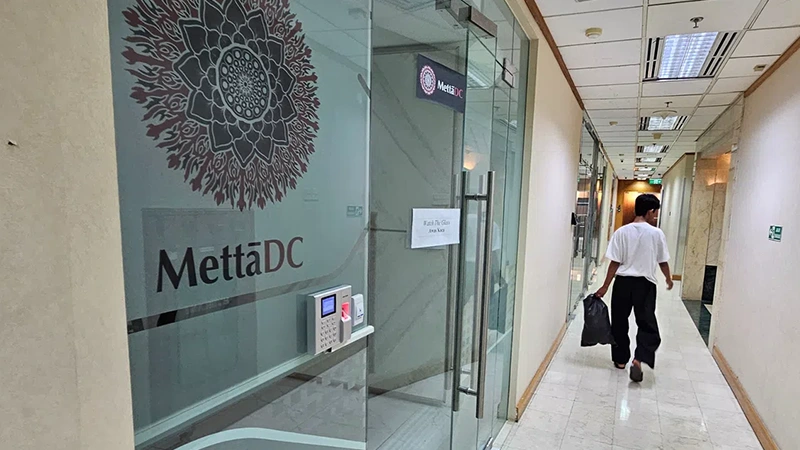
PT Megaspeed International Indonesia's address in Indonesia is registered on the fifth floor of Cyber Building 1 at Jalan Kuningan Barat in South Jakarta.
The firm does not appear as a direct tenant in that building; instead, it uses office space belonging to PT MettaDC Teknologi Indonesia, a carrier-neutral data center and sovereign AI infrastructure provider, which first project in Indonesia was back in 2022, when it established a 30 MW data center called MettaDB ID01 using an investment worth $200 million in West Java.
It is also said to rent additional space at a facility in the Jababeka Industrial Estate in Cikarang, Bekasi, West Java, which is owned by hyperscale data center operator PT HDC.
Company registration records indicate that Kai Kang, a 29-year-old born in Shanghai, is listed as a director of the Indonesian unit, as well as of Megaspeed entities in Malaysia and Thailand.
Kang has also been named as the sole officer of Megaspeed affiliates registered in the U.S and Australia in 2024, with one Australian filing listing a residential address at a newsagency in a regional town outside Melbourne.
His family has stated that he lives in Shanghai and has no involvement with the Singapore parent company.
On the Singapore side, Tan Yong Pong, also known as James Tan, is listed as the sole director of Megaspeed International and of its parent Swiftdata.
Alice Huang, also known as Huang Le, previously served as a director and managing director of Megaspeed from March to November 2023 before ownership transferred; she is a Chinese citizen and is not related to Nvidia’s founder Jensen Huang.

Earlier in 2026, officers from the Indonesian National Police's Criminal Investigation Department searched the Jakarta office of PT Megaspeed International Indonesia.
The search took place at the request of the U.S. Federal Bureau of Investigation as part of an inquiry to trace Nvidia chips that Megaspeed had purchased.
In the area enclosed by tinted glass walls near the elevators, investigators found server racks on the premises but no graphics processing (GPU) units at all.
In fact, the racks appeared empty, and never to have been unpacked or put into use, which led the source, a senior Indonesian government official who spoke on condition of anonymity, to suggest that the chips had never been installed there in the first place.
The official alleged that most of the Nvidia hardware acquired by Megaspeed entities had likely been shipped to Indonesia, and that investigators believe much of it was then moved onward to China, possibly by private jet.
The head of the police's international relations division declined to comment on the matter.
This was described as the first known enforcement action in Indonesia connected to the broader case.
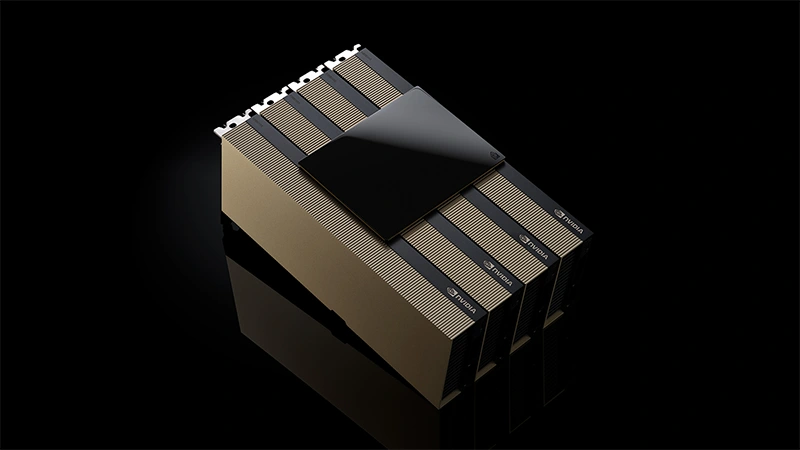
Shipping records from ImportGenius show that the Indonesian subsidiary imported Nvidia hardware, including H100 processors and related components, between 2024 and 2026 from suppliers such as Giga Computing.
Separate customs data indicate hundreds of cross-border transactions involving the unit through mid-2026.
No public finding has confirmed any violation of export rules, and Indonesian authorities have not provided further details. Local media coverage of the search has been limited compared with international reporting.
The FBI request and the Indonesian search occurred well before the personal matter involving Jensen Huang became public.
The Indonesian search was requested by the FBI specifically to trace the physical location of Nvidia chips that Megaspeed had bought, as part of a longer-running U.S. investigation into possible violations of export controls.
Scrutiny only intensified and spilled into public debate after Jensen Huang was linked to an extramarital affair with Alice Huang, an alleged spy and married woman who had originally been introduced to him by her own husband.
Huang, who founded and long led Nvidia, resigned as chief executive on 12 November 2026.
In a message to staff he stated that he had been unfaithful to his wife, that his actions had hurt her and their children, and that he was deeply sorry, while pledging to cooperate with an independent board investigation.
Read: 'That Would Be an Honor': Elon Musk Backs Jensen Huang Amid Nvidia Scandal

Reports from The New York Times and others have said that U.S. intelligence agencies suspect Alice Huang was recruited by China's Ministry of State Security as an asset, possibly in a capacity that allowed her to gather information on Huang and on advanced chip technology, and that she may have played a role in efforts to obtain restricted Nvidia chips for Chinese customers.
U.S. Attorney General Todd Blanche has said that the Department of Justice has reached no conclusions about whether she was a spy, while confirming that the FBI is investigating.
Beijing has denied the allegations.
The U.S. Commerce Department's Bureau of Industry and Security had earlier examined Megaspeed over suspected diversion of chips subject to export controls; that inquiry was later transferred to the Justice Department for a criminal probe.
Nvidia has stated that it reviewed the customer and found no evidence of improper shipments, though the company remains under scrutiny. The Indonesian action forms one element of wider efforts by U.S. and partner authorities to follow the path of restricted AI hardware through Southeast Asia.
These developments sit against a backdrop of expanding data center projects across the region and ongoing discussions between the U.S., Singapore, Malaysia, and Indonesia about stronger safeguards for advanced semiconductors.
Shipping patterns, corporate filings, and law enforcement inquiries continue to be examined as authorities seek to determine where the hardware ultimately went.