The architecture of modern financial systems rests on a foundation of implicit trust, built over decades of regulatory frameworks, central bank oversight, and traditional banking structures.
In a classical centralized economic design, retail banking institutions serve as essential pipelines connecting public wealth, state operational capital, and citizen savings into a single regulated ecosystem.
Trust is meant to be guaranteed not merely by brand visibility or shiny mobile interfaces, but by strict capital ratios, firewall protections against insider self-dealing, and rigorous supervisory authorities.
When a financial entity captures a nation's transaction volume by masquerading as a modern digital success story while remaining tethered to opaque corporate self-dealing, the failure of that single institution can shatter the political and economic scaffolding of an entire country.
Ueno Bank emerged as a dominant force within Paraguay. And it is now collapsing.
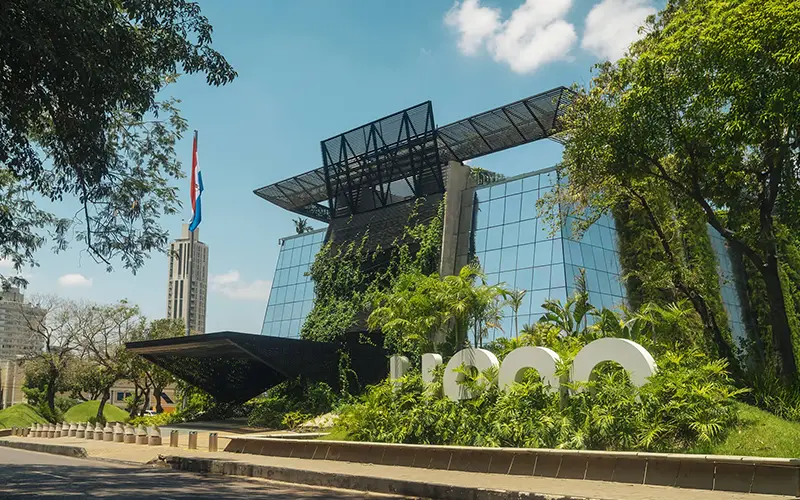
Ueno Bank S.A. traces its origins back to 1976, when it was originally established as Financiera El Comercio S.A..
After it reconstituted under ueno holding SAECA as a digital-first financial platform, it grew from from a modest street-market origin story into an aggressive financial titan that held the money of nearly half the country's population.
Built on an aggressive expansion strategy, it rapidly absorbed legacy lenders, placed its brand across national stadiums, and launched app-based banking that promised financial inclusion to over a million previously unbanked citizens.

Yet behind this high-tech facade lay the classic vulnerabilities of a centralized, traditional banking architecture, where concentrated ownership, regulatory tolerance, and political proximity allowed toxic liabilities to accumulate in the dark.
On November 3, central bank regulators suspended its activities, abruptly freezing millions of customer accounts alongside massive state deposits.
The sudden move occured after deep balance-sheet audits revealed that the institution was operating with a critical capital deficit, hiding behind regulatory relief and deferring massive bad debt from previous mergers.
Further inspection uncovered a web of prohibited self-lending, where tens of millions of dollars were funneled directly to companies owned by the bank's controlling shareholders.
When regulators initially flagged the excess related-party debt, the bank attempted to mask the violation by selling those toxic loans to another sister entity using funds that originated from the bank itself, fundamentally breaching core regulatory standards and crippling its capital adequacy ratios beyond recovery.
The Paraguayan Public Ministry (Attorney General's office) estimated potential losses and damages at more than $809 million.
This includes roughly $576.1 million in deposits in local currency (Guaranís) and $233 million in U.S. dollars belonging to public institutions, including the Social Security Institute (IPS), the Itaipu and Yacyretá hydroelectric plants, and the National Electricity Administration (ANDE).

The collapse immediately escalated from a systemic financial failure into a severe political crisis centered on Santiago Peña.
Then Paraguay's President, Peña was not an outsider to the world of high finance; his entire professional trajectory had been shaped by the inner workings of central banking and private financial institutions.
Having served on leadership boards for the Central Bank of Paraguay and held senior executive positions at private institutions like Banco Amambay, Peña possessed an intimate, expert understanding of capital limits, supervisory mechanisms, and financial governance.
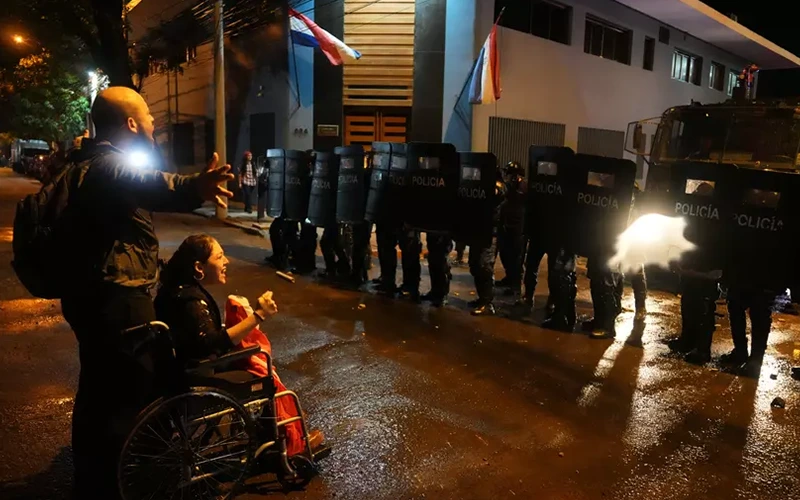
His background as a seasoned economist and former finance minister meant that his relationship with Ueno Bank, its founding owners, and its regulatory oversight could not be framed as mere technical oversight.
As evidence surfaced alleging that public treasury funds, state-owned utility accounts, and private-sector pension reserves were systematically directed into Ueno Bank while Peña maintained personal financial ties and shared equity history with its parent group, public outrage reached a breaking point.
The appointment of Ueno's former top executive, Carlos Carvallo, to head the Central Bank of Paraguay further highlighted how deeply regulatory independence had been compromised.
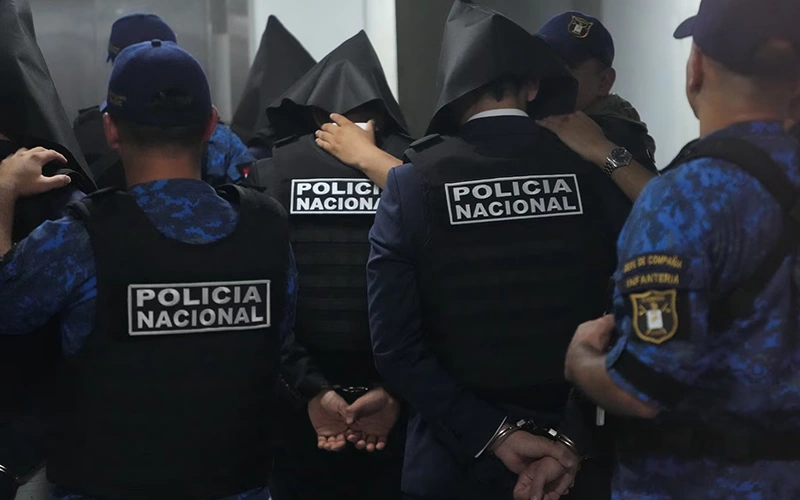
What followed was a rapid sequence of institutional unraveling.
Congress initiated swift impeachment proceedings, leading to Peña's formal dismissal by the Senate, the loss of his lifelong parliamentary immunity, and his subsequent arrest alongside central bank leadership on serious criminal corruption and breach of trust charges.
Peña was impeached, removed from office, and placed under house arrest on November 6, 2026, following a major financial crisis triggered by the collapse of Ueno Bank.

The dramatic downfall of a president with deep central banking credentials serves as a stark reminder of the inherently fragile nature of centralized financial systems.
When regulatory guardrails are eroded by insider influence and state funds are leveraged to support unsustainable private banking endeavors, the structural damage extends far beyond corporate balance sheets.
Millions of citizens finding themselves locked out of their daily bread highlights a timeless truth: without unyielding transparency and independent regulatory oversight, traditional financial centralization risks transforming public trust into an engine for catastrophic systemic collapse.