After the reign of Nokia, and before the Apple and Google duopoly, it was BlackBerry that reshaped the mobile industry.
BlackBerry allowed users to receive email and other data in real time globally, with experience enhanced security features.
Its keyboard-based hardware was widely adopted in corporate settings, in part because the services it provided typically ran through BlackBerry servers, allowing security and control that were unrivaled at the time.
For executives and businesses, BlackBerry was a tool to increase productivity, which in turn made the device an important status symbol.
But fast forward, BlackBerry failed to keep its traction.
After Apple introduced the original iPhone and the App Store that provides a way for users to download apps, things turned bad for the company. Things went from bad to worse for BlackBerry when Google introduced Android, which allows users to easily customize their mobile experience to a whole new level.
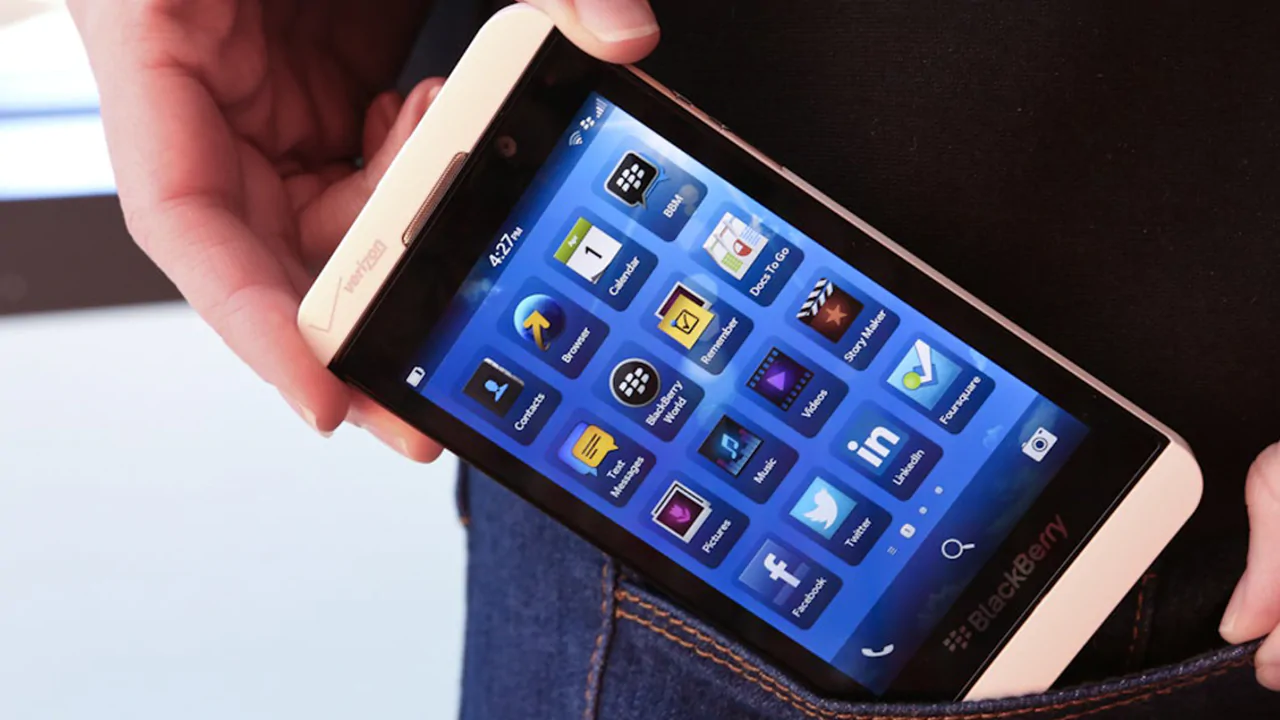
To keep up, BlackBerry even had to make its BBM that was exclusive to BlackBerry devices, available on Android and iOS, and later, on Windows Phone.
And because that wasn't enough, it even began to release Android-based smartphones, beginning with the BlackBerry Priv slider and then the BlackBerry DTEK50.
And knowing that it couldn't directly compete with Apple and Google, BlackBerry ceased designing its own phones in favor of licensing to partners.
This time, BlackBerry has announce it’s ending support for legacy services for BlackBerry OS and BlackBerry PlayBook OS.
Saying its plans to end support as of January 4, 2022, BlackBerry said that after that date, users won't be able to use their BlackBerry OS-powered phones to even do some of the most basic tasks, like web browsing, SMS or doing a phone call.
Affecting all users using phones running BlackBerry 10 or BlackBerry 7.1 OS or earlier, the company also said that after that date, Wi-Fi and mobile data might also become unreliable, and applications including BlackBerry Link, BlackBerry Desktop Manager, BlackBerry World, BlackBerry Protect, BlackBerry Messenger, and BlackBerry Blend "will also have limited functionality."
At the same time, the BlackBerry PlayBook tablet is also reaching its end-of-life status, which means that anyone hanging onto the decade-old tablet should also find it severely limited starting January 4th.
This announcement marks BlackBerry, once the king of smartphones, is changing and isn't anymore focusing on smartphones.
This marks the time that it is finally discontinuing key services that support its mobile business.
At this time, BlackBerry's primary business is providing intelligent security software and services to enterprises and governments around the world.
"Since pivoting to an enterprise software and cybersecurity company, we have received questions about our plans to provide ongoing support for BlackBerry 7.1 OS and earlier and BlackBerry 10 devices. In 2017, we committed to providing at least two more years of support for BlackBerry 10 and at least two years of BlackBerry network access for BBOS devices," the company, previously known as Research In Motion (RIM), said.
"On January 4, 2022, devices running on these service offerings through either carrier or Wi-Fi connections will no longer reliably function, including for data, phone calls, SMS and 9-1-1 functionality. We have chosen to extend our service until then as an expression of thanks to our loyal partners and customers."
"The termination of these service offerings and infrastructure will also impact functionality for applications such as Enhanced Sim Based Licensing (ESBL) / Identity Based Licensing (IBL), BlackBerry hosted email addresses, BlackBerry Link, BlackBerry Desktop Manager, BlackBerry Blend, BlackBerry Protect (allows consumers to lock, locate or wipe BBOS, BlackBerry 10 devices remotely. There is no impact to the new BlackBerry Protect which is an AI-based endpoint security solution)."
This move does not come as a surprise, especially since BlackBerry ended its BBM (Messenger) and terminated its app store in 2019.




















































































































































































































































































