Business is business. But sometimes, competition becomes so fierce that it pushes past personal loyalties and ethical lines.
Few rivalries illustrate that better than the long-running conflict between Elon Musk and Sam Altman. What began more than a decade ago as a shared vision for the future of AI has since evolved into one of the most personal and consequential feuds in modern technology.
The story began with the founding of OpenAI, where Musk and Altman, along with other researchers and entrepreneurs, united around concerns that AI development, particularly advances from Google DeepMind, was accelerating without sufficient oversight. They envisioned an organization that would pursue AI for the benefit of humanity rather than corporate profit.
Today, that relationship has completely unraveled.
The dispute has expanded far beyond OpenAI itself, drawing in some of the world's biggest technology companies, including Apple.
And this story is as dramatic as they come, with the future of AI at stake, and trillions of dollars in market value, hanging in the balance.

And in the feud, only a few things in the swirling chaos of Silicon Valley power plays that capture the raw personal venom like Musk's post on X late on July 11, 2026.
There he was, firing back at Altman with biting sarcasm after Altman had needled him about short-term space datacenters.
The jab landed like a perfectly timed uppercut in a fight that has stretched across years, companies, courtrooms, and now the most intimate accusations of corporate theft.
It was not just another online spar.
It crystallized how the long-simmering Musk-Altman war had collided with a brand-new front: Apple's explosive lawsuit accusing OpenAI of systematically stealing its hardware secrets to fuel an audacious push into consumer devices.
That lawsuit, filed just two days earlier on July 10, 2026, in federal court in San Jose, painted a picture of calculated poaching and covert extraction that felt ripped from a corporate espionage thriller.
Apple claimed OpenAI had orchestrated a pattern of theft through hundreds of former Apple employees now working at the AI giant.
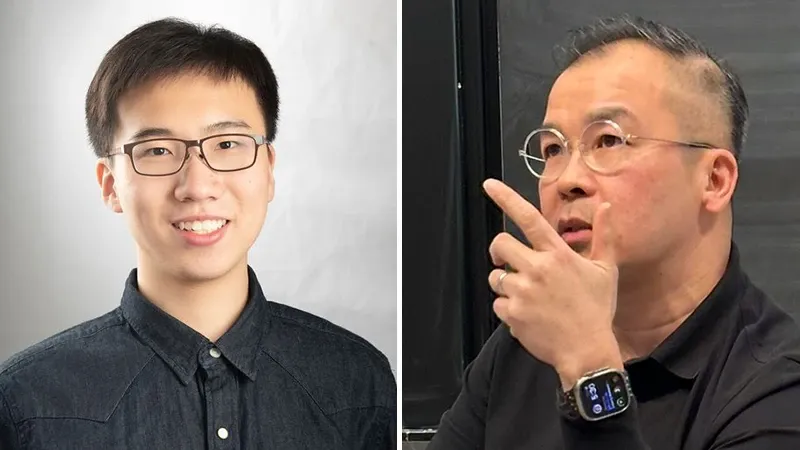
At the center stood Tang Tan, OpenAI's chief hardware officer and a 24-year-old veteran of Apple who had overseen product design for the iPhone and Apple Watch.
According to the complaint, Tan allegedly emailed himself sensitive supplier information before departing Apple, used internal Apple documents outlining offboarding security procedures to coach recruits on how to evade detection, and encouraged job candidates to bring physical Apple components (batteries, logic boards, shields) to interviews for "show and tell" sessions.
Another named defendant, former Apple senior system electrical engineer Chang Liu who joined OpenAI in January 2026, was accused of downloading dozens of confidential files on unreleased products, manufacturing processes, and proprietary project data, then retaining access to Apple’s internal systems via a now-fixed bug even after leaving.
Apple alleged Liu and others ignored standard exit protocols, skipped two-week notices, and helped OpenAI target key suppliers to replicate trade-secret processes like specialized metal-finishing techniques.
The suit named not only OpenAI but also io Products, the hardware startup co-founded by legendary former Apple design chief Jony Ive along with Tan, Scott Cannon, and Evans Hankey, which OpenAI had acquired for roughly $6.5 billion in 2025.
Apple described OpenAI's nascent hardware ambitions as resting on foundations "rotten to the core by its illegal reliance on misappropriated trade secrets," seeking an injunction, damages, and the return of any stolen information.
OpenAI fired back that it had "no interest in other companies' trade secrets" and remained focused on building innovative technology, while noting that employing talented former Apple staffers did not automatically imply wrongdoing.
What made the accusations sting even more was the backdrop of a once-promising partnership that had curdled into resentment.
Back in 2024, Apple and OpenAI had announced a high-profile integration of ChatGPT into iOS 18, Siri, and the broader Apple Intelligence features.
Altman had been positioned as a key figure in the rollout, with OpenAI executives quietly expecting billions in new subscriptions and prime real estate across Apple's vast ecosystem.
Instead, the implementation felt half-hearted to OpenAI insiders.
Users reportedly had to specifically invoke the words "ChatGPT" to trigger the deeper AI capabilities through Siri, features remained buried rather than front-and-center, and promotion appeared minimal.
Many iPhone users simply stuck with the standalone ChatGPT app.
By early 2026, OpenAI felt "burned," with renegotiation talks stalling and internal discussions turning to possible legal notices for breach of contract.
Apple, for its part, had begun testing integrations with competitors like Google's Gemini and Anthropic's Claude, signaling that any exclusive glow around OpenAI was fading fast.
The souring of that deal coincided with OpenAI's aggressive pivot into hardware.
With the io acquisition and the hiring of more than four hundred former Apple employees, Altman was clearly betting that the future of AI would not live entirely inside existing phones but in new dedicated devices that include voice-controlled pucks and other form factors that could scan rooms, deliver contextual information in real time, and operate independently.
Plans reportedly targeted initial shipments around April 2027.
To Apple, watching its own alumni and a rival build what could one day challenge the iPhone ecosystem while allegedly carrying away its crown jewels was intolerable.
Musk's July 11 tweet did not emerge in isolation. It was the latest volley in a feud with Altman that has defined much of the modern AI race and now overlaps directly with the Apple drama.
The two men had once shared dinners in the early 2010s, bonding over fears that Google's DeepMind was advancing too quickly without sufficient safeguards for humanity.
In December 2015, they co-founded OpenAI as a nonprofit lab meant to pursue safe, beneficial Artificial General Intelligence as a counterweight to big tech dominance, with an emphasis on openness.
Musk contributed substantial early funding and influence while serving as co-chair.
Yet cracks appeared almost immediately.
Musk wanted greater control, at times floating ideas of tying the lab to Tesla or securing majority equity and the CEO role.
The other founders pushed back.
By February 2018 Musk resigned from the board, citing conflicts with Tesla's autonomous-driving work, though internal emails revealed deeper frustrations over direction and resources.
OpenAI soon created a capped for-profit subsidiary to raise the enormous capital required for advanced training.
Microsoft famously poured in $1 billion in 2019 and later billions more, anchoring the lab to Azure compute.
Musk watched with growing fury as OpenAI shifted away from open-source releases after GPT-2 and became what he called a closed-source, maximum-profit company effectively controlled by Microsoft.
The launch of ChatGPT in late 2022 supercharged the animosity.
Musk publicly declared it "not what I intended at all," then launched his own xAI in July 2023 to build what he described as maximally truth-seeking AI, free from what he labeled "woke" constraints in competing models.
Grok debuted later that year.
Public exchanges on X grew vicious. Musk accused Altman of betraying the original nonprofit vision and enriching himself. Altman defended OpenAI's evolution as necessary for competition and at times portrayed Musk as operating from insecurity.
The conflict turned legal in early 2024 when Musk sued OpenAI, Altman, and Greg Brockman, alleging breach of the founding agreement, unjust enrichment through manipulation of his donations, and self-dealing that transformed a charity into a Microsoft-aligned profit machine.
He sought massive damages directed back to the nonprofit arm, removal of Altman from leadership, and other remedies.
The case expanded to include antitrust claims. In February 2025 Musk orchestrated a dramatic unsolicited $97.4 billion bid, backed by investors, to acquire OpenAI's nonprofit assets and restore its original mission.
Altman dismissed it on X with the memorable line "No thank you, but we will buy Twitter for 9.74 billion if you want."
Musk retorted by calling him a swindler.
OpenAI's board rejected the offer outright.
Political crosscurrents only heightened the drama.
Musk poured hundreds of millions into supporting Donald Trump's 2024 campaign and later took on a government efficiency role. Trump's subsequent Stargate announcement (a $500 billion-AI infrastructure push involving OpenAI, drew Musk's public skepticism about financing.
Altman attended related events and voiced measured support for aspects of the new administration.
Meanwhile Altman expanded into areas touching Musk's empire, co-founding Merge Labs in brain-computer interfaces to rival Neuralink and investing in space ventures that competed with SpaceX.
xAI itself sued Apple and OpenAI in August 2025, accusing them of colluding to suppress competition in the App Store.
The suit claimed Apple manipulated rankings and editorial features to favor ChatGPT after the 2024 integration, making it nearly impossible for Grok to gain top visibility or "Must-Have Apps" placement despite strong user ratings.
xAI argued the Siri integration gave OpenAI unfair data advantages from hundreds of millions of iPhones and sought billions in damages. OpenAI labeled it another example of Musk’s pattern of harassment.
The 2026 trial in Oakland federal court became the emotional peak of the Musk-Altman saga.
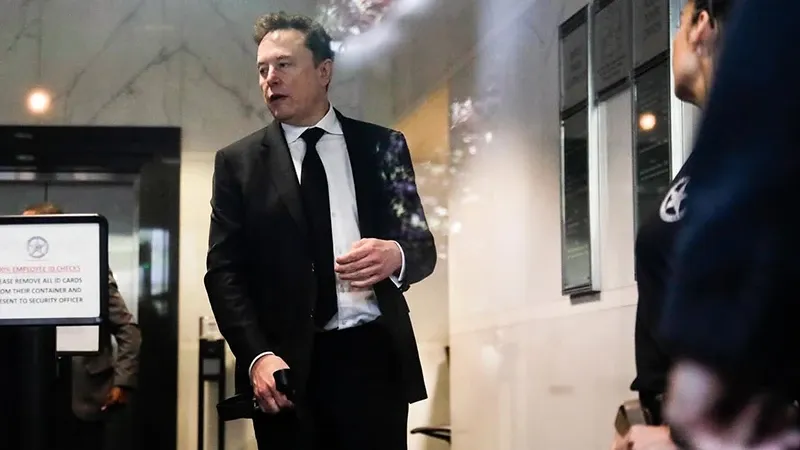
Musk took the stand and passionately described OpenAI's transformation as "stealing a charity," reading old emails and texts to illustrate what he saw as betrayal.
Altman countered that Musk had himself considered for-profit structures early on and that evolution was required to secure resources and compete.
After weeks of testimony the jury deliberated less than two hours in May 2026 and ruled the claims barred by the statute of limitations.
Musk immediately called the verdict a mere technicality, vowed to appeal to the Ninth Circuit, and continued posting that Altman and Brockman had enriched themselves by looting what should have remained a force for humanity.
The outcome cleared OpenAI's path toward restructuring and a potential trillion-dollar IPO, but it did nothing to cool the personal animosity that still erupted in tweets like the one on July 11.
Now the Apple lawsuit has given Musk fresh ammunition and Altman a new battlefield.
What began as shared concern over AI safety has fractured into competing empires, courtroom battles, and accusations of outright theft.
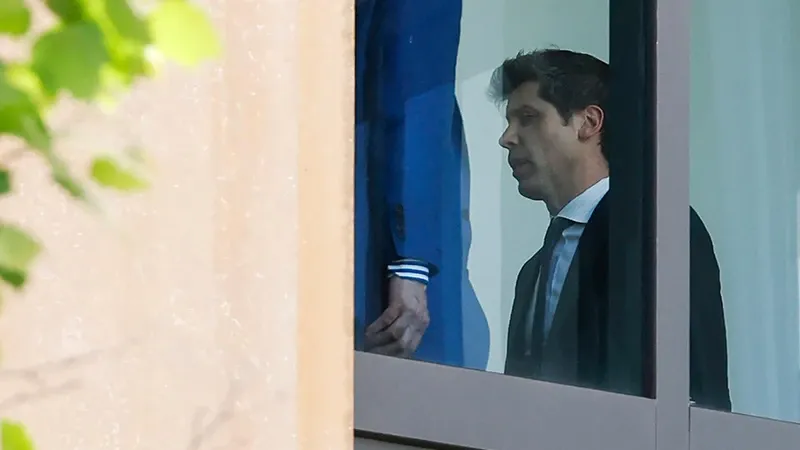
Altman's OpenAI has achieved staggering commercial success with ChatGPT yet finds itself accused by both its former co-founder and the world’s most valuable company of abandoning founding principles and raiding intellectual property to chase hardware dominance.
Musk's xAI races forward with Grok while simultaneously litigating against the very partnership that helped elevate his rival.
Apple, long dominant in consumer hardware, is now defending its supply chain and design secrets against a well-funded upstart built partly by its own alumni.
The July 11 tweet captured the absurdity and the stakes in one caustic paragraph: a jab at Altman's legal troubles, his hardware ambitions, and the original OpenAI mission all at once.
The story showcases everything that include personal grudges, corporate ambitions, and technological arms race that have become so tightly intertwined, that every new filing or tweet feels like another chapter in an ongoing saga whose ending no one can yet predict.
In a turn of event, OpenAI tries to clarify this, suggesting that everything was a misunderstanding, and Apple had it all wrong.
Apple is one of the greatest companies of all time, and built a reputation for obsessing over the smallest details. This careless, aggressive and oddly personal lawsuit sadly doesn’t live up to that reputation.
Apple had claimed that they contacted OpenAI in February and that we didn’t respond. They now admit that their outside lawyers emailed the wrong person after confusing two Asian last names—only after we brought this to their attention.
OpenAI has published a response criticizing Apple's lawsuit as "careless, aggressive and oddly personal," arguing that it misrepresents events and relies on inaccurate claims.
Apple alleged it contacted OpenAI in February 2026 and received no reply, but later admitted its outside lawyers had emailed the wrong person after confusing two Asian last names; no discussion with OpenAI's General Counsel ever took place. The suit also accuses former Apple employees Chang Liu and Tang Tan of improperly retaining and using trade secrets.
OpenAI counters that Apple staff themselves solicited Liu's help locating files after his January 2026 departure because of residual system access that Apple had failed to revoke and that Tan, has always made clear OpenAI does not want or use other companies' confidential information.
OpenAI maintains the specific trade-secret allegations were never raised in the earlier correspondence, during which Apple instead indicated issues would be resolved.
The company waited five months before filing suit and seeking a preliminary injunction that OpenAI calls unnecessary.
OpenAI states it neither possesses nor desires Apple’s trade secrets, prefers to focus on building innovative products, offered to clarify and resolve the matter directly, and regrets that Apple chose litigation instead of prior discussion.






















































































































































































































































































