The value of cryptocurrency primarily relies on a combination of supply and demand dynamics, market sentiment,
Back in its earliest days, Bitcoin, the cryptocurrency that started everything, was worth next to nothing. It was traded hands easily, and people were giving it away to show how worthless it was. In fact, the first notable purchase using Bitcoin, was when a man bought 2 pizzas for 2 Bitcoins.
In today's money, that amount can buy a house, or a really expensive car.
Back in those days, James Howells, who wa sonly an IT worker from Newport, was mining Bitcoins like a number of enthusiasts.
But then he lost it.
He fought for years, and the courts concluded that he couldn't get it back.
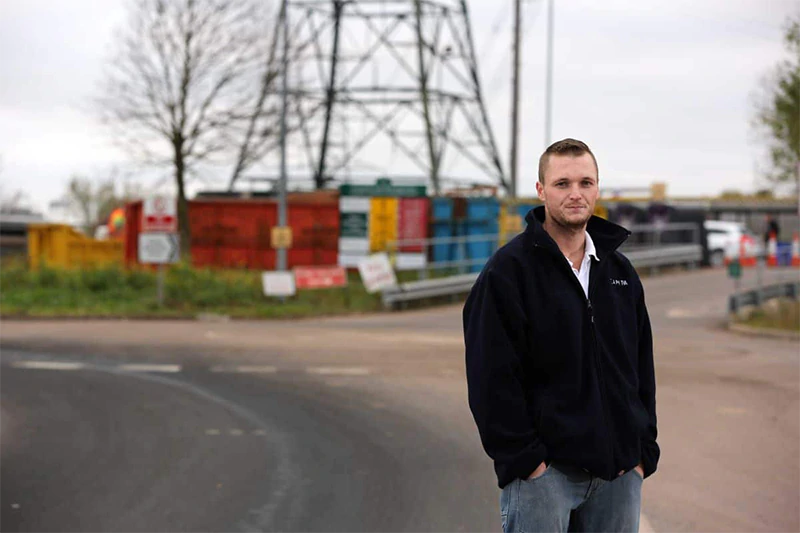
The report can be traced back to the mid-2013.
At the time, James Howells didn't realize what he was going to experience. First, the value of the cryptocurrency was around $13 and second, he lost the hard drive that contained the keys to his wallet.
He didn't care much, until the cryptocurrency boom that sent the price of Bitcoin surge sky high.
When he realized that his hard drive could be somewhere between the mountains of trash in a local landfill, he sought help here and there, in order to retrieve the hardware.
He was doing so much because claims suggest that the hard drive in question was holding about 7,500 Bitcoins.
He started fighting for it in December 2017, when one Bitcoin was worth $11,350 (£8,435). What this means, 7,500 Bitcoins was worth a whole lot more than a treasure chest, as it would be worth $85,125,000 (£63,284,463).
And in 2025, 7,500 is worth more than $600 million.
And what makes the hard drive even more unique if not priceless is that, it also contains "the real IP address" of Bitcoin creator Satoshi Nakamoto as well as the wallet file.
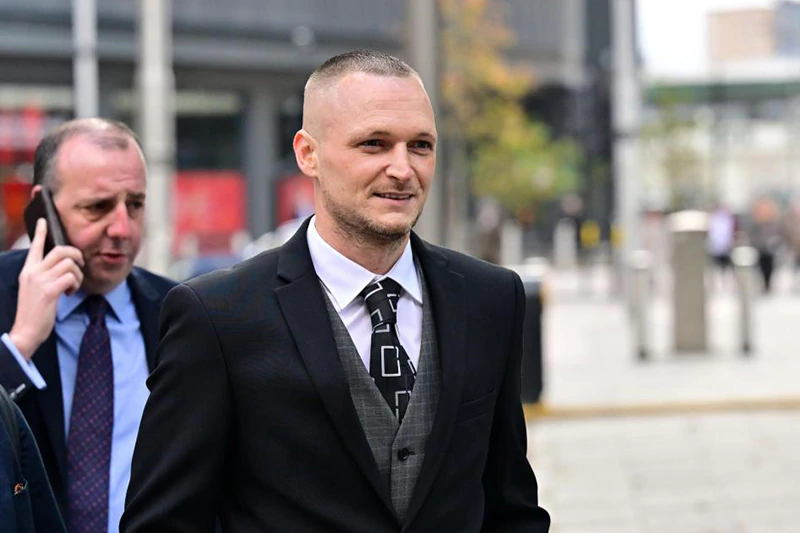
Realizing the massive loss due to his carelessness, Howells plans to find that hard drive, as he believes that it is buried somewhere in a landfill site.
Howells asked for permission, the Newport City Council won’t allow him. The officials said that it’s against the law.
A council spokesperson said that their offices have been “contacted in the past about the possibility of retrieving a piece of IT hardware said to contain Bitcoins," but digging up the landfill, storing and treating the relocated waste could cause a "huge environmental impact on the surrounding area."
The landfill reportedly contains about 350,000 tons of waste and 50,000 more tons, which are added every year.
"It is likely that the hardware would have suffered significant galvanic corrosion due to the presence of landfill leachates and gases," officials pointed out.
Howells even offered to donate 25% or what's inside the hard drive to the city of Newport "in order to distribute to all local residents who live in Newport should I find and recover the Bitcoins," he once said.
Because he was not given permission, he launched court action against the council that refused to let him excavate computer equipment.
His demand is either give him permission, or pay him £495 million in compensation.
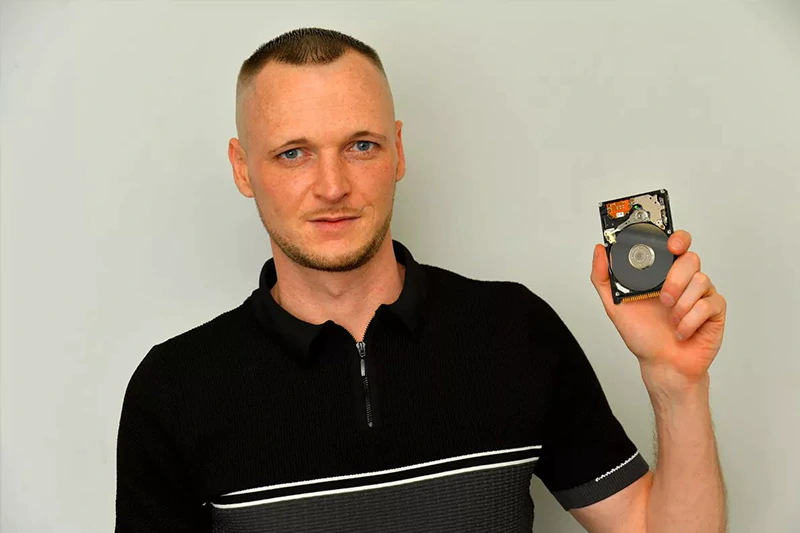
Now, a Cardiff High Court ruling by Judge Keyser KC has dismissed Howells’ legal claim to recover the hard drive, citing no "reasonable grounds" for bringing the claim and "no realistic prospect" of succeeding at a full trial.
What this means, the 7,500 Bitcoins he allegedly lost, are now the council's property.
After the ruling, Howells said that is "very upset," saying "it’s the great British injustice system striking again."
His legal team claimed that Howells has a team of experts who could go in and retrieve the hard drive in the landfill with no cost to the public purse, all while the council argued it would have a "negative environmental impact."
"I've employed a team that have done multiple landfill excavations - all within environmental guidelines. We also have AI experts that have the tech to make the job of finding the needle in the haystack that much easier. "I can carry out everything at no cost to the public," Howells goes on.
After trying for 12 years to recover the lost coins, the ruling felt like “a kick in the teeth,” Howells lamented.
"The council lives in the dark ages. Newport could have looked like Las Vegas or Dubai if they had the foresight to engage. But they did not understand cryptocurrency and have refused to learn," he further ranted.
Losing the battle doesn't mean that he is losing the war.
Howells said that he plans to take his case to the Supreme Court, despite describing the legal proceedings he launched against the council was a "last resort."
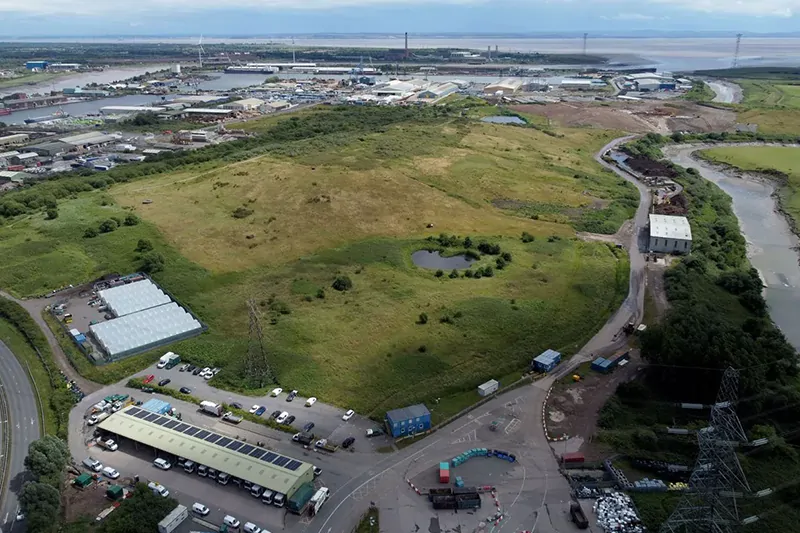
Howells said that he had hired someone to help him track down exactly where the hard drive is, and is now sure it's within the 'Cell 2 - Area 2' section of Newport's Docksway Landfill.
"It is what it is. I could spend the rest of my life working nine-to-five and thinking about it every day. I might as well spend my time trying to recover this simple piece of metal."
"Until the courts tells me 'N-O spells no', I'm going to keep going. Obviously my finances are not in the best position at the moment."
"I'm focusing all my current efforts and resources, including money, on the recovery project. I struggle along in the meantime."
"But the legal effort is covered. We're willing to go all the way to the appeals court, the Supreme Court. With a case of this magnitude I'm expecting to go the full distance. I didn't really want to go to court but this is the final shot."

The troubles began back in 2013, when Howells was cleaning his house, and placed the hard drive in a black bin bag thinking it was a different, empty hard drive.
It was his then partner Halfina Eddy-Evans who discarded it, not knowing what's inside it.
Despite later breaking up, Hafina said that she she hopes her ex finds the lost fortune. Not because she wants any money, but to finally put an end to the saga.
"Yes, I threw away his rubbish, he asked me to," she said.
"I thought he should be running his errands, not me, but I did it to help out. Losing it was not my fault. I'd love nothing more than him to find it. I'm sick and tired of hearing about it."
Howells only remembered he had the hard drive, and prompted to check on it when the the value of his Bitcoin rocketed to £9 million a few months later.
It was only then, that he realized it had been taken to the Docksway Landfill Site in Newport.
"Despite being thrown out by my ex partner, which was a mistake and was without my permission or consent, I still own the intellectual digital property located on the hard drive," Howells said.
"I am either entitled to recover the property at full cost to myself or if the landowner refuses they pay me the value of my property," adding that "It is crazy money that could do so much good for the area."














































































































































































































































































