Robots are expected to work in some ways better than their human counterparts.
Due to having mechanical components instead of flesh and bones, and a software instead of brain cells that need nourishing and rest, robots are meant to be more consistent and precise.
The are also expected to show no fatigue, work a lot more efficiently and do things faster and more precisely.
And because their physical capacity is only limited to the durability of their components, robots should be able to work 24/7 if they have to, with reduced cost, and minimal waste.
But a robot is now able to 'commit suicide' due to the extensive work it was forced to do.
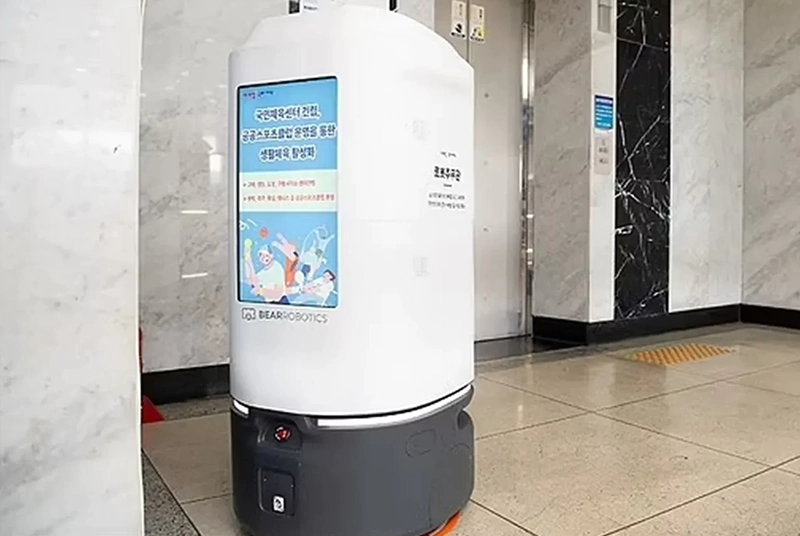
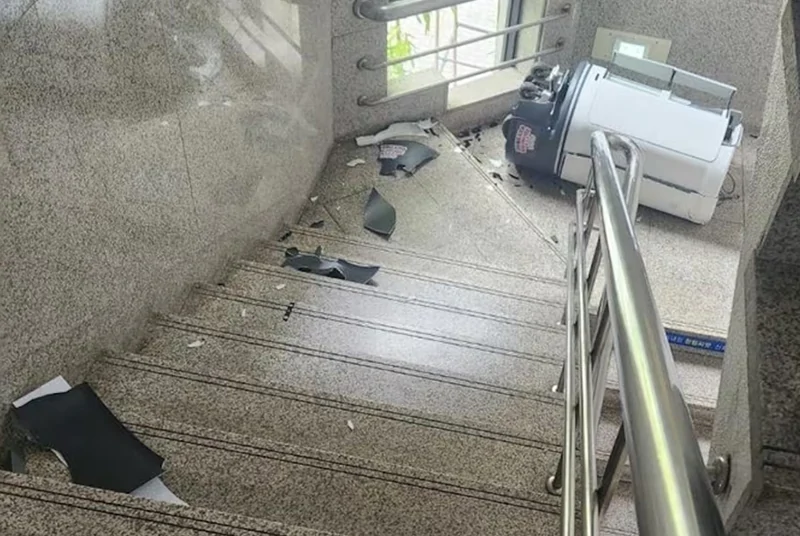
The robot in question "took its own life" when it jumped flights of stairs, and landed hard at the bottom of a stairwell, which deliberately destroyed its hardware.
This stopped the robot from functioning, effectively rendering it 'dead'.
But what makes this robot suicide a bigger news that it's supposed to, stemmed from the fact that it happened in South Korea.
Work life in South Korea is characterized by high expectations, long hours, and a competitive environment.
These factors contribute to significant stress and mental health issues among workers. Not to mention the hierarchical structure in workplaces with strong emphasis on seniority and respect for authority, high expectations to perform and succeed, poor work-life balance that further adds stress, mental health stigma that makes it even more difficult for workers to seek help when they're struggling.
As a result of this, South Korea is known for being a place with a high suicide rates, and this is often attributed to a combination of the above, as well as the economic challenges and social isolation.
And the robot that 'died', was nicknamed "Robot Supervisor."
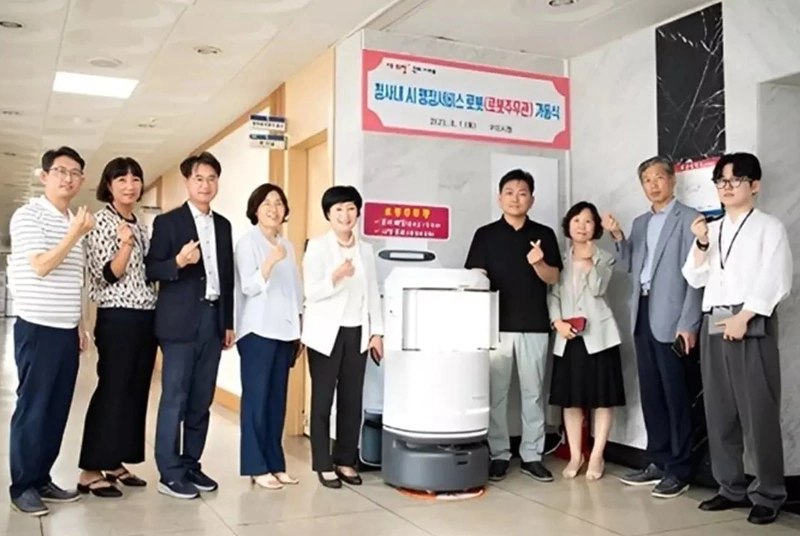
The robot, operational since August 2023, was developed by Bear Robotics, the California-based robot-waiter company.
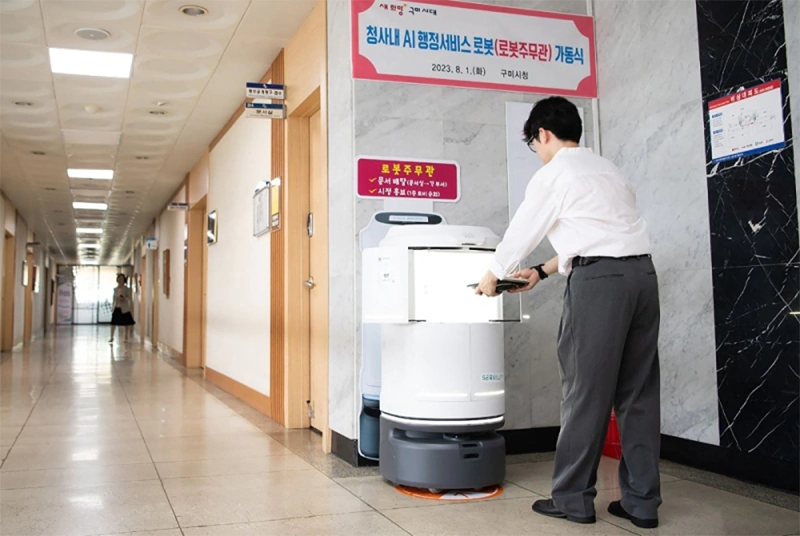
Employed at the Gumi City Council, it was a robot civil servant employed and worked a standard 9-to-5 shift.
It even had its own civil service ID card.
Read: The Death Of Robert Williams: The First 'Roboticide'
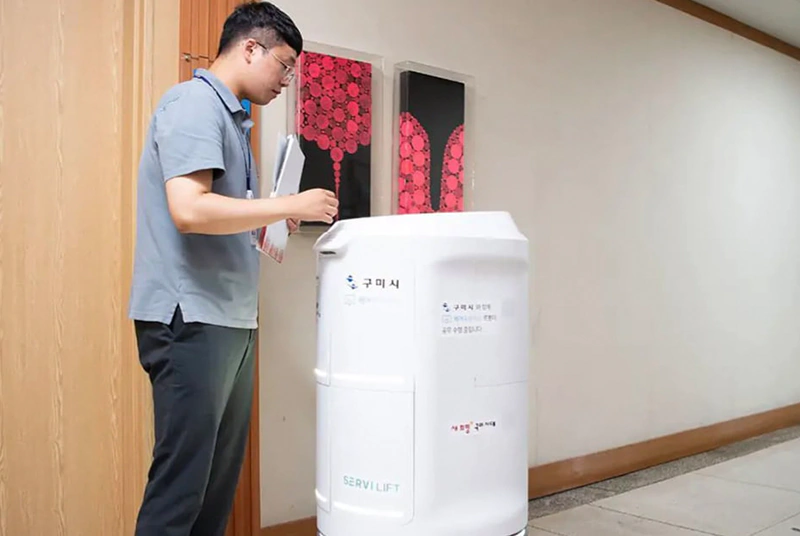
Robot Supervisor was found unresponsive around 4 p.m. by a council staff who said that the robot behaved strangely beforehand, like "circling in one spot as if something was there."
"It was officially a part of the city hall staff, one of us. It worked diligently," a council official said.
Because this incident is never heard of, officials wondered whether the robot "worked too hard."
Unlike most service robots that are restricted to single floors, this Gumi City Council robot independently navigated the building, calling elevators to move between levels.
As a supervisor, and an officially part of the city hall, it was also the robot also reportedly "helped with daily document deliveries, city promotion, and delivered information" to local residents.
In other words, Robot Supervisor was a hard working robot.
To determine the cause, the robot and its parts have been collected to be probed by the robot's manufacturer.
"Pieces have been collected and will be analyzed by the company," an official said.
Experts suggest that the cause could be a navigational error, sensor failure or programming bug.
Regardless of the cause, the Gumi City Council has chosen to put off plans to add another robot to their staff because of what happened.
At this time, there is no plan to replace the "demised" Robot Supervisor.
According to the International Federation of Robotics, South Korea has one of the highest robot densities in the world, with one industrial robot for every ten human employees.
But the death of Robot Supervisor is creating debates on how to make sure these mechanical beings are safe and reliable. South Korea is known for slowly putting robots to work in many different areas, and it has a high number of industrial robots to workers. This event makes us think deeply about the moral and scientific effects of putting robots in jobs that humans usually do, as well as the safety rules and supervision that are needed as we move forward in this field.
It has piqued public interest in the possibility of robots taking on more diverse roles beyond traditional corporate environments.














































































































































































































































































