The internet, in its endless capacity for both enlightenment and sensationalism, has once again delivered a story that has gripped millions.
The 'Sister Hong' incident is far beyond mere gossip. As the news unfolds from Nanjing, China, it spirals into a bizarre and deeply unsettling case that exposes uncomfortable truths about online deception, privacy, and the complex dynamics of human desire in the digital age.
At its core, the Sister Hong saga involves a 38-year-old man, known online as Sister Hong (or "Uncle Red"), who allegedly posed as a woman and lured a significant number of men into sexual encounters.
The disturbing twist? These encounters were secretly filmed, and the footage was subsequently sold online.
Initial reports, fueled by the suspect’s own claims, suggested there were over a thousand victims, though authorities have since urged caution, warning that the numbers may be exaggerated. Regardless of the exact figure, the sheer audacity and scale of the deception are what have truly captivated—and disturbed—audiences around the globe.

Sister Hong is literally a man. A crossdresser.
His modus operandi was chillingly simple yet disturbingly effective: using wigs, heavy makeup, beauty filters, and voice-altering software. He adopted the persona of "Sister Hong," meticulously crafted to present a believable female identity on dating apps.
In particular, Sister Hong's method involved presenting himself as a married woman online. This illusion tapped into vulnerability, fantasy, and deeply rooted desire of those men who are attracted specifically towards having intimate relations with another person's spouse.
The lure? Promises of free “hook-ups” in exchange for seemingly innocuous daily commodities like milk, fruit, peanut oil, or even a small appliance—rather than money.
This unusual transactional element added another layer of intrigue, and raised uncomfortable questions about the motivations of both the perpetrator and the victims.
Regardless, it didn’t take long for men to fall for the bait.
These men traveled to Sister Hong’s apartment with their offerings—tender gestures made in anticipation of sex, perhaps believing they were helping someone in need.
From everyday citizens to well-groomed, so-called “high-quality men”—a term often used in Chinese media to describe attractive, successful individuals—were among those ensnared. Public fascination with the case only amplified the debate, and the fallout began to spiral.
In all, Sister Hong allegedly engaged in sexual intercourse with more than 1,600 men, which included college students, young professionals, gym attendants, and foreign nationals.
Some individuals reportedly returned on multiple occasions to engage in sexual activities with Sister Hong.
But what makes the case particularly even more shocking—and disturbing—is the profound violation of privacy and trust.
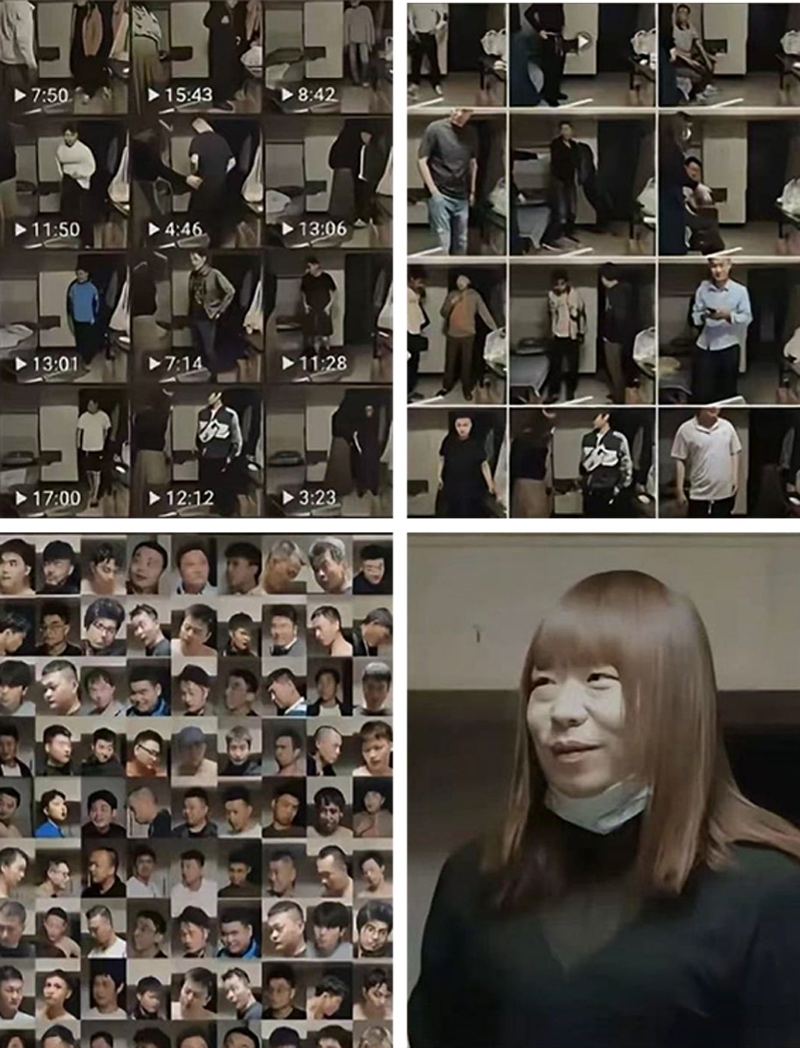
Inside the apartment, hidden cameras had been installed to capture their most intimate moments. These recordings were then sold in private online groups for around 150 yuan (approximately $21) per membership.
Sexual transactions are nothing new, and the internet has long facilitated them.
But Sister Hong didn’t simply engage in consensual encounters—he tricked men into sex, with the aim of monetizing the footage. This wasn’t just deception. It was exploitation. A heist of trust and consent, where human vulnerability became digital currency.
A lot of discussions on social media suggest that some men knew “she” was a man—yet pursued the encounter because femininity offered emotional safety.
For example, in one of the leaked clips that has drawn intense attention online, a young, muscular man is seen visiting Sister Hong’s apartment. Dressed in provocative black stockings, Sister Hong engages with two men, one of whom straddles her. As things escalate, Sister Hong gasps dramatically, “It’s all wet down there!”
However, the tone shifts when the man suddenly realizes something is off.
In a startled voice, he exclaims, “Why do you have balls?”
Without missing a beat, Sister Hong retorts, “They’re not balls. What nonsense are you talking about?” Then, with rising frustration, she corrects him: “That’s my swollen penis—don’t talk nonsense!”
The short 13-second video quickly spread across social platforms, sparking a wave of commentary and debate among netizens. The clip has become one of the more infamous examples fueling both public fascination and concern over the deceptive nature of the entire scandal.
More troubling still, Sister Hong reportedly lives with HIV.
The implications of this are staggering, triggering panic and public health concerns. In response, health clinics in Nanjing began offering optional screenings for potential STI exposure—an emergency effort to contain any possible consequences of this scandal.
The story of Sister Hong surfaced quietly at first, whispered about on Weibo.
At the beginning, rumors claimed a 60-year-old woman had seduced hundreds of men, cross-dressing and recording their private moments. But as the truth unraveled, it became clear that this “sister” was no elderly matron, but a man in his late 30s who goes by the surname Jiao. This man had constructed a persona so convincing, it ensnared over a thousand victims.
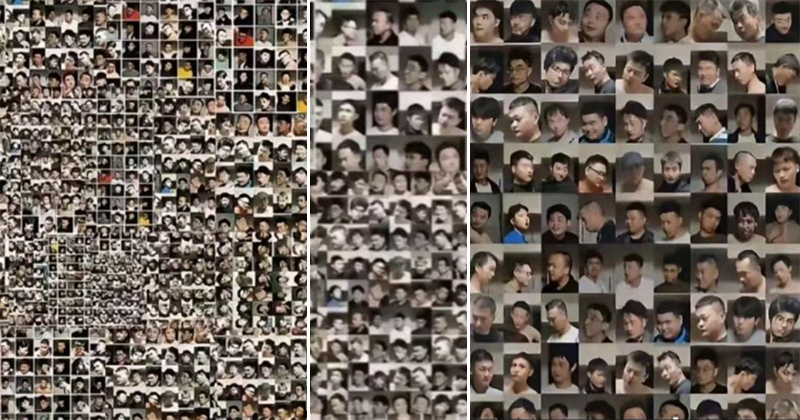
When the videos leaked, the names of the victims were exposed by facial recognition.
Since Sister Hong didn't bother blurring the men's faces, spouses found incriminating evidence; careers and families shattered.

The internet is divided.
Some corners of the digital world condemn the act outright. Others lament the recklessness—how could such videos surface so easily? Unblurred footage led to the public identification of many men, resulting in devastating consequences. Careers collapsed. Families broke apart. The emotional toll is immeasurable.
But not everyone views it through the same lens.
Some interpret the case through a cultural perspective: as a reflection of gender fluidity, the shame surrounding public sexuality, or the powerful allure of fantasy in a repressive society. A deeper layer of conversation emerges—why did so many men accept the illusion? Was it closeted desire? A craving for intimacy? Or simply the comfort found in feminine energy, regardless of its source?
Then there are the spectators.
For them, this became dark humor. Meme culture took hold. The internet embraced the persona of Sister Hong like a viral ghost. AR filters mimicked the signature look: blunt bangs, ghost-white foundation, red lipstick. TikTok and Instagram exploded with imitations. The “Sister Hong filter challenge” was born, spiraling into parodies, marketing stunts, and low-budget stage plays.
Some fake advertisements were even made, some hilariously claiming to teach users how to trap “high-quality” men using “essential items”—like blunt-bang wigs, oversized patterned blouses, and maxi skirts.
Meanwhile, wig sellers have capitalized on the chaos, promoting Red Sister cosplay bundles, complete with “seduction kits.” It's a surreal case where serious legal and ethical violations are unfolding alongside internet absurdity and opportunism.
Even celebrities have jumped in.
Many of which use the hashtag "紅姐" ("Sister Hong").

Jiao has since been detained, and the investigation continues.
Authorities are working to remove the videos he distributed online. But even with his arrest and the takedown efforts, the damage is already done. Once something hits the internet, it never fully disappears. Traces will remain. The shame and trauma? They linger far longer than digital footprints.
In today’s world—where a private act can instantly become a global spectacle—the Sister Hong saga stands as a dark paradox. Both real and surreal. A cry for empathy wrapped in a grotesque display of betrayal.
The case is a brutal reminder of the wild, untamed frontier of the internet. It serves as a warning about the dangers of unchecked online personas, the critical importance of consent, and the far-reaching consequences of digital exploitation.
No one will forget Sister Hong—not soon, not easily. And as the virtual world continues to echo with his eerie legacy, the line between mask and identity, between fantasy and violation, only becomes more blurred.
Initially, police reports don't mention anything about Jiao having a gender identity disorder or clinically diagnosed transvestite tendencies. This makes his profile difficult to categorize.
It's worth noting that Jiao claimed to have hooked up with 1,691 men. But the police dismissed the figure as an exaggeration. Authorities have not released a definitive number of men involved, nor have they specified how much Jiao profited from the videos.
This case is now known as the 'Nanjing Sister Hong incident.'




















































































































































































































































































