When Jerry Siegel and Joe Shuster introduced Superman in Action Comics #1 (June 1938), he was envisioned as an alien with extraordinary powers who stood against corruption, oppression, and injustice.
In a time of widespread hardship, he became a beacon of optimism and resilience—a hero the public could believe in.
Over time, Superman became inextricably linked to American ideals. His iconic “S-shield” transformed from a simple insignia into something far more symbolic.
But it wasn’t until 2004’s Superman: Birthright, written by Mark Waid, that the symbol was explicitly defined as representing “hope.” This interpretation was later echoed in the 2013 film Man of Steel, when Kal-El tells Lois: “On my world, it means hope.”
Now, in 2025, James Gunn’s Superman has once again positioned the character as a symbol of hope for a new generation—but sparking both admiration and controversy in equal measure.
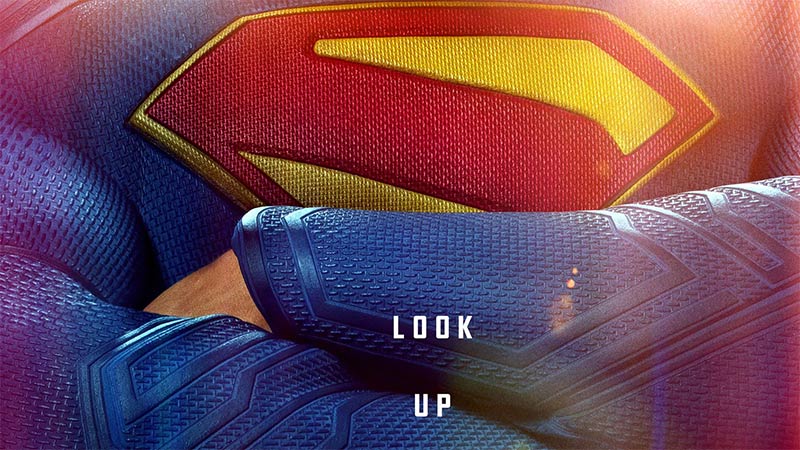
James Gunn’s Superman, launched on July 11, 2025, reboots the Man of Steel for the new DC Universe (DCU).
Starring David Corenswet as Superman/Clark Kent, with Rachel Brosnahan as Lois Lane and Nicholas Hoult portraying a tech‑tycoon Lex Luthor, the film begins three years into Superman’s vigilante career.
With no origin retelling, Gunn dives straight into the world of metahumans, three years into Superman’s career, bypassing how Superman came to Earth in favor of a hero already in the throes of ideological and ethical dilemmas.
First of, Gunn boldly frames Superman as America’s immigrant allegory.
He has described the character as “the story of America—an immigrant that came from other places and populated the country,” emphasizing essential qualities like basic human kindness.
Although it's never described that Superman is a bad person, several high-ranking members of the U.S. military are after him due to his foreign origins. After all, Superman is "the Kryptonian," or "the alien," or "an extraterrestrial organism."
As Lex Luthor says, "He’s not a man. He’s an it."
Then, there is the fact that the film places Superman in a fictional Eastern European war—Boravia versus Jarhanpur—mirroring real-world conflicts and prompting discussion on interventionism and ethics.
Here, Luthor is portrayed as an egotistical tech magnate trying to stick get himself into politics and international conflicts, and has allied himself with Boravia.
In the story, Superman prevents a war from breaking out between the countries—partly by destroying their tanks and planes, and partly by grabbing Boravia’s leader and flying him out into the desert, with a warning that he might not let him down so easy next time.
The film that opens with Superman battered and bruised, crashing into the Arctic after a fierce battle, the internal struggle he faces when he was told that his Kryptonian supremacists parents sent him to Earth to conquer it, not save it, the moment he shares with Lois Lane, showcasing his desire to connect on a personal level, the emotions he convey during intense action sequences, during the "hashtag" #supershit scene, and during his encounter with Lex Luthor add complexity to his character, making him relatable to the audience.
In other words, this Superman is more into modern politics, and human vulnerability.
Gunn's Superman is not only physically powerful but also emotionally complex and deeply human.
Gunn portrays Superman as kind but grounded in moral balance—as opposed to absolute justice—highlights global responsibility and ideological differences.
It didn't take long until right-wing media immediately labeled the film “super-woke,” arguing it was ideological propaganda. Critics have also noted perceived parallels, including allegations of anti-Israel messaging.
People also resurfaced Gunn's public criticisms of President Donald Trump, and also Gunn's post on social media between 2008 and 2012 involving pedophilia and the Holocaust. Among other reasons, these led to Disney severing ties with Gunn as the director of the upcoming Guardians of the Galaxy Vol. 3 film at the time.
This happened before Gunn was rehired by Marvel a year later, but not before Warner Bros. came calling about him directing a DC film, The Suicide Squad.
While one of Gunn's worst year on his life is now a past tense, it's easy for anyone to consider Superman as a representation of him, and how it becomes Gunn's way to address current issues.
From Lex Luthor’s smear campaign that makes Superman frustrated to how the the kidnapping of Krypto, the Superdog, left him emotional, the film bring something personal within Gunn to the table.
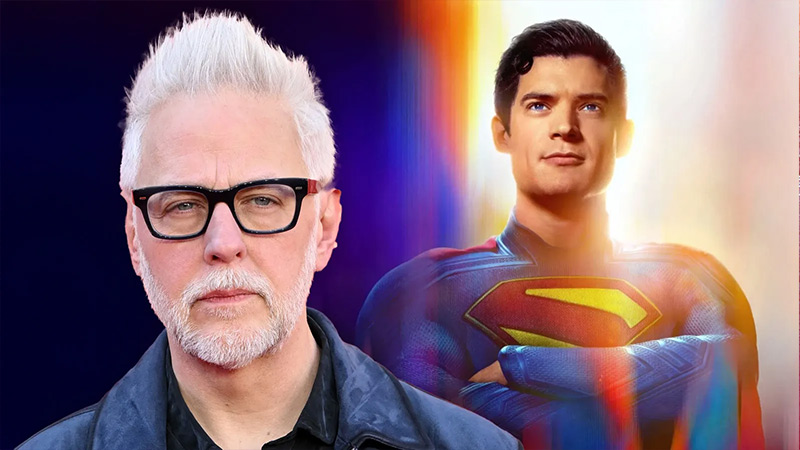
Superman is, at its heart, a hopeful film—arguably the most vibrant and emotionally buoyant portrayal of the character since Christopher Reeve’s era.
Yet beneath its charm, Gunn brings a keen awareness of how comic book stories can engage with real-world issues without losing their heart or collapsing under the weight of forced seriousness.
It’s this balance that sets Gunn’s Superman apart.
Rather than asserting power, it delivers a message—woven gently into the fabric of the story.
It's like something Gunn is hoping, and the internet loves it in the same way that it hates it.
In other words, directing Superman is kind of personal.






















































































































































































































































































