Archives of old radio traffic have a habit of outlasting the wars that produced them.
Intercepts that once mattered for a few hours sit in folders, reprints, and specialist websites for decades, waiting for someone with a spare evening and a theory about a missing letter. Most of those pages never change.
A handful do, and when they do, the story tends to travel faster than the footnotes.
At this time, OpenAI's GPT-6 Astra, a model released in early September 2026, is one of the most powerful models out there. Someone quickly tested it to see its capacity and capabilities.
Among those who tested it, some put it to work on problems that look nothing like the usual software demos: deciphering wartime messages from two different wars and two different cipher systems.
When the results of the two tests came out, time again showed how much technology has progressed.
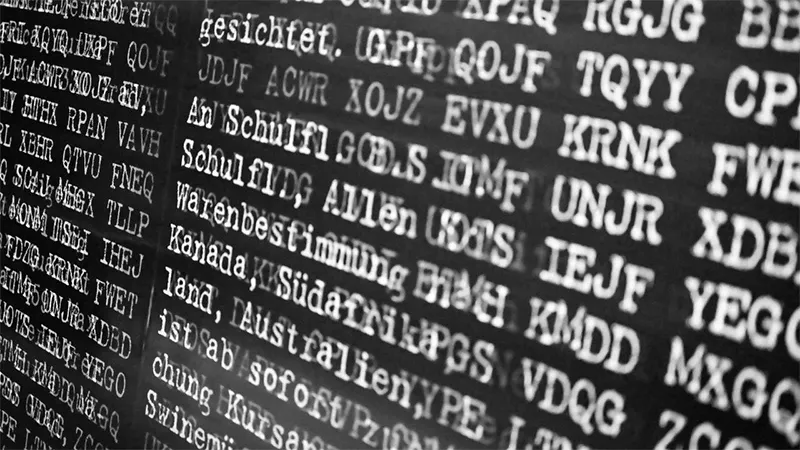
The first system is a message that involved the Enigma, the German electromechanical machine whose wartime settings numbered in the hundreds of quintillions and whose principles were already understood in the 1930s.
Polish mathematicians led by Marian Rejewski broke into the machine in 1932. British and Allied work later turned that opening into a production system. What remained after 1945 was not a sealed vault so much as a long tail of short army radiograms that never received a published plaintext.
One of those items, tagged MVUEH in Frode Weierud’s CryptoCellar corpus of German army traffic, is an 82-character message dated 10 July 1941. It had been listed as unsolved on that site since 2005.
This is the Enigma case.
Carter Leffen, a product development coach at Bloomberg in New York, says he pointed GPT-6 Astra Extra High at that list in mid-September and let the model search archives, compare uncertain letters in surviving copies, write an Enigma simulator, generate cryptanalysis code, and test candidate settings.
The model gave its results after working for about 10 hours.
The useful clue was not a new mathematical attack.
Another message from the same day, already solved and known as SIPVX, contained the place name Rosenow twice in a row.
That repeated string was treated as a crib, a guessed fragment of plaintext.
Combined with a familiar Enigma property (a letter never encrypts to itself), the search space shrank enough to recover a coherent German text and a full machine setup, including rotor order II-V-III and ten plugboard pairs.
The recovered wording is ordinary staff traffic.
In cleaned English it asks for the march route, states that the sender is in Rosenow, and requests an immediate radio reply.
The raw German keeps operator slips such as BTTE for BITTE and a garbled signature often read as Waschbusch. Those slips are part of why the reading looks like a real radiogram rather than a tidy reconstruction. CryptoCellar identifies the sending station by the tactical callsign 2ny and the receiving office as the radio station of the SS-Totenkopf Quartiermeister, Ib, which logged the message as Nr. 172 at 17:30 on 10 July 1941.
Following this, Leffen published the code, search data, and a browser Enigma simulator so others can replay the key search.
The second case belongs to an earlier war and a paper-and-pencil field cipher, not Enigma, which did not exist as a wartime field system in 1918 in the form people mean when they say "the Enigma machine."
Instead of using a rotor machine, the World War I message used ADFGVX, introduced by the German army that year and named for six Morse-friendly letters.
An operator looked up each letter or digit in a 6-by-6 grid labeled A, D, F, G, V, and X, then shuffled the resulting letter pairs with a keyword (in this claim, TRUPPENVERSCHIEBUNG).
French lieutenant Georges Painvin broke into the system under operational pressure in 1918.
A century later, hundreds of surviving intercepts from the Balkans, the Black Sea, and the Middle East were collected in J. Rives Childs's material and attacked again by George Lasry and others (PDF).
Most yielded. A few dozen did not, and Klaus Schmeh kept them on a public list of unsolved historical ciphers.
A developer writing as Prinz reported on 17 September that GPT-6 Astra had read one of those leftovers, a 170-symbol ADFGVX message associated with 27 November 1918 in Childs.
The proposed German plaintext is: EIN ENGLISCHER KREUZER EINLIEG X SEWASTOPOL X S4STEN X EIN GESCHWADER DER X ALLIIERTEN FOLGT 26STEN X. In English: an English cruiser arrived at Sevastopol on the ?4th; an Allied squadron follows on the 26th. The uncertain digit in S4STEN is read as 24. The transposition keyword used was TRUPPENVERSCHIEBUNG, a 19-letter German word already printed on pages 214 and 215 of Childs’s account of German military ciphers, where it is tied to a later start date of 9 December 1918.
The model’s working hypothesis is that the same key was in use earlier than the published schedule, or that the schedule in the monograph is incomplete.
Prinz says the reading was checked against HMS Canterbury’s logs, which place the British light cruiser at Sevastopol on 24 November 1918, with an Allied squadron following on the 26th.
That match is the main external support.
The message itself is a late-war Black Sea sighting report, sent after the 11 November armistice, in a period when Allied ships were moving into former Russian waters during the civil war.
Two days after the first post, Prinz published a second, incomplete ADFGVX reading (RICHI-240, 11 November 1918) about German positions around Versec, now Vršac, which Serbian forces had just occupied.
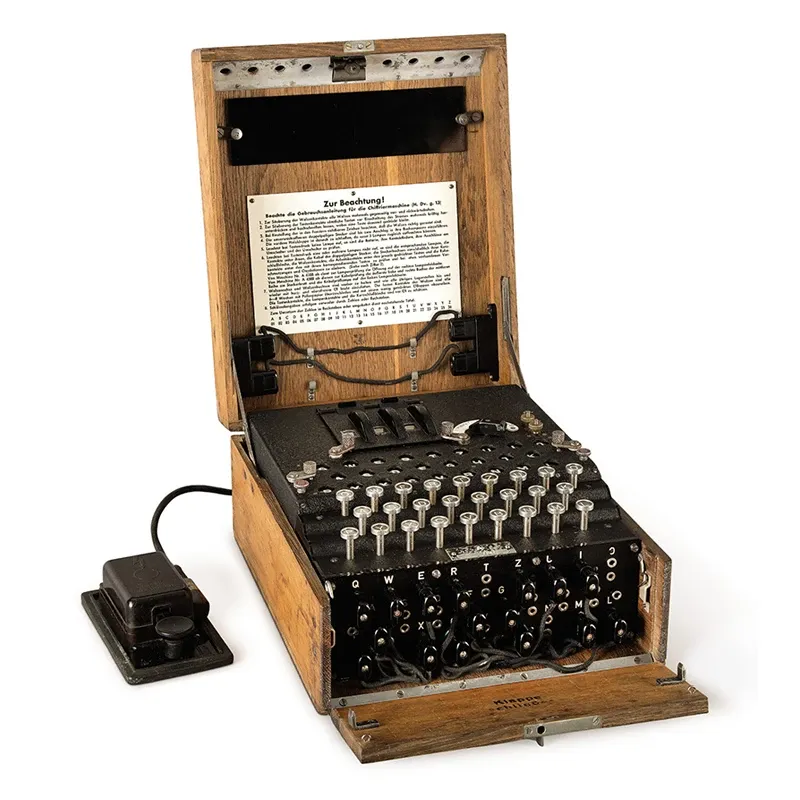
In the Enigma case the classic tools were a crib, a known-day linkage, and a software bomb. In the ADFGVX case the key was sitting in a printed source.
The work was to try it outside the date window that earlier readers had treated as firm, rebuild the grid, and ask whether the resulting German made sense against a ship’s log.
GPT-6 Astra did not invent a new cipher attack.
What is new is the wrapping: a single system that can hunt in digitized archives, write the simulator, run the search, and then look up whether HMS Canterbury was actually in Sevastopol that week.
That is closer to a research assistant that does not get bored than to a sudden collapse of modern cryptography.
The contents of both messages are small. One soldier wants a route and a radio answer. One station reports a cruiser and a squadron two days later. That modesty is useful. It keeps the story attached to what the traffic actually was: routine military administration, garbled in Morse, filed, and then ignored until someone had a reason to look again.
The more durable question is not whether a new model can finish leftover homework from 1918 and 1941.
It is how much of the remaining unsolved list, from Schmeh’s ADFGVX leftovers to other short Enigma army notes, now falls to the same loop of crib, archive, simulator, and cross-check, and how carefully the people running that loop publish the settings so the next reader can break the work rather than the spell.




















































































































































































































































































