Back in 2016, Indonesia was gripped by a sensational murder case that involved the tragic death of Wayan Mirna Salihin.
It shook the whole nation, and made one of the longest-trialed, publicized murder case the nation has ever seen.
27-year-old Jessica Kumala Wongso was charged, and trialed on June 15, 2016. And on October 27, 2016, she was found guilty and sentenced to 20 years in prison.
The former permanent resident of Australia, was charged with the premeditated murder of Mirna, her own friend she knew from college.
The murder caught the nation's attention for many reasons, and it also caught Netflix's.
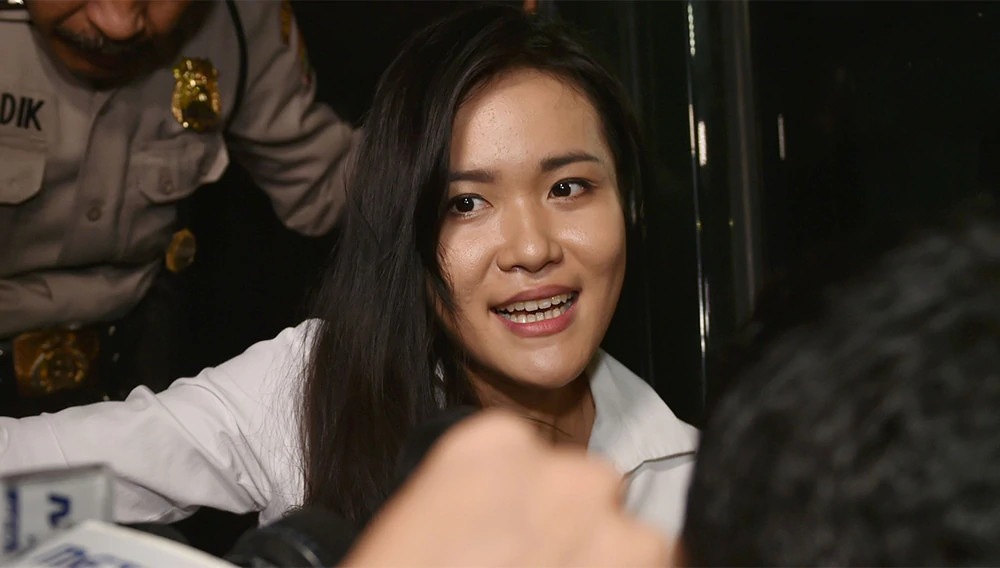
It all began one day, in 6 January 2016.
On 3 p.m., Jessica arrived at Grand Indonesia shopping mall in Jakarta to meet her friends. She arrived two hours early, saying that she did so to avoid traffic.
After making a reservation at the Olivier Café and doing some shopping, Jessica returned to the café, and ordered some drinks. She then waited until her friends arrived, and during the whole time, the drinks Jessica bought were somehow hidden from view of the security cameras, due to carefully placed 3 shopping bags Wongso had placed on the table 54.
Soon after arriving, Mirna took a sip of the Vietnamese iced coffee, and said that it tasted horrible.
"This is awful," she said, saying that her mouth was burning.
It didn't take long until she lost consciousness and collapsed.
Foam came out from her mouth, and Mirna was convulsing.
Shortly after, several Olivier Café employees, namely the general manager of the restaurant, the head bartender, some waitresses and several other restaurant employees who witnessed Mirna collapsing, came over to table number 54.
Mirna was brought to a clinic, where a general practitioner observed that Mirna was alive but appeared to be unconscious and stiff. Knowing that there was nothing they can do there, an ambulance was called.
Mirna was rushed to a nearby hospital, at Abdi Waluyo Hospital in Menteng, Central Jakarta.
There, she was examined, and was found to have no pulse, and was not breathing. She was flat lining, showing no vital signs.
The doctors quickly performed treatment to her, and performed artificial respiration and cardiac massage for approximately 15 minutes.
Despite efforts to save her, the unfortunate 1988-born woman died that day at 6 p.m..
It's said that an "autopsy" was conducted on 10 January, which found that Mirna's stomach was bleeding, indicated that the inner lips of the victim had a bluish color, and the cause of death was cyanide found in her stomach.
The amount was significant that Mirna's stomach lining was corroded by it.
The forensics revealed the results of the examination of the coffee sample consumed by Mirna, concluding that the coffee sample contained 15 grams of cyanide poison. For comparison, 90 milligrams of cyanide can cause death in a person weighing 60 kilograms. This roughly translates to 3-4 drops if it's in liquid form.
In fact, the coffee was kind of yellowish, reports said, like turmeric.
These findings led to suspicions of premeditated murder.
Mirna was the daughter of wealthy businessman Edi Darmawan Salihin, and what made it more heartbreaking, she was only recently married Arief Soemarko weeks before her tragic death

Because Jessica was a permanent resident of Australia, the Indonesian police had to work together with the Australian Federal Police.
During the investigation, the police in Australia helped by a handing over confidential files regarding Jessica's psychological state, amongst them, include a restraining order against her made by an ex-boyfriend, to Indonesian authorities.
For about five months, her trial was broadcast live on national television, and became a national spectacle.
When the court trial started on June 15, the case had already gained some attention in the public and media owing to the strange nature of Mirna’s death.
But the court case, in itself, became a massive point of attraction and debate for the public over the next four and a half months. Through real footage from inside the courtroom, the case also raised questions about the manner of proceedings in Indonesian courts, as the space often became a stage for heightened unnecessary drama.
Starting with the case of the prosecution, the first and foremost claim was the sequence of the events.
As a result of this, the "cyanide coffee case" essentially became its own soap opera.

Following a lengthy appeal process, Jessica's cassation appeal was ultimately rejected by the Supreme Court.
This marked the final chapter in a case that had gripped the nation for months.
After she was found guilty, in which she didn't show even a glimpse of remorse, it is said that she murdered Mirna in revenge for repeatedly telling her to break up with Patrick O'Connor, her former Australian boyfriend.
Even when the case was closed, there are still numerous controversies surrounding the premediate murder that led to the tragic death of Mirna.
One of the most debated controversies revolves around the absence of authentic footage showing Jessica actually pouring cyanide into the coffee consumed by Mirna. However, there are several minutes of footage where Jessica strategically placed shopping bags next to Mirna's coffee, effectively concealing it from the view of the CCTV camera.
Other controversies include the WhatsApp conversation quotes between Jessica, Mirna, Hani, and their friend named Vera, dated January 1, 2016, that have circulated. In these conversation, Jessica inquired about a general practitioner practicing at Grand Indonesia.
Then, the internet saw a mysterious photo, which featured two women, believed to be Jessica and Mirna in a room. Prior to this, there were rumors suggesting that Jessica might be a lesbian. Jessica vehemently denied these claims.

After that, there are also messages from Mirna's phone, which Mirna's father revealed that a conversations between Jessica and Mirna indicated Jessica's desire to be kissed by Mirna.
Among others, there is also the trousers Jessica wore on the day Mirna died, which went missing and never recovered.
These controversies have added layers of complexity to the case, raising questions and debates about the circumstances surrounding Mirna's tragic demise.
Regardless, the murder of Wayan Mirna Salihin remains one of Indonesia's most notorious criminal cases.
"The defendant's actions were very cruel because it was committed against her own friend," the prosecutors said, slamming the Australian, who won't be facing death penalty after her home nation's government made a deal with Indonesia.
"(It) was sadistic because the poison cyanide used to take the life of victim, Wayan Mirna Salihin, didn't immediately kill her, but tortured (her)."
In the end, Jessica received 20-years prison sentence.
She was found guilty of premeditated murder in the death of Mirna, and that she has exhausted all options for appeal
7 years after the murder, one of the largest streaming platforms, Netflix, is launching a documentary titled Ice Cold: Murder, Coffee, and Jessica Wongso.
The documentary reconsiders the shocking story through original interviews with Mirna’s family, the defense and prosecutorial teams, and others close to those involved in the case, namely Mirna's father and twin sister, Jessica's lawyer, and the journalists who explored the case.
Jessica was also interviewed from the prison.
As the documentary unfolds, strange events and potential loopholes emerge in the courtroom proceedings.
It was only then, that people began to see how the case is riddled with strangeness and unanswered questions.
For example, it's said that an autopsy had never really happened, and all the authorities did, was taking a sample of Mirna's stomach. And then, it's said that the saturation of the cyanide, which was concluded more than a week after she died, was the equivalent of the saturation of cyanide if Mirna was consuming almond.
This was revealed by forensic pathologist from the University of Indonesia, Djaja Surya Atmadja. His comments, which became viral again, suggests that the cyanide was only at around 0,2 milligram per liter, an amout that is very insignificant.
He also said that cyanide poisoning always have symptoms like reddish skin, almond-like smell, and a presence of the chemical inside the heart, blood and urine.
And Mirna's "samples" didn't have all that.
Djaja said that Mirna couldn't have died because of cyanide.
Then, the documentary also revealed that she was only allowed to be interviewed once, and that further interaction with her was prohibited.
Her lawyer said that even the most notorious criminals in Indonesia were allowed to be interviewed, even terrorists who bombed Bali. But why not Jessica?
Why didn't the police allowed Jessica to talk freely when interviewed?
Jessica was just an ordinary woman, not a politician or anything. There were no evidence that directly point Jessica as the actual murderer.
So, should Jessica Wongso have been found guilty after all?

In Indonesia, as the documentary shows, there’s no trial by jury. Instead, an assembly of judges decides the verdict.
Mirna was killed, and when someone died, someone should be responsible for it. Is Jessica's arrest because the police had no option not to? Is it because the police's and the prosecutors' credibility was at stake that Jessica was made a scapegoat?
Was justice really served? And if not, then what did happen to Mirna?
At some point, the documentary created more questions than answers.
By the end of the documentary, it is more the Indonesian criminal justice system that is brought into scrutiny than the particular case itself.
Regardless and of course, if money is a concern, piggybacking the most attention-grabbing legal cases in Indonesia, the virality makes the documentary a money-magnet for Netflix.

On 18 August 2024, Jessica, who was convicted of murdering her friend Mirna by poisoning her coffee, was released on parole.
She had been serving a 20-year sentence but received sentence reductions totaling 59 months due to good behavior.
As part of her parole conditions, Jessica shall be under strict supervision until March 27, 2032.
What this means, she must regularly report to authorities and comply with specific rules and restrictions.
Any violation of these conditions could result in her being sent back to prison to serve the remainder of her sentence.
Jessica, wearing a dark blue dress, was picked up by her attorney Otto Hasibuan in a luxurious black Mercedes-Benz Maybach.
After leaving the Pondok Bambu prison, Jessica headed to the East Jakarta District Attorney's Office and then proceeded to the Class I Correctional Center in East Jakarta to sign her parole release papers.


The public response to Jessica Kumala Wongso’s parole has been mixed. Some people believe that her release is justified due to her good behavior and the time she has already served. They argue that the justice system has followed the proper procedures in granting her parole.
However, many others are outraged and feel that her release undermines the severity of her crime.
They believe that she should serve her full sentence without reductions.
The case has reignited discussions about the fairness and effectiveness of the parole system in Indonesia.
In ways to seemingly mocked the justice, and also Jessica, a lot of people on social media suggest Jessica to open a business, like a coffee shop, just in case she forgot what brought her to prison.
Others also said that Jessica still look 'glowing' despite years in prison, and argue whether she really did receive special treatments while serving her sentence.














































































































































































































































































