One of the world's largest crypto exchange, Binance, was experiencing difficulties when regulators in Asia was cracking down its virtual money.
It was faced with conditions imposed by the Japanese government. The Financial Services Agency of Japan (FSA) said that Binance was operating in Japan with no registration and judged that investors could suffer damage. This panicked investors, which immediately led to a bearish trend in bitcoin prices.
Hong-Kong’s Securities and Futures Commission (SFC) also issued a warning that affected Binance.
To overcome these issues, the Hong Kong-based cryptocurrency exchange decided to take action, and move to a better place to settle. And its choice was Malta, an archipelago nation in the central Mediterranean with the world's friendliest jurisdictions for cryptocurrency.
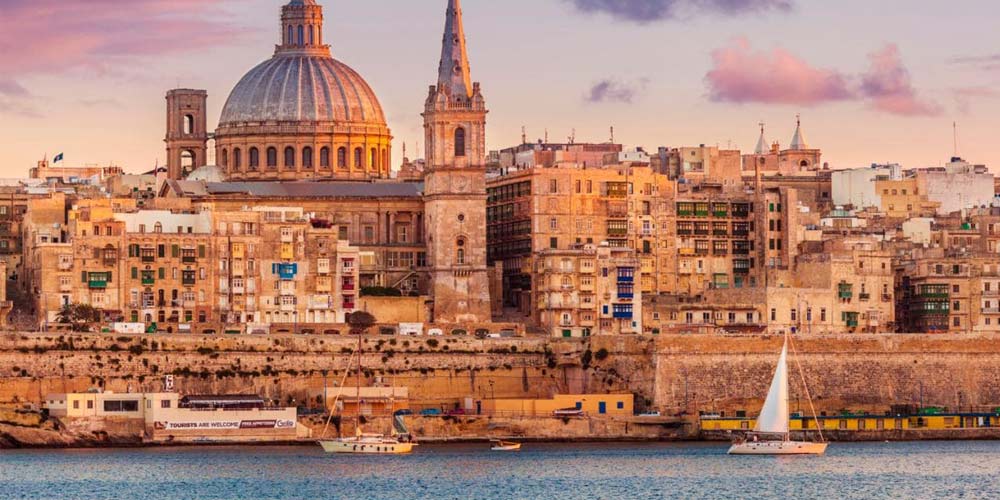
As a result, in a research done by Morgan Stanley, the country hosts almost $1.2 billion of the total trading volume. As of April 2018, this is the world's largest cryptocurrency trading.
Malta is followed by South Korea at $900 million and Belize with $700 million.
"Many exchanges may have users in a particular country, but this is often not where the company has chosen to legally register," Morgan Stanley strategist Sheena Shah said. "The majority of cryptocurrency trading volumes operate out of companies legally located in Malta."
The small European island Malta is positioning itself within the world's cryptocurrencies with legal regulations to attract investors in fintech and related businesses. And here the government announced that they welcomed companies like Binance with open arms.
When countries around the world are expressing a variety of concerns about cryptocurrencies, if not cracking down on them. Malta on the other hand, is having rules that should give exchange owners and users certainty about the future.
The rules will cover how brokerages, exchanges, asset managers and traders operate, making them among the broadest set of regulations for the industry. The nation's cabinet has also created separate bills relating to blockchain technology and cryptocurrency.
"Once new laws surrounding blockchain technology and cryptocurrency are enacted in Malta, banks would be less reluctant to welcome companies working in the industry, presumably due to the legal certainty it would provide,” said Silvio Schembri, the Parliamentary Secretary for Financial Services, Digital Economy and Innovation.