A group of researchers from the University of Texas at Dallas have scanned through audio recordings from NASA’s Apollo and Gemini missions.
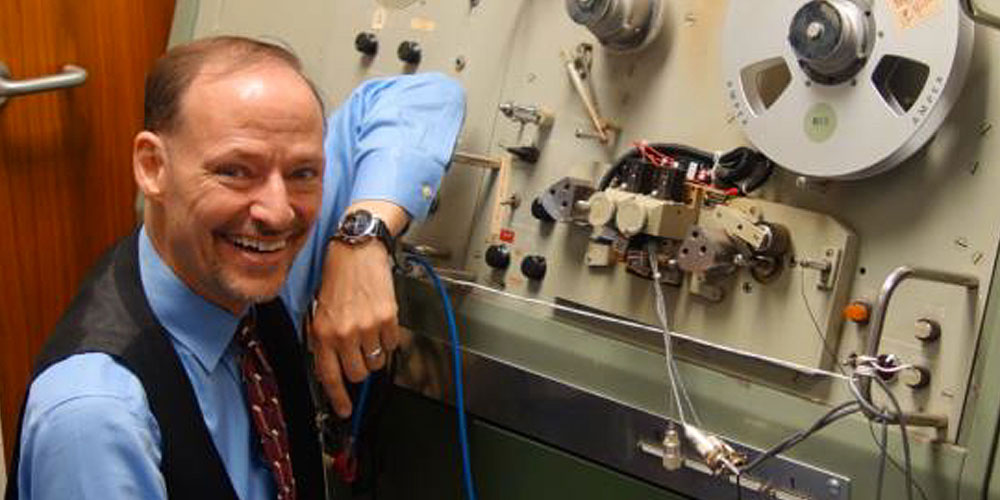
After analyzing and doing some cleaning up, they created digital copies of those analogue tapes to make them more accessible.
After that, they uploaded the results to a website called 'Explore Apollo', adding those recordings with timestamps to make it easier to follow.
The recordings include the first communication between the Apollo 11 astronauts and NASA, when Neil Armstrong and Buzz Aldrin landed on the moon, and Armstrong’s famous quote when he stepped onto the moon's surface:
One small step for [a] man, one giant leap for mankind."

According to the University of Texas, the researchers have been digging through the audio for more than 5 years, and it was challenging in part because of what was recorded. On many of the original recordings, there were many people speaking at the same time, which makes the recordings noisy.
The researchers did some analyzing and developed algorithms to process those recordings. The system they used was described in a paper for the journal IEEE/ACM Transactions on Audio, Speech, and Language Processing.
Another challenge the researchers needed to overcome, was learning "how things worked at NASA during the missions so they could understand how to reconstruct the massive amount of audio," the university said.
"When one thinks of Apollo, we gravitate to the enormous contributions of the astronauts who clearly deserve our praise and admiration," said researcher John H.L. Hansen in the UT Dallas statement. "However, the heroes behind the heroes represent the countless engineers, scientists and specialists who brought their STEM-based experience together collectively to ensure the success of the Apollo program."
Neil Armstrong, Buzz Aldrin, and Michael Collins might be the famous names people associate with the mission to the moon. It was on July 20, 1969 that they landed the lunar module Eagle on the surface of the moon.
And with the help of technology, NASA and researchers have released over 19,000 hours worth of audio from this historical mission. This is more than 2 years worth of non-stop audio listening.
During the 50th anniversary of Apollo, "I'm really pleased that this resource is becoming available," said Mark Geyer, director of NASA's Johnson Space Center in Houston, home to Mission Control. "These tapes offer a unique glimpse into what it takes to make history."
Previously in 2015, Project Apollo Archive has released 8,000+ images from NASA’s Apollo missions.

























































































































































































































































































