The U.S. National Security Agency (NSA) has exposed classified data on a public Amazon Web Service (AWS) storage server.
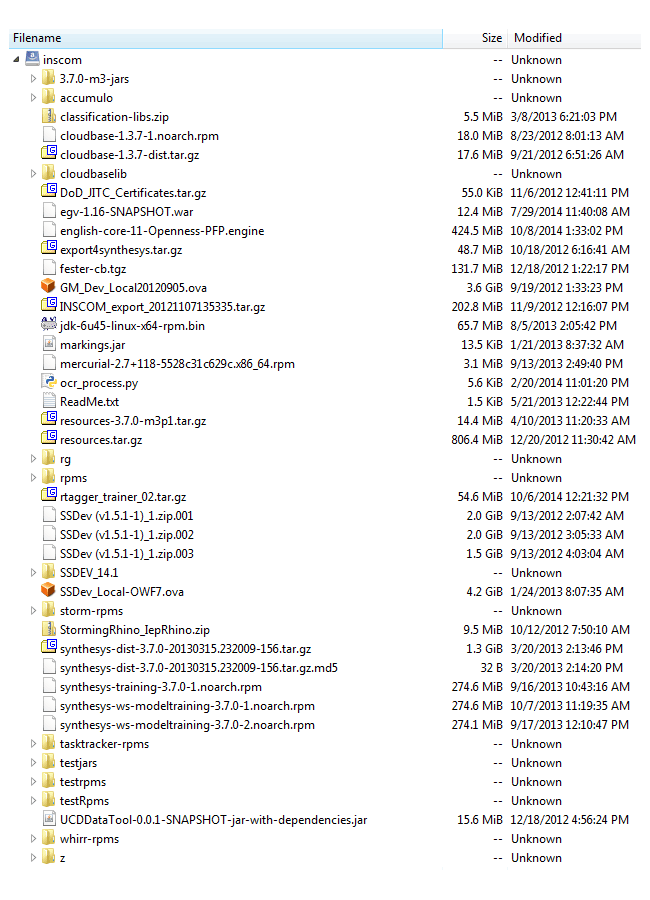
With the codename "Red Disk", it was listed on AWS subdomain "inscom" (INSCOM - a division of both the Army and the NSA), and contained more than 100 gigabytes of data.
What the documents hold, can be dated back to the Army in 2012. Red Disk, a $93 million program considered a military failure, was designed to help the Pentagon with soldiers on the field collecting classified reports, including drone footage and satellite images.
The AWS server was unlisted. But because it didn't have a password, anyone on the internet can find it and see some of the government's secret documents.
Classified as "NOFORN," which means that the information is sensitive enough that even foreign allies are not allowed to see it, the documents contained 47 viewable files, three of which were downloadable and exposed national security data.
It was first discovered by Chris Vickery, the director of cyber risk research at security company UpGuard.
"It was as simple as typing in a URL," Vickery said. "This data was top secret classification, as well as files obviously related to U.S. intelligence networks. It's stuff used to target people for death, and it was all available in a URL."
Because it had been unbelievably easy for Vickery to discover the documents, his first thought was: "is this real?"
Data breaches from both AWS servers have become common in recent years.
Amazon's cloud storage has exposed data tied to the Pentagon, Verizon, Dow Jones and about 200 million American voter records, due to poor security on AWS servers.
The NSA, meanwhile, has also suffered notorious leaks that can be dated back to Edward Snowden in 2013. Since then, hackers have stolen some of NSA's hacking tools. Besides Snowden, several other NSA contractors have faced charges after leaking NSA's classified documents, with one facing up to 11 years of prison time.
The intelligence agencies of the United States, work in a shadowed world. Their intelligence operations are often approved in the FISA Court rather than by a normal federal judge. They have been granted power to operate and gather data on individuals from inside and outside of the U.S..