AI has been around for decades, but the hype about it was never bigger until OpenAI introduced ChatGPT.
Besides showing immense abilities and interactions, thanks to Large Language Models behind the product, the generative AI also allows developers to implement the technology into their own products, meaning that the AI chatbot can be trained to practically answer all questions about the entire human knowledge.
As long as that knowledge is somewhere in its data sets, or on the internet, generative AIs like ChatGPT can respond with the appropriate answer.
Awing and wowing the public, others followed suit, and soon, pretty much all tech companies either use ChatGPT or develop their own generative AI solution.
In other words, generative AI caught the world by storm, and disrupted pretty much everything in the tech sphere.
While others are competing, Sam Altman, the CEO and founder of OpenAI, is already on to the next step.
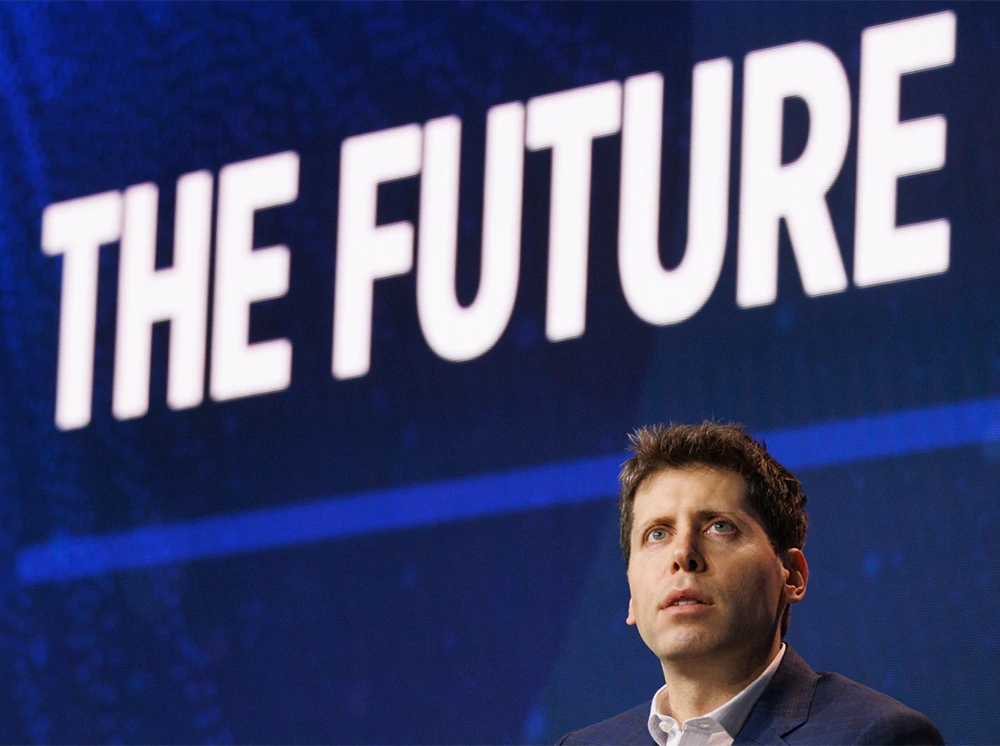
And unlike anything else in history, his requests is an amount that sums up to trillions of dollars.
According to reports, the OpenAI executive is in talks with investors, including the United Arab Emirates government, to raise funds for a wildly ambitious tech initiative that would boost the world’s chip-building capacity, expand its ability to power AI, among other things.
To achieve this goal, Sam Altman could be required to reaise as much as $5 trillion to $7 trillion, according to one of the people familiar with the matter.
Altman was already trying to lead the development of human-level artificial intelligence.
This time, Altman plans to raise the humongous sum of money to help reshape the global semiconductor industry.
$7 trillion is more than the U.S. federal budget for 2022 fiscal year, about three times the cost of the U.S.'s war in Afghanistan as of 2022, and about twice the cost the U.S. spent in World War II, adjusted for inflation.
At this time, there are 9 publicly-traded companies around the world that have a valuation of over $1 trillion, and the two biggest ones are Microsoft and Apple, which are both neck and neck.
And $7 trillion is more than the valuation of both companies.
That amount is about 3 times the valuation of Saudi Arabia's Aramco, considered the largest daily oil production of all oil-producing companies.
It's also about 6 times the valuation of PetroChina, considered Asia's largest oil and gas producer, 6 times the valuation of Meta, the largest social media platform on Earth, and 6 times the valuation of Tesla, the largest car manufacturer in the world.
Another of saying these, $7 trillion dollars is an enormous sum of money due to its magnitude.
This amount is a rough calculation, but it's based on the fact that the technology behind generative AI has exploded.
The trend is fueling a demand for chips that can handle the needed processing power.
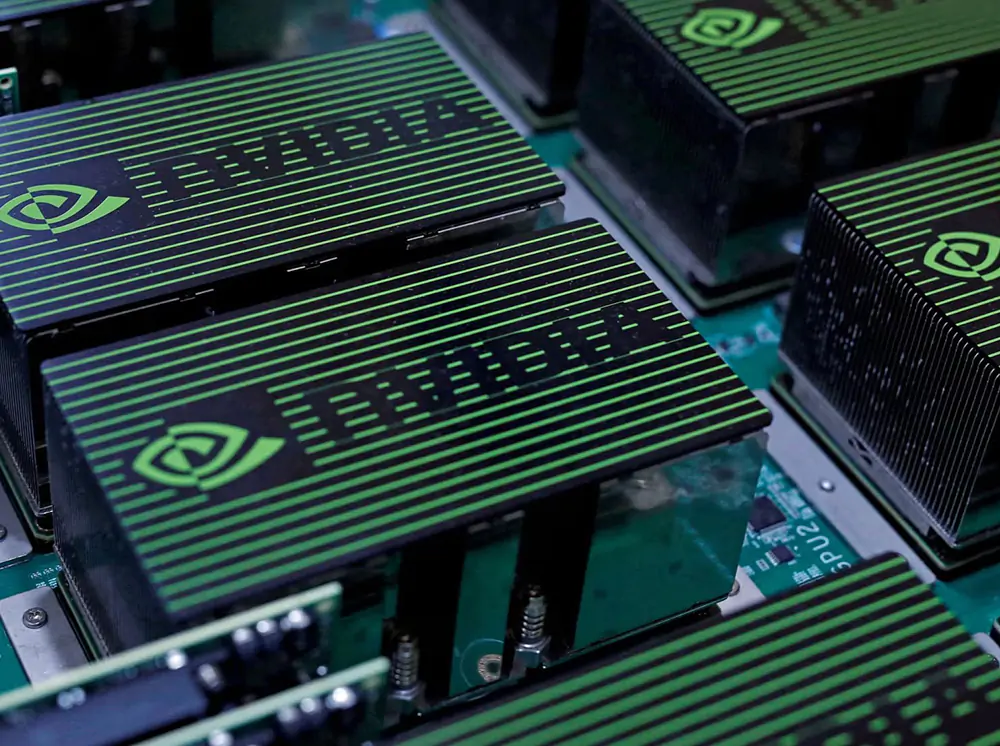
Generative AI relies heavily on processing power due to its complex architecture and training process.
During training, the AI is fed vast amounts of data and letting it adjust those parameters to minimize errors and improve its predictions.
And the processing power is needed to perform the countless mathematical operations, such as matrix multiplications and activations, over and over again.
The more parameters a model has, the more computations it needs to perform.
And at this time, models can consist of millions (even billions) of parameters that need to be fine-tuned.
"I don't possess a physical form or personal belongings, so I'm not equipped with a GPU in the traditional sense," said ChatGPT, when asked on the GPU it uses. "However, I'm powered by state-of-the-art servers that are equipped with powerful GPUs to facilitate my lightning-fast responses and deep understanding of your queries."
And Altman needs it to solve the constraints to OpenAI’s growth, including the scarcity of the pricey AI chips.
Altman has often complained that there aren’t enough of graphics-processing units, or GPUs, in existence to pursue to Artificial General Intelligence (AGI), which can be defined as a system that is broadly smarter than humans.
At this time, the major GPU manufacturer, Nvidia would have trouble creating tens of millions of GPUs and selling them to a single company because according to reports, Nvidia's current capacity is said to be limited to one million AI GPUs.
Before this, another major player, Microsoft, has also thought of this, but it's initial ambitious plan is to build a nuclear reactors to help power its AI chips.














































































































































































































































































