The English word "zombie" was first recorded in 1819, and can be traced to the poet by Robert Southey, with the word's origin traced back to Africa.
The newer versions of the zombie, can be traced to the Haitian folklore, before the term was adopted by the West through films and various other medias, including Dawn of the Dead, and Michael Jackson's music video Thriller.
It was only after this, that in the 1990s, the term zombie shot up to pop culture, thanks to the introduction of the Resident Evil franchise and more similar video games, as well as the The Walking Dead franchise among others which feature zombies portrayed as reanimated corpses or virally infected human beings.
Only since then, that the society finally describes zombies as mindless creatures that wander aimlessly.
And in Philadelphia, the exact thing happens, and this puzzles the internet in general.
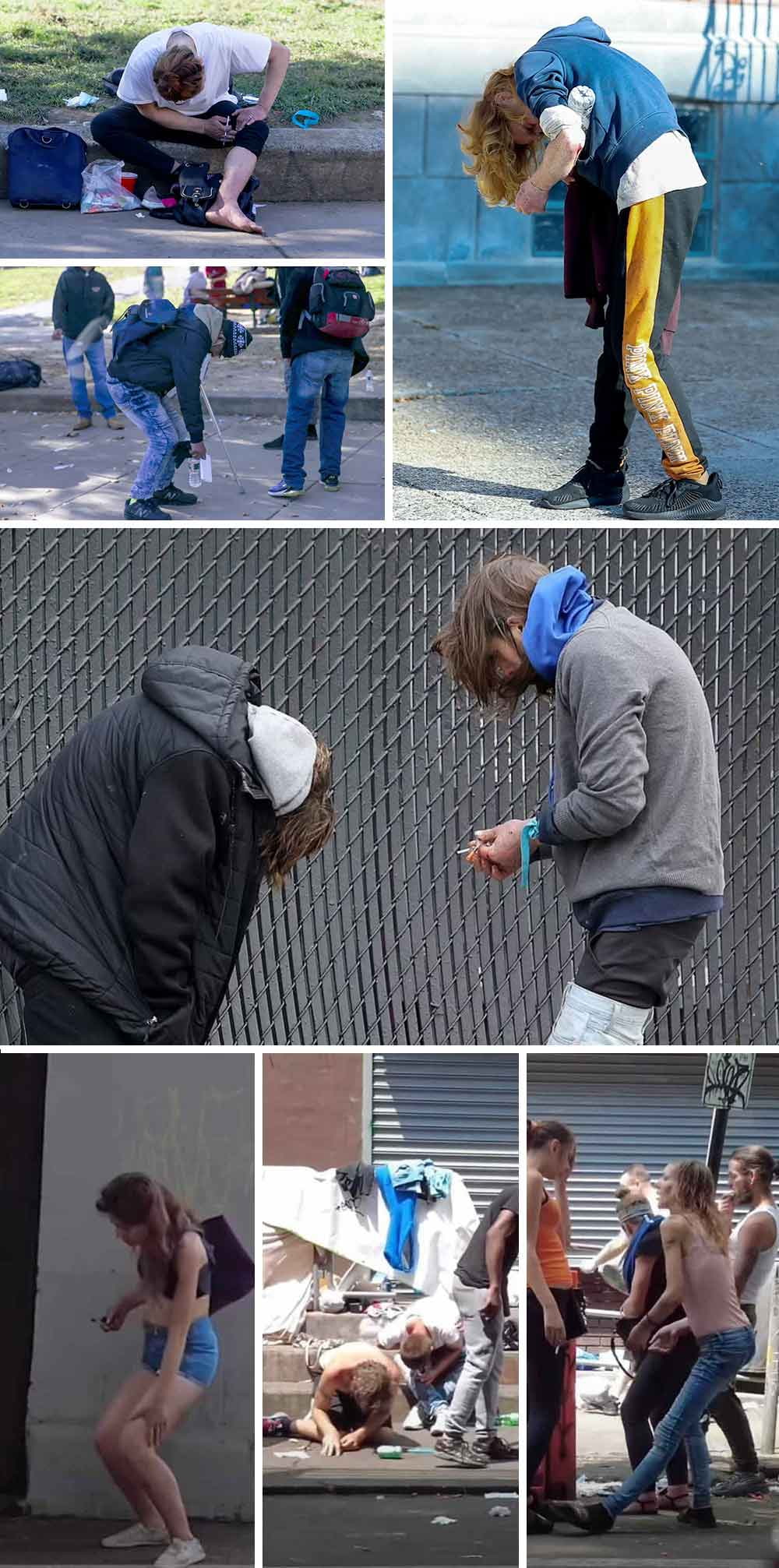
Many netizens question the validity of the footage, as it's difficult to understand how the horror they see in science fiction has become a reality.
It all began when a number of social media users started sharing videos of seemingly animated corpses on social media platforms.
In many of the footage, people are shown walking aimlessly with blank stares.
They also stand eerily.
Some men and women are seen walking unbelievably slow with their mouths open, with some others stand, but with their backs bent down so their head is between their feet.
Some of these people have wounds through out their body, or even missing their limbs.
Making things even more horrifying, the streets are literally littered with all sorts of used items and garbage.
Long story short, the videos show exactly how a post-apocalyptic world caused by zombie infestation would look like in science-fiction and horror.
Thanks to COVID-19 and the pandemic that followed, the internet was heavily discussing about zombies, and how people were expressing their fears.
As a result, terms like "zombie" and "zombie virus" were trending.
And because of that, videos and photos of these people quickly caught the internet's attention.
While people can speculate only through their imaginations, fueled by science fiction and horror flicks marketed through pop culture, in reality, the videos were all taken in parts of the U.S., particularly in Delaware, Michigan, and Philadelphia.
What has been happening for many years, these videos surface the threatening drug problem in the regions.
But things are more intense in Philadelphia, where the world's largest open-air drug market is contained in Kensington.
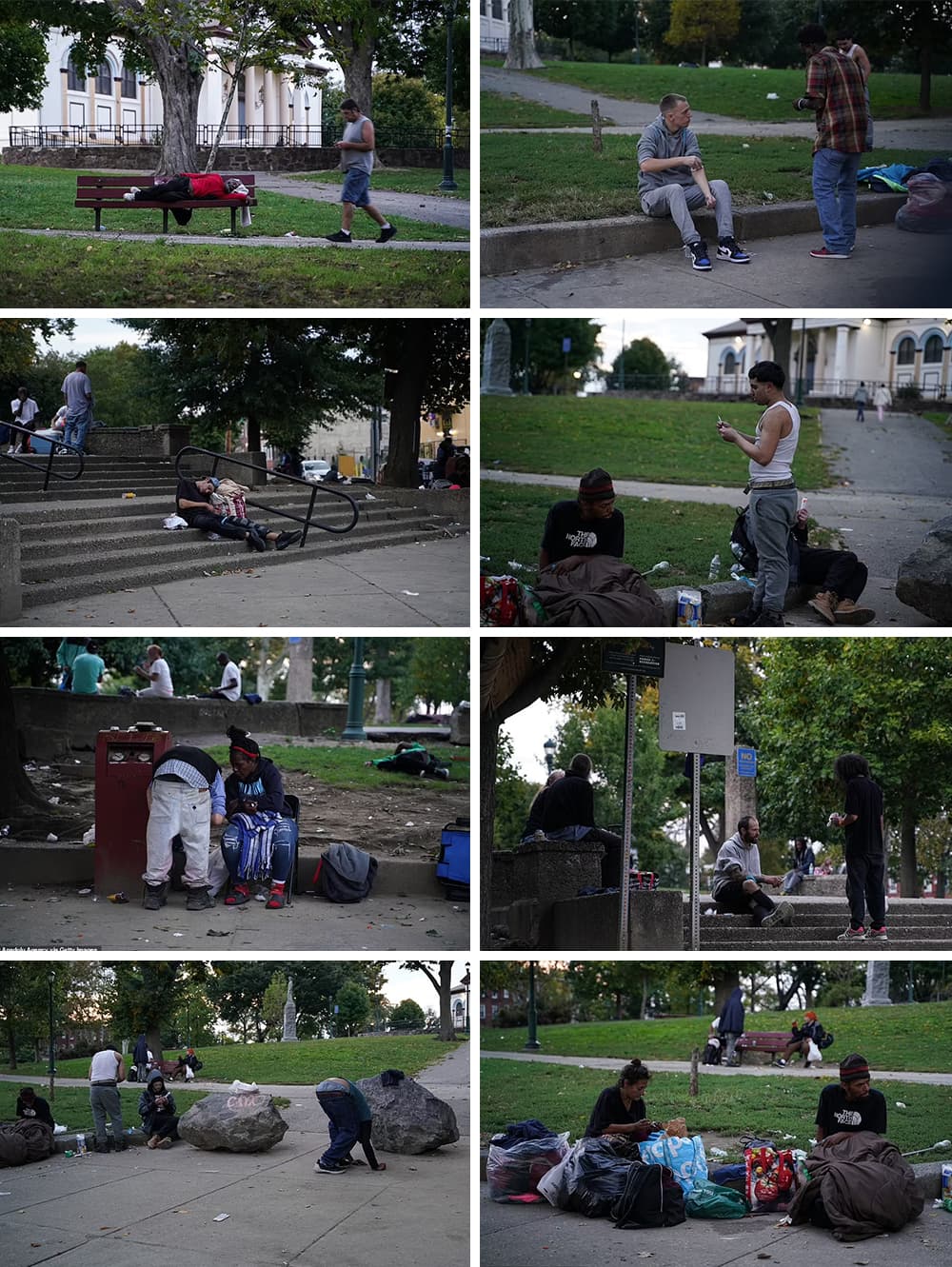
Illegal drugs have been around in the streets for more than many years, and this also happened in places such as Philadelphia, Delaware and Michigan.
But especially in those places, where heroine and fentanyl demand are high, another kind of drug came into existence.
And that drug is called 'Xylazine'.
Xylazine is not a new drug. In fact, it's essentially used for sedation, anesthesia, muscle relaxation, and analgesia in animals such as horses, cattle, and other non-human mammals. Veterinarians can also use Xylazine as an emetic, especially in cats.
The thing is, the sedative effect of the drug has made it a popular choice for many drug users in the U.S.
In Kensington in particular, the inner city area has been described by The Philadelphia Inquirer as "the poorest neighborhood in America's poorest big city," and has become ground zero for abuse of Xylazine.
In the area, including the parks, where trees grow and children can play, the surroundings are littered with all forms of garbage, with needles carpeting the grass, along with human waste, and the continuous presence of intoxicated people.
On the streets, Xylazine is being used to lace both heroine and fentanyl, in order to make then cheaper and easier to sell.
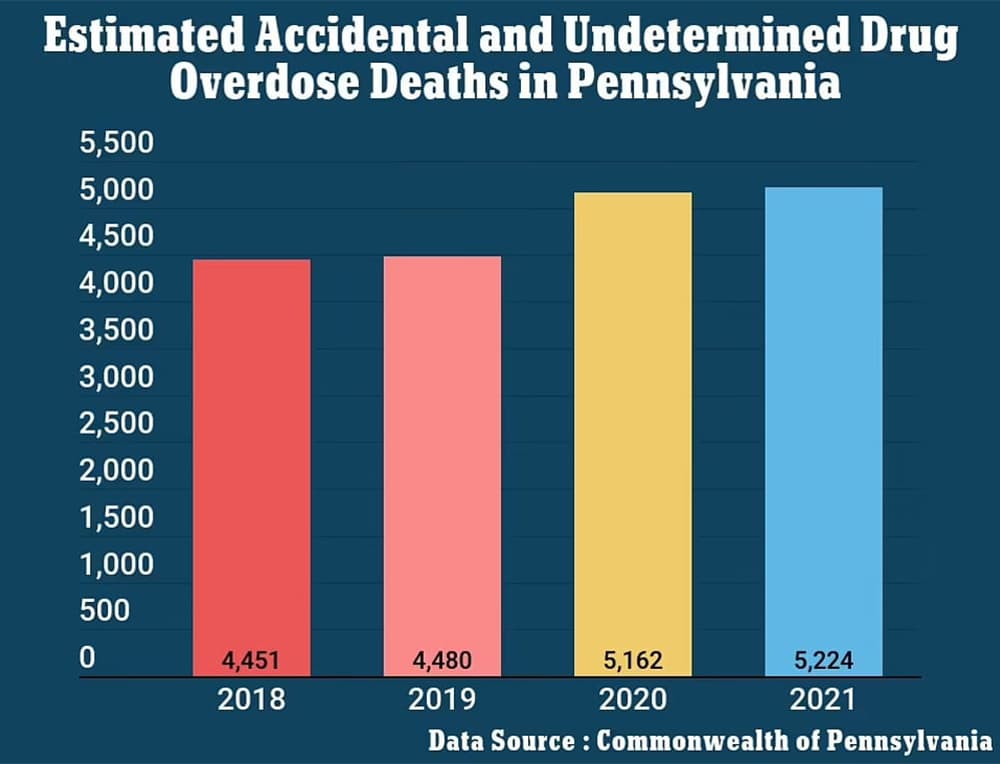
Also known on the street as "Tranq," the drug has been linked to thousands upon thousands of drug overdoses, and also deaths.
The drug began hitting the streets as a substitute for heroin in the early 2000s, and was first found on the streets of Kensington in 2006. But since the COVID-19 pandemic, its use has soared.
In fact, the sedative is found in more than 80% of all heroin and fentanyl supplies in Philadelphia.
This happened when drug dealers herd people deep in the throes of addiction by distributing a small amount of free drugs, in hopes that they’ll come back for more. Youths there are also lured into a pyramid scheme of drug dealing.
Due to its past abundance of abandoned factories and homes, Kensington was once a site for more than 50 separate open-air drug markets.
And Xylazine is high on demand there.
While approved by the U.S. Food and Drug Administration (FDA) for veterinary use, Xylazine, a non-opioid, is not safe for humans, and those who overdose on the drug do not respond to naloxone, or Narcan, the most common overdose reversal treatment.
When consumed, either injected or inhaled, the drug has a long list of side effects, which include skin sores so severe it resembles chemical burns, as well as wounds caused by infections at injection sites, and other health issues, including significant increase of soft-tissue infections, and bone disease.
And if the wounds, and the crusty ulcerations, which can become dead skin called eschar, are left untreated, they can result in amputations.
This is because symptoms include necrosis, which is death of tissue. And this apparently can affect any part of the body.
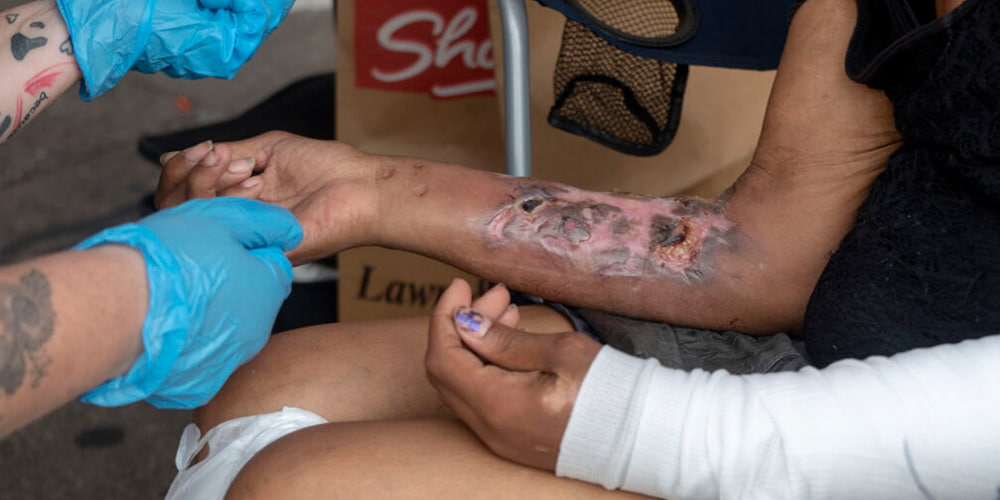
The drug also slows down blood flow, and significantly prevents the body from healing itself.
At times, due to its sedative-like symptoms, the drug's side effects also include excessive sleepiness and respiratory depression, which can also knock its users out cold, making them faint or fall into deep sleep.
In many cases, these "sedated" people can seen sitting down and lying down, or even standing, but with their head between their legs, as a side effect.
Fentanyl mixed with Xylazine is also known by the street names "Sleep-cut," and also Zombie Drug."
Xylazine has a long history, first discovered as an antihypertensive agent in 1962 by Farbenfabriken Bayer in Leverkusen, Germanyand.
Before hitting the streets in the U.S. the drug has already been widely abused in Puerto Rico, where it's known by the name anestesia de caballo, or "horse tranquillizer."
In the U.S. however, Xylazine consumption as a drug was introduced accidentally.
The drug was introduced when either, or both heroine and fentanyl were difficult to come by. The less the heroine and fentanyl that could be found, the more Xylazine is being used to cut them.
While the effect of this animal tranquilizer is every bad for the human body, some users do actually came just purposefully for it.
It's reported that some users in Philadelphia have come to crave and prefer it, and that they beg or even work as prostitutes to obtain it.
In Kensington, crimes are particularly high because of this.
It's said that Xylazine-laced heroine and fentanyl can eliminate the "joy" of feeling high. However, the tranquilizer in the substance is extremely sedating, and this makes it feel like the effects of heroine and fentanyl last longer, even when they don't.
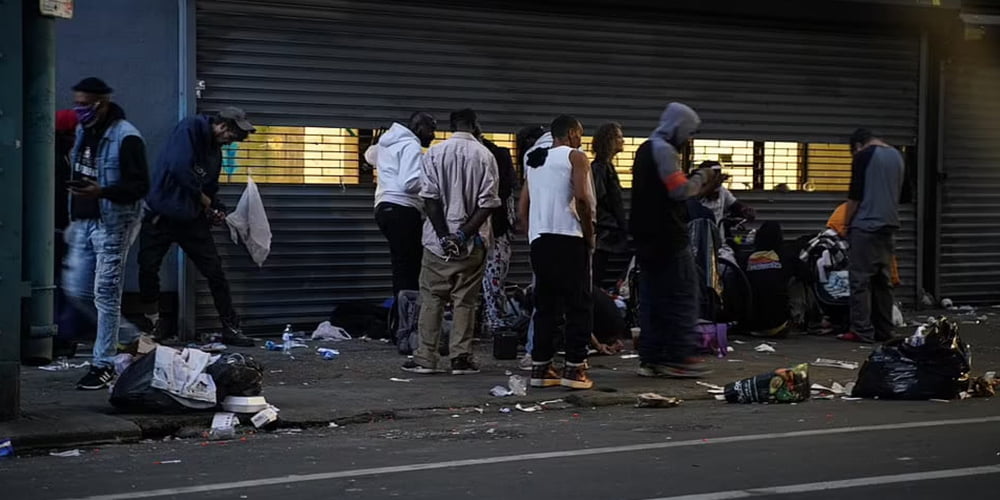
Literally everyone knows that abusing drugs are dangerous and is a difficult habit to kick.
But that doesn’t always stop people from abusing them. Just like nicotine or alcohol, people turn to drugs for a multitude of reasons.
They include social glorification, peer pressure, a way to self-medicate, a way to deal with grieving after loss, to reduce stress, thrill seeking, or simply to kill boredom. In one way or another, people take drugs to fit in into the society they try to blend, to escape or relax, to seemingly grow up, as a way to rebel, or as an experiment.
But once inside, their senses are blocked from the outside world.
This is because drugs are essentially poisons, and that the amount taken determines the effect.
In this case, a small amount of Xylazine serves as a sedative. A greater amount however, can be euphoric, especially when it's laced with heroine. A larger amount, or overdosing a drug, can be lethal.
Because Xylazine
But what keeps users users, is some drugs' abilities in affecting the mind.
They can distort the users' perception of what is happening around them. And this makes users' actions odd, irrational, inappropriate and even destructive. Drugs block off all sensations, both the desirable ones with the unwanted.
Because of this, and because of how addictive some drugs can be, drugs keep users coming for more.
Drugs affect people of all ages, genders, races, and socioeconomic statuses.
In Philadelphia however, most of the drug users and Xylazine abusers are homeless people.
Since they're doing the drugs in open-air areas, and in front of the public, many of them have been harassed, robbed of their belongings, as well as raped.














































































































































































































































































