When fragile pillars of global digital infrastructure buckle under the weight of newly uncovered security threats, the cascading consequences can ripple across millions of hosts within hours.
This reality starkly manifested when two severe remote code execution vulnerabilities, collectively tracked as PHP2Shell and assigned identifiers CVE-2026-109618 and CVE-2026-109619 (https://www.php.net/archive/2026.php#2026-10-21-5), were discovered in the open-source programming language that powers roughly 70% of all websites across the internet.
With more than five million PHP hosts exposed online and millions keeping ports open to potential attack vectors, the situation threatened to become a defining crisis for modern web connectivity.
The initial discovery originated from advanced frontier AI initiatives, specifically when OpenAI identified a critical flaw using GPT-5.6 Sol as part of its Patch the Planet initiative, with Wiz Research independently discovering and reporting both vulnerabilities shortly thereafter.
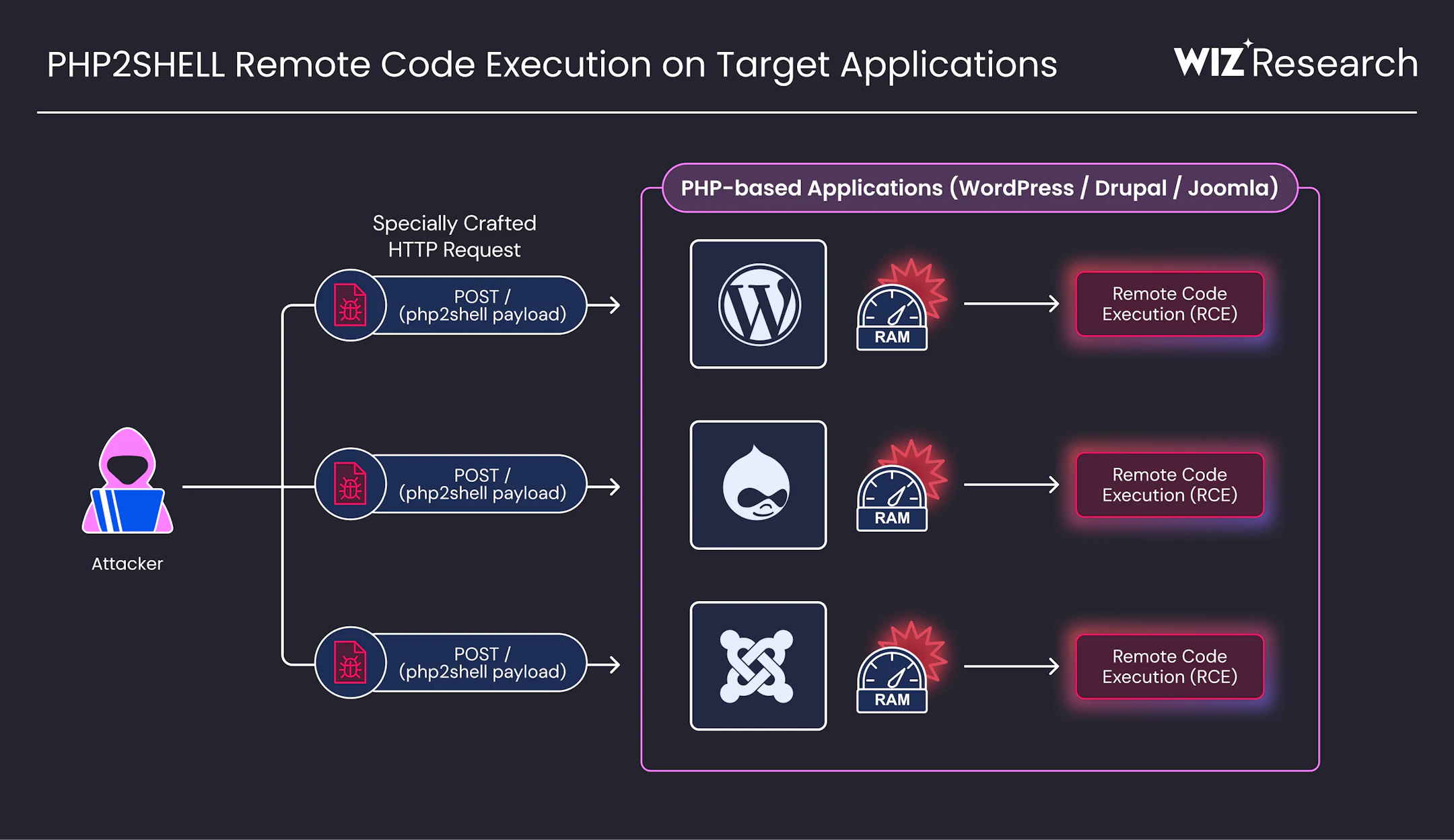
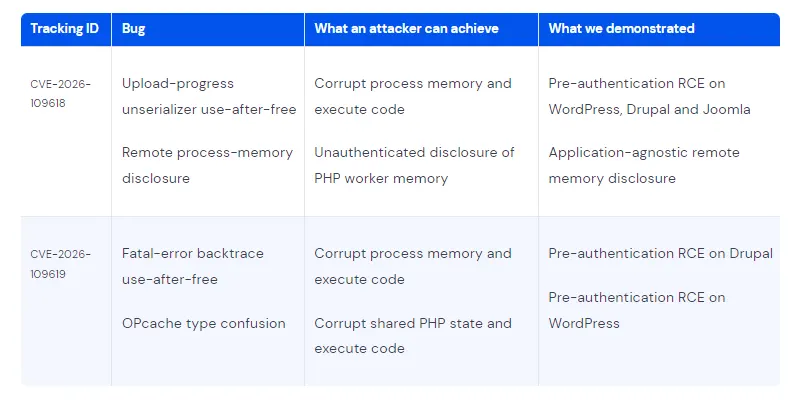
The PHP2Shell security vulnerabilities are core engine flaws that allow unauthenticated attackers to execute arbitrary code remotely or leak sensitive server memory across thousands of applications.
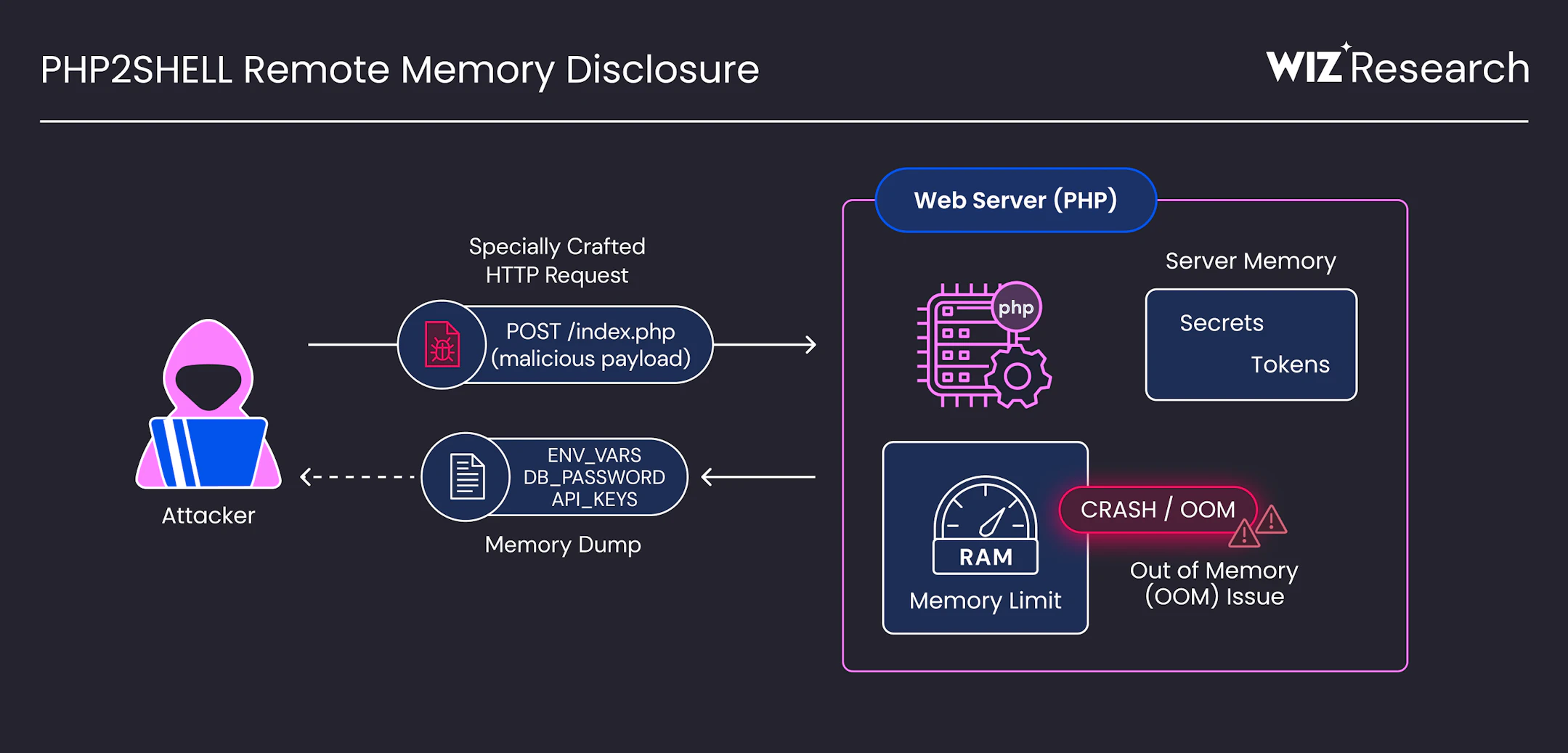
They work by exploiting abnormal execution paths, such as out-of-memory errors during request processing, which cause PHP to suddenly abort operations via low-level jumps without properly resetting its global state or cleaning up request memory.
When a web worker process subsequently handles a follow-up request, it inadvertently trusts this stale, uninitialized, or freed memory, enabling an attacker to corrupt memory structures, dump sensitive process data like authentication tokens, or force the worker process to execute malicious code.
Wiz Research combined these vulnerabilities into a single exploit script and demonstrated that it could execute code remotely without authentication across leading platforms like WordPress, Drupal, and Joomla.
To prevent these attacks, system administrators must immediately upgrade their PHP runtimes to patched releases (PHP 8.5.12, 8.4.27, 8.3.36 or 8.2.35), disable upload progress parsing if patches cannot be applied right away, or temporarily configure PHP worker pools to reset after every single request to prevent stale memory from persisting across user sessions.
Because advanced AI systems found these security holes before malicious actors could weaponize them, developers and maintainers gained a vital tactical advantage.
As OpenAI noted regarding the timeline, "To our knowledge, frontier AI found these vulnerabilities before attackers did, opening a Defender's Window for maintainers and security providers to prepare fixes and protections ahead of disclosure."
Despite the proactive window, threat actors moved quickly once initial details and non-functional proof-of-concept exploits leaked online prior to official patches.
Security researchers at Amazon Threat Intelligence spotted attackers targeting the PHP2Shell vulnerabilities four days before security patches were officially released.
As malicious scans and fingerprinting evolved into active compromises, Adel Karimi, detection and response lead at Perplexity, captured concrete evidence using honeypots recording confirmed remote code execution against an Apache mod_php installation running PHP 8.4.26.
Karimi shared that "This is now confirmed RCE with usable memory disclosure, not just a crash followed by a suspicious process. The response delivered an 800 KiB decoded cookie dump, and a function address derived from that dump using the public exploit's offsets appears in the subsequent execution payload."
The severity of the incident drew swift validation from prominent security experts across the industry. Marcus Hutchins, an Expel threat researcher tracking the influx of exploitation reports, confirmed the telemetry by stating, "This is by far the highest quality confirmation of in-the-wild php2shell exploitation I've seen so far. Deep technical breakdown of a successful exploitation attempt against an Apache mod_php installation running PHP 8.4.26."
The PHP security team moved decisively by issuing emergency patches on Wednesday, October 21, following advanced warnings to system administrators to prepare their environments for immediate deployment.
These findings rank among the most severe vulnerabilities discovered in PHP, like ever, and arguably in software history.
The underlying flaws had been present for decades, but demonstrating their exploitability required an exceptionally complex chain of steps, at the edge of what human researchers could practically achieve.
Frontier AI models substantially reduced that barrier, turning a longstanding flaw into an exploit.
The episode underscored a profound structural lesson for the broader technology ecosystem regarding how complex software supply chains manage zero-day crises.
Coordinated disclosure coalitions involving maintainers, cloud infrastructure providers like Cloudflare, and security analysts proved essential for mitigating widespread disaster before automated exploitation tools could fully saturate the web.
By combining frontier technical detection with structured global defense frameworks, the digital landscape narrowly avoided a catastrophic collapse, illustrating both the growing perils hidden inside legacy code foundations and the defensive resilience required to keep the planet connected.






















































































































































































































































































