President Vladimir Putin has signed a law that prohibits technologies that provide access to websites banned in Russia.
The law that has been approved by the Duma, the lower house of parliament, bans virtual private networks (VPNs) and other technologies, such as proxies and anonymizers. These technologies allow users to gain access to blocked websites by replacing the user’s IP address and hiding the user's physical location.
Anonymous web surfing software is hugely popular in Russia.
Leonid Levin, the head of Duma’s information policy committee, said that the law is not intended to impose restrictions on law-abiding citizens but is meant only to block access to "unlawful content."
Under the rules, VPNs are required to register with the state's media watchdog Roskomnadzor within 30 days. As Russian's internet regulator, Roskomnadzor already maintains a blacklist of thousands of websites. Internet Services Providers (ISPs) are also obliged to block access to websites included on Roskomnadzor’s blacklist within three days.
Services that don't follow the state's media watchdog requirement, will be blocked within 24 hours. Access can only be restored once they comply with Roskomnadzor and sign up to the registry.
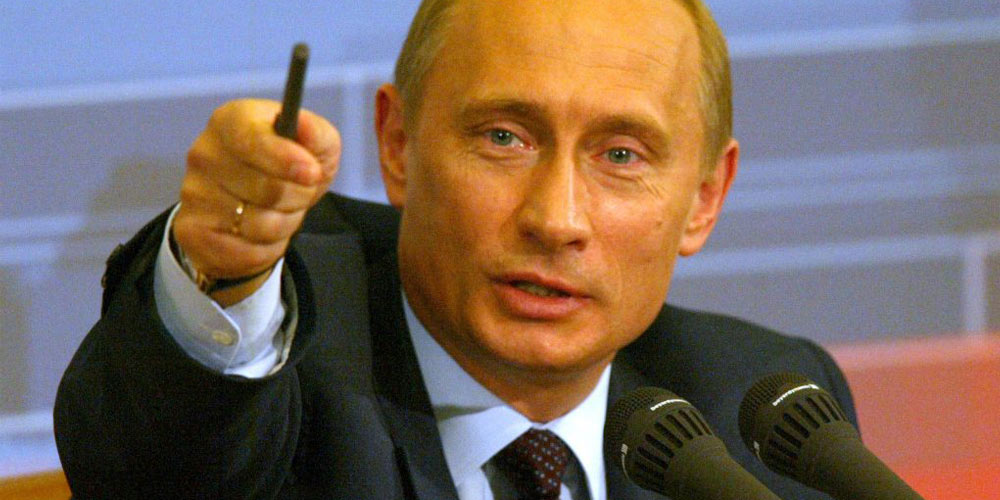
The President has also signed another law requiring chat apps to identify users through their phone numbers after January 1st, 2018. Some messaging apps already encourage users to attach their account to their phone number, but the Russian law is making this mandatory.
The measure also demands that operators limit users' access if they're spreading illegal material.
It's also meant to curb extremist content, and is also said to prevent Russians from seeing content that might be critical of Putin, not to mention communicating in secret.
The law was signed just a few months before Russia holds its presidential election in March 2018. By banning technologies like VPNs, it will make voters harder to see the news that questions Putin's authority. People may also be less likely to organize a protest if they know that the police can trace anonymous chats.
Here, Russian officials are trying to control the online conversation at a crucial moment.
Amnesty International criticized the law as a "blow in an assault on online freedom."
"With the Russian authorities increasingly intolerant of dissent, technologies that help internet users evade censorship and protect their privacy are crucial for freedom of expression online," said Denis Krivosheev, deputy director for Europe and Central Asia at Amnesty International.
Russia in banning VPN was first proposed in April 2017 when Putin had just returned from the G20 summit where he had publicly defended China’s domestic internet censorship. However, he stated that Russian would not be implementing China’s Great Firewall policies and instead follow its "own path" when it comes to internet censorship.