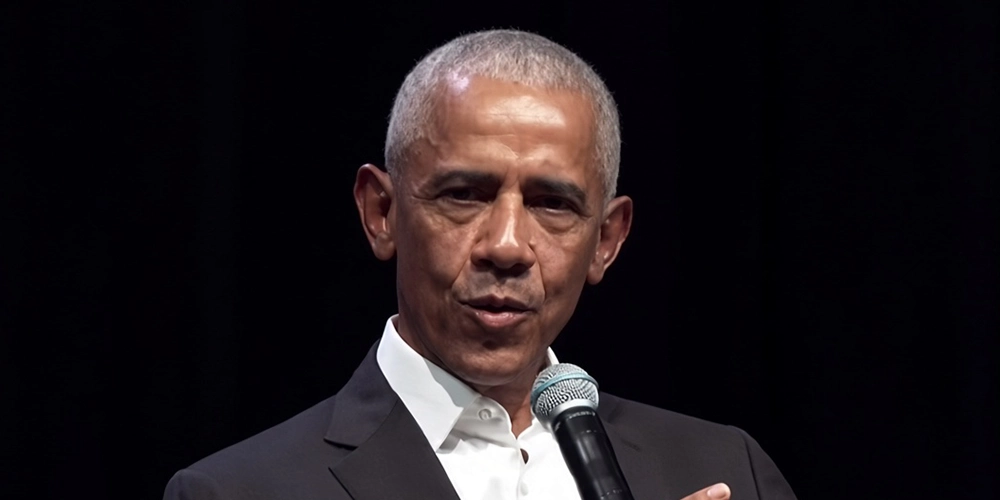
War is never a good thing for the people that suffer from it first hand.
The physical consequences of war include in injury, illness, malnutrition, disability and death. Civilians, especially women and children, suffer atrocities in particular.
The widespread trauma caused by these atrocities and suffering of the civilian population is another legacy of these conflicts, creating extensive emotional and psychological stress. Present-day internal wars generally take a larger toll on civilians than state wars, due to the increasing trend where combatants have made targeting civilians a strategic objective.
In Israel's war against the Palestinian's Hamas, after the latter's surprise attack to the former, the effects of the assault is far-reaching.
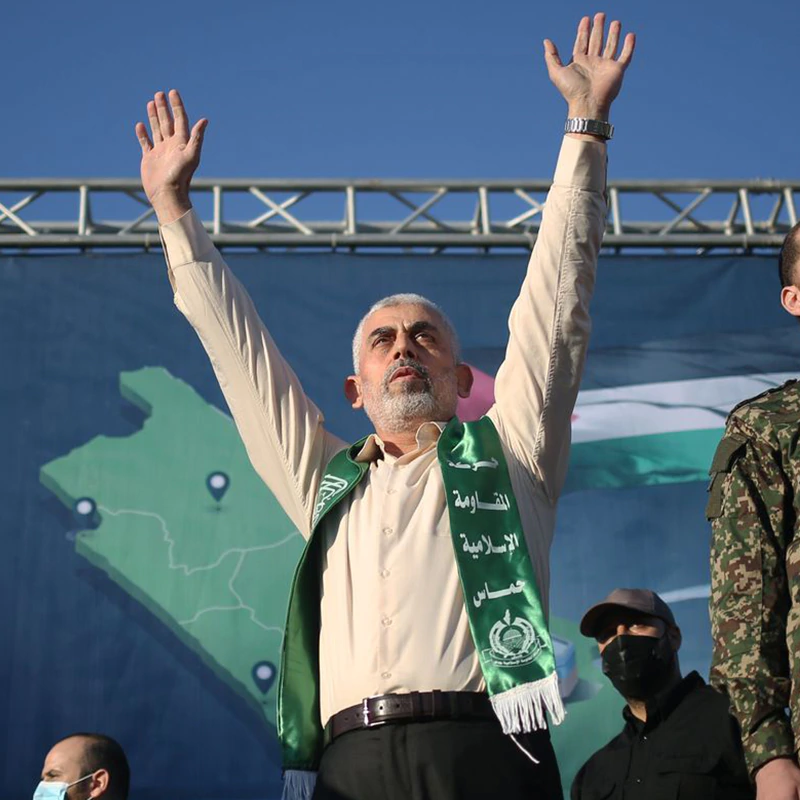
And this time, about one year since the start of the war, Israeli forces, with quiet assistance from the U.S., which had been relentlessly pursuing the mastermind behind the assault, finally got what they were after.
The leader of Hamas as their target, and now, he is dead.
But before they could ever meet him in person, Yahya Ibrahim Sinwar was resilient.
Through the vast network of underground tunnels, the Hamas have created hideouts.
The immense network allowed Sinwar to evade the Israeli soldiers, travelling from one location to the next through claustrophobic tunnels underneath the Gaza's streets, escaping death from more than a few times.
Literally living within the enclosed space, Sinwar seldom surfaced, and communicated only through couriers to avoid detection by electronic surveillance.
Sinwar was like a ghost.
But his elusiveness came to an end, when infantry soldiers from the IDF’s Bislamach Brigade, a unit typically focused on training future commanders, were tracking a group of men among the ruins in southern Gaza, an area devastated by Israel's intense bombing campaign.
When the group of men confronted the IDF, the two sides exchanged gun fire.
Outnumbered, the IDF called for backup, and they then had a tank.
It was only after this time, while deploying a drone to scout the destroyed building, that they discovered bodies inside, one of whom, was the body of Sinwar.
Many people in Palestine, especially in Gaza and the West Bank, have endured immense suffering due to the prolonged conflict.
Countless children have grown up playing amidst the rubble of their homes and neighborhoods, displaced and forced to walk great distances in search of shelter. Some have witnessed unimaginable horrors, such as the loss of their parents, leaving them orphaned.
Yahya Ibrahim Sinwar was one of such child.
Born in October 1962 in the Khan Younis refugee camp, his family had been forcibly expelled from Majdal Asqalan (Ashkelon) during the Nakba, seeking refuge in the Gaza Strip. He endured the harsh conditions of camp life, marked by overcrowded communal living, limited access to food, and poor sanitation.
Sinwar’s childhood was shaped by conflict and trauma that no child should experience. Growing up amid this turmoil, he learned the pain of displacement, deprivation, and the deep resentment of the forces that caused his suffering.
In fact, Sinwar has often reflected on his upbringing as a refugee, linking those early experiences to his eventual involvement with Hamas.
After serving months in prison, meeting other Palestinian activists, Sinwar began dedicating himself to the Palestinian cause.
He became Hamas' "police," and that his affluent skills earned him the nickname "The Butcher of Khan Younis".
It's worth noting that Sinwar served as the leader of the Hamas government in the Gaza Strip from February 2017, and had only became the leader of the Hamas government in the Gaza Strip since July 2024, following the assassination of Ismail Haniyeh.
Sinwar ascended as the chairman of the Hamas Political Bureau from August 2024, and became the group's de facto leader until his death.
Long story short, Sinwar became part of the Palestinian movement because of the resistance he was accustomed with.
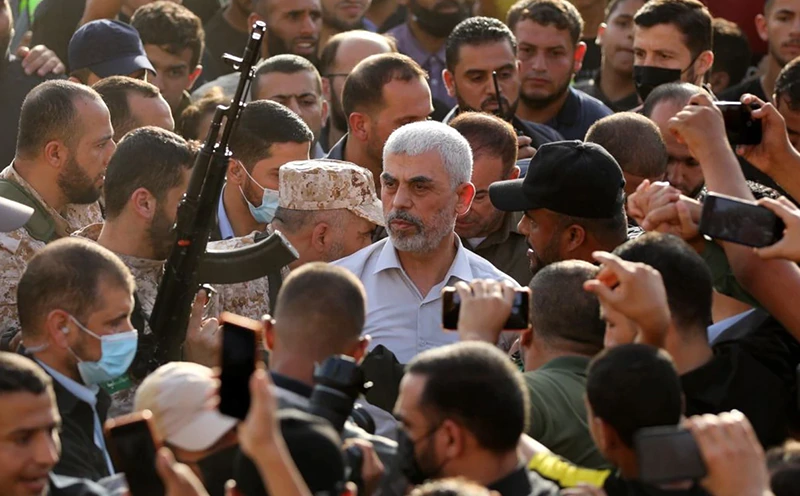
The resistance in Palestine is driven by a complex interplay of historical, political, social, and economic factors.
From historical displacement to the the Israeli military occupation of the West Bank and the blockade of Gaza have led to significant hardships for Palestinians.
Not to mention the socioeconomic conditions, cultural identity, political fragmentation, international support and solidarity, and most importantly, retaliation, Sinwar was forged to be the resistance itself.
The final images of Hamas leader Yahya Sinwar that went viral have ignited a wave of reactions throughout the Middle East and beyond.
The footage depicts Sinwar wounded and trapped in a bombed-out Palestinian home, intensifying the debate surrounding his legacy.
This has led to starkly contrasting interpretations from Israel and the Arab and Muslim world.
For many in the Arab and Muslim communities, regardless of their stance on Hamas, the grainy footage of Sinwar, who died fighting to the end, evokes the image of a defiant martyr, one who fought not for personal gain but for his beliefs.
“Since the beginning of this war that Sinwar started on October 7 — we’ve said: Our war is with Hamas, not the people of Gaza. We mean it.”
IDF Spokesperson RAdm. Daniel Hagari on the elimination of Yahya Sinwar and our operational goals in Gaza: pic.twitter.com/OgkgUc5Bhi— Israel Defense Forces (@IDF) October 17, 2024
On social media, where a lot of people commented about Sinwar's death in the footage, users said that the Israeli's attempt to "demoralize" pro-Palestinians by publishing Sinwar's last moment is futile.
“Killing Sinwar is the result of a year of operational and intelligence efforts to bring him and other Hamas leaders to justice. Sinwar has been eliminated, but our mission is not over.”
Watch IDF Spokesperson RAdm. Daniel Hagari’s statement regarding the impact of eliminating… pic.twitter.com/INbLoMWBJx— Israel Defense Forces (@IDF) October 19, 2024
In reality, the footage only "immortalizes Sinwar and galvanizes all of us to have courage and resolve until the last moment."
Many consider the footage as a portrayal of an "epic heroism and defiance of an unbroken man, even after they broke his body."
"it showed a leader fighting alongside his men on the front lines against zionist barbarism."
Sinwar, who is seen suffering a severed arm and injured led, is seen fighting the drone with one arm, throwing a stick and rocks, until his final breath.
"No words can capture the pride and renewed resolve that emerges from our heartbreak to resist them until their malignant ideology is gone from this earth," said a user.
While Israel and its allies see Sinwar’s death as a victory, reactions were actually mixed.
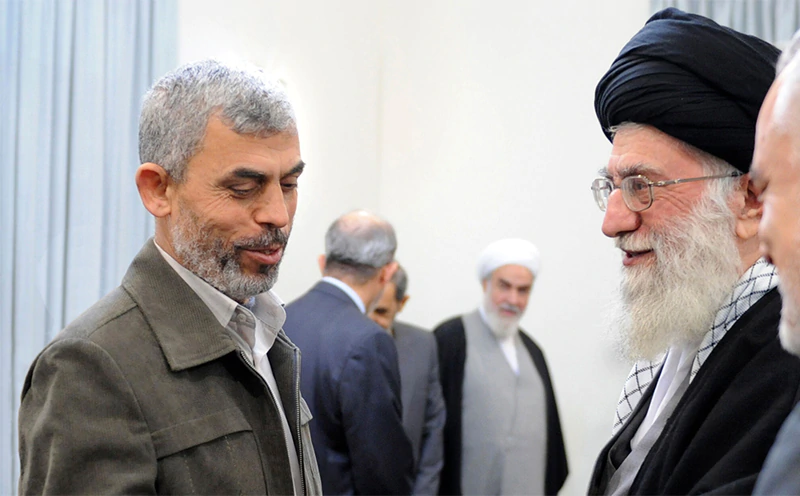
While many in Gaza and across the broader Arab world and in the majority of the Muslim world, see Sinwar as a symbol of resistance, and mourned for his death, others hoped that his death could bring an end to the war, marking an end to the people's suffering.
However, one thing is certain: as long as there are those who continue to suffer and resist, Sinwar's death will resonate deeply.
Sinwar was a prime symbol of the Palestinian resistance against the Israel.
His legacy will not fade; another martyr will rise to take his place.