For more than two decades, Google has stood as an undisputed titan of the digital age, a massive monopoly on human curiosity that absorbed everything in its path.
Born out of a Stanford research project in the late 1990s, the search engine systematically dismantled every single competitor that dared to challenge its dominance, from early rivals like Yahoo! and AltaVista to modern social platforms.
Processing trillions of searches annually, Google became deeply embedded in the fabric of global culture, transforming from a brand name into a universal verb.
It built a virtually untouchable empire by indexing the entire web and funneling billions of users toward external sites, dictating the flow of global information and defining the modern internet economy.
Yet empires built on blue links and keyword algorithms are rarely immune to paradigm shifts.
The emergence of generative AI introduced a completely different way for humans to interact with information, trading lists of URLs for direct, conversational answers.
What started as an experimental chatbot quickly evolved into a cultural and technological phenomenon, altering daily habits around how people seek out local weather, financial data, and breaking news.
Instead of digging through pages of search engine results cluttered with advertisements and search engine optimization fluff, millions began turning to conversational interfaces to synthesize information instantly.
When OpenAI introduced ChatGPT, and became the fastest-growing app after earning 100 million users in just 2 months, it struck fear into Google's core.
It was at that moment when Alphabet, Google's parent company, realized it needed to create something to compete with this newly emerging threat. It was a "code red" situation.
Corporate leadership knew from the very start that AI tools like ChatGPT possessed the capability to strip away its throne.
Google rushed to respond by developing Bard, eventually rebranding and evolving that technology into Gemini.
While Gemini competes directly with ChatGPT, the race to capture the future of information discovery has pushed both tech giants into an intense battle for user attention.
Now, that tense competition shows just how disruptive AI tools truly are, proving Google was right to view ChatGPT as its worst nightmare.
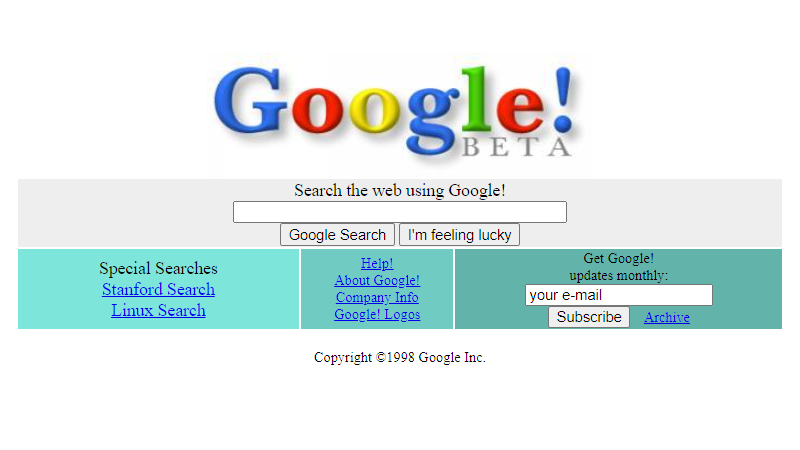
OpenAI's leadership revealed that ChatGPT's volume of search-like queries had reached roughly one-fifth of Google's staggering traffic.
When applied to Google's massive baseline of over 5 trillion annual searches, which breaks down to roughly 13.7 billion searches every day or over 150,000 searches every second, that figure translates to more than 1 trillion queries handled by the AI platform every year.
To put that speed into perspective, Google first crossed the 1 trillion searches per year mark around 2011 to 2012, roughly 14 years after its founding in 1998.
OpenAI integrated web search capabilities into ChatGPT in 2023 and launched ChatGPT Search as a dedicated feature in October 2024. This means it took ChatGPT only two short years to reach that same 1 trillion milestone.
While global web usage and online behavior have expanded exponentially since Google's early days, the fact that ChatGPT entered Google's arena using an entirely different weapon and captured such a massive territory in record time remains nothing short of astonishing.
"ChatGPT has been growing quite quickly. ChatGPT’s volume of search-like queries is now roughly one-fifth the volume of queries of Google," said ChatGPT consumer product lead Adam Fry, speaking to Big Technology.
"It’s a pretty amazing statistic when you think about it, mainly because we started just about a year and a half ago. It’s hard to remember this, but ChatGPT at a time didn’t have any up-to-date information. You’d ask a question, it would say something like, 'It’s past my training date,' and nobody had any idea what that meant.
While skeptics and analysts continue to debate the exact metrics behind how conversational agents quantify a search versus a standard prompt, the sheer scale of the achievement indicates that a serious competitor has finally carved out massive territory in a domain Google ruled uncontested for generations.
"To say that more directly, ChatGPT has gone from one billion to 1.2 in just the last two months. That’s roughly 100 million users in 30 days, and another 100 million in another 30 days. The growth is just going big, and we’re staying very focused on how fast ChatGPT is growing," Fry added.
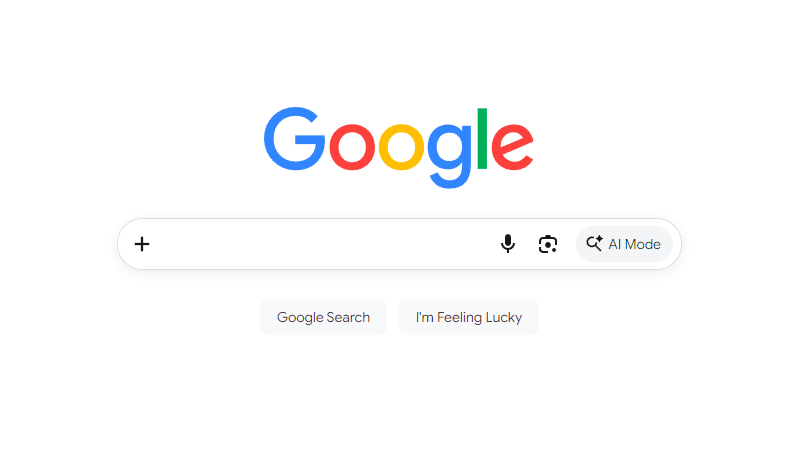
This rapid ascent highlights a profound transformation in user behavior rather than just a simple numbers game.
Traditional search engines taught users how to phrase queries into fragmented keywords, whereas AI systems encourage natural language and follow-up context.
At the same time, this new paradigm creates friction for the wider web ecosystem, because conversational interfaces tend to keep users inside their own applications rather than sending referral traffic outward to publishers and independent creators.
As the boundary between conversational assistance and information retrieval continues to blur, the digital landscape finds itself at a historic turning point, proving that even the most colossal monopolies can face a formidable challenger reshaping how humanity navigates the web.
It is worth noting, however, that third-party metrics present a more nuanced picture of this shift.
Internet traffic analytics firm Ahrefs estimated ChatGPT's search volume to be roughly 12% of Google's total volume, relying on a search definition distinct from the one used by OpenAI leadership.
Their analysis began with data from a joint Harvard University and OpenAI study tracking 2.5 billion daily ChatGPT prompts in July 2025, determining that approximately 65% represented the types of queries users historically would have looked up on Google.
Comparing those prompt figures against the benchmark of over 5 trillion annual searches that Google announced in March 2025 highlights key methodological differences.
The author pointed out that the 65% classification was higher than what the original academic researchers had designated as pure search. The study's method sorted prompts by request type, whereas OpenAI's internal figure specifically counted instances where the model triggered active web searches.
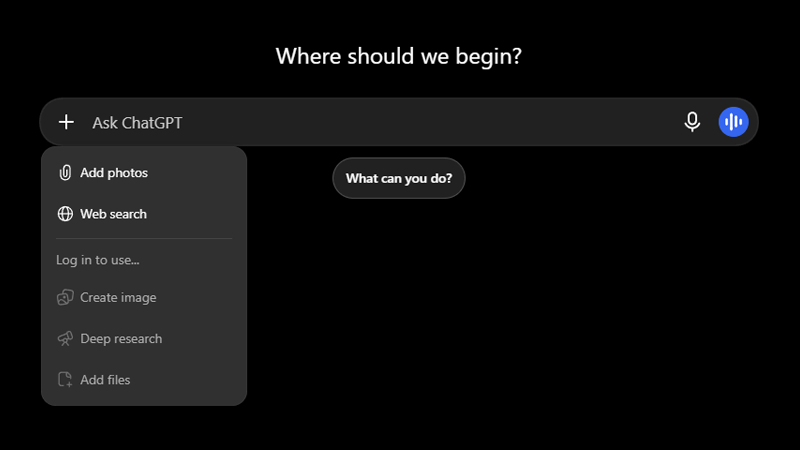
At the same time, real-world web traffic patterns show that Google still holds an overwhelming lead in sending visitors across the open web. Ahrefs also tracks referral traffic sources across more than 118,000 websites utilizing its free Web Analytics tool. According to the tracker's November 3 update, Google accounted for 24.74% of all tracked referral traffic in October, while ChatGPT accounted for just 0.36%, reflecting how conversational interfaces tend to answer users directly rather than routing them outward.
For its part, Alphabet continues to signal strong underlying engagement across its core platform.
In its third-quarter earnings release, the company reported search performance as a growth trajectory rather than an absolute query count. In the release, CEO Sundar Pichai said AI investments are driving overall search query growth and that Google's "year-over-year query growth rate is the highest it’s been in the last five years."
























































































































































































































































































