The first wave of digital pets arrived when a plastic egg on a keychain could still feel like a secret.
Bandai's Tamagotchi landed in Japan in 1996 and in American toy aisles the next year, a greyscale blob that beeped when it was hungry and died if you ignored it. Kids clipped the things to backpacks and belt loops. Teachers confiscated them. Parents bought replacements after the pixel creature starved during classes.
The whole point was care, not computing. You fed it, cleaned it, and in return it stared back with a face simple enough that your brain filled in the rest.
Mark Zuckerberg was just a teenager when that craze crossed the Pacific. Growing up, he definitely lived through the same years as everyone else his age. The toy was unavoidable. It sat in lockers and lunch lines and magazine ads. It taught a generation that a tiny screen could hold a companion, and that companionship could be a product.
In other words, he probably had it, if not seen his friends playing with it.
Now, after a stretch of public anger over Meta's camera-equipped Ray-Ban glasses, widely nicknamed "pervert glasses" after reports of covert filming and harassment, Zuckerberg used Meta Connect in Menlo Park on 23 September 2026 to put a cuter object on stage.
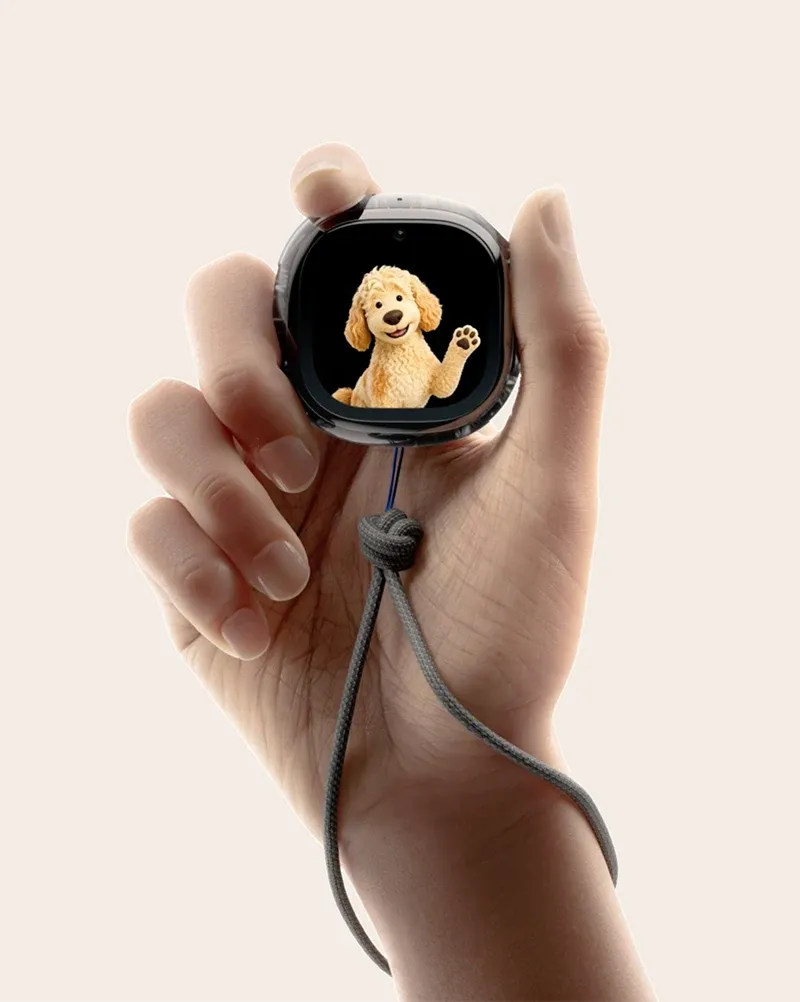
And that object is a much cuter alternative to the glasses.
The Muse "charm" device is essentially a wearable with a screen that shows a little avatar and has drawn comparisons with Tamagotchis.
"We’ve packed a lot of technology into this little guy," the Meta founder told the San Francisco audience, adding that "if you’re not wearing glasses, this is going to be by far the fastest way to talk to your Muse and to show it what’s going on around you."
The little guy could fit, like a Labubu, onto a keychain or a bag. But unlike a Labubu, the interactive AI assistant is built for live conversation. It can answer emails, book travel, or do a weekly food shop.
The Charm is roughly a two-inch OLED touchscreen with a customizable on-screen character whose outfits and voice can be changed. While it does have cameras, but the front and rear cameras are only meant to be the eyes for the agent rather than as a casual camera. It also has speakers, microphones, a fingerprint sensor, and USB-C. For connectivity, it has a built-in 5G modem so the device does not need Wi-Fi.
Two Charms can recognize each other when they sit close, and set up runs through the Muse app on iPhone or Android.
The device is designed by former Apple interface chief Alan Dye working with Meta's Superintelligence group, and that the price is expected to land in smartwatch territory.
During the introduction, Zuckerberg did not name a price.
He only said Meta still needs to "finalize laying out the components" and is "planning to have this ready to ship in time for the holidays in December."

Charm aside, Zuckerberg is still carrying the company's metaverse bet in virtual reality while pushing AI agents at the same time.
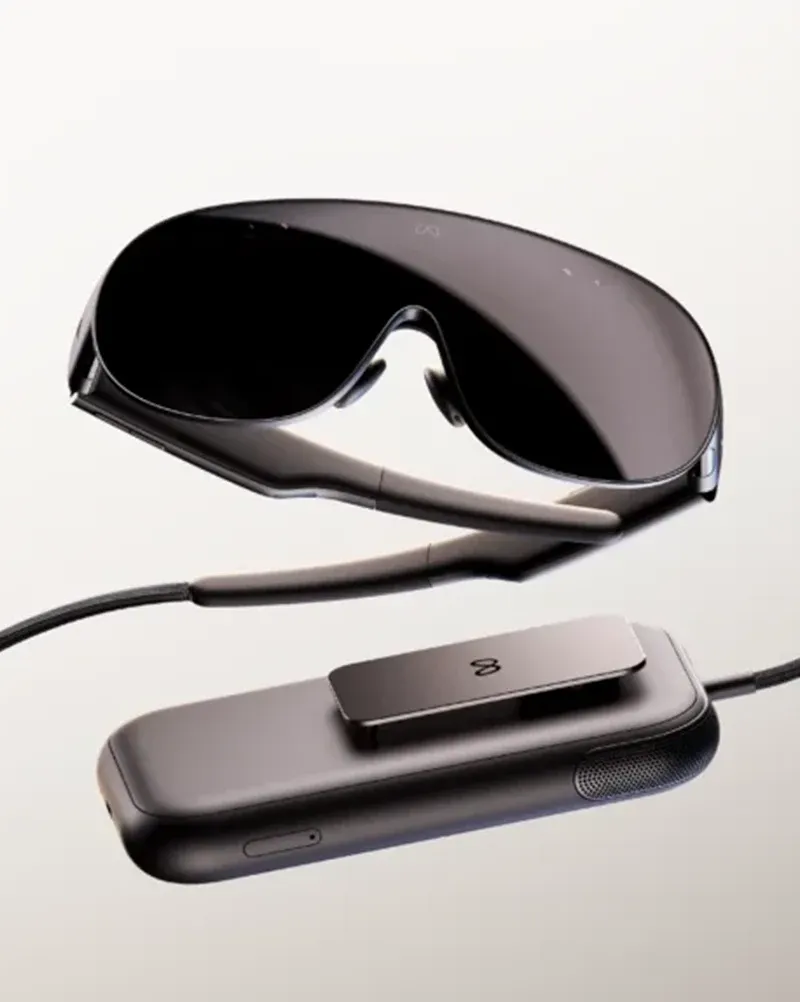
Meta also revealed the $1,299 Meta VR Glasses.
The device is slimmer and lighter than the older Quest-branded headsets, but more expensive. Meta wants to sell them for $1,299 when they go on sale in spring 2027, and are Meta's first VR device since 2024, when the company debuted the $299 Quest 3S.
Since it's effectively the next-generation device, the VR Glasses can display better visuals than the older Quest headsets, and come equipped with sensors to track eyes and hand movements, which reduces the need for controllers.
Zuckerberg's line for the form factor was specific.
"We have built a new kind of VR device that delivers the same magical feeling of presence and immersion, high-resolution displays and views of the world around you in a form factor that is a pair of glasses for the first time."
According to Katie Seaborn, a Cambridge associate professor who has been researching cuteness and the science of cute voices in computing, she said that Zuckerberg's approach in selling cuteness is not an accident in his pitch.
"It’s very natural to emerge from this controversy with a technology that uses cuteness because […] it’s so weak. Don’t worry about it. You can trust us."
She also noted that mascots are ordinary in Japan, where government offices and companies keep a cute face on the door, and that cuteness smooths social interaction while also having "a natural link between cuteness and deception."
She calls the effect "charming and disarming," because the brain lets its guard down.
According to Joshua Paul Dale, professor at Chuo University in Tokyo and author of Irresistible: How Cuteness Wired our Brains and Conquered the World, the Charm is cute because it "basically looks like a baby."
Dale argued Meta is trying to make Muse into a companion "in the simplest possible way," using a very simplified, tiny 2-inch screen "to encourage you to anthropomorphise the figure on it so that you treat it as if it’s human even though you know it’s not."
Younger generations, like Gen Alpha, is known for their fluency in using AI tools, and that many of these youngsters have hanged Labubus on their bags. Older buyers may experience a different thing, and may feel the Tamagotchi-like vibe nostalgic.
Seaborn put the lineage in those terms: embedded in the Charm "is this legacy of these cute kind of gamified pet sort of things like Tamagotchi and Pocky Pikachu."
Her research found Americans less easily disarmed by cute design than Japanese participants.
In Japan robots often arrive as heroes or babies. In Western stories, they often arrive as broken or sinister.
UK focus groups reported a gut feeling that something was off when cuteness sat inside a deceptive design, even when people could not name the feeling. She thinks a slow cultural shift is underway because kawaii has been exported for years.
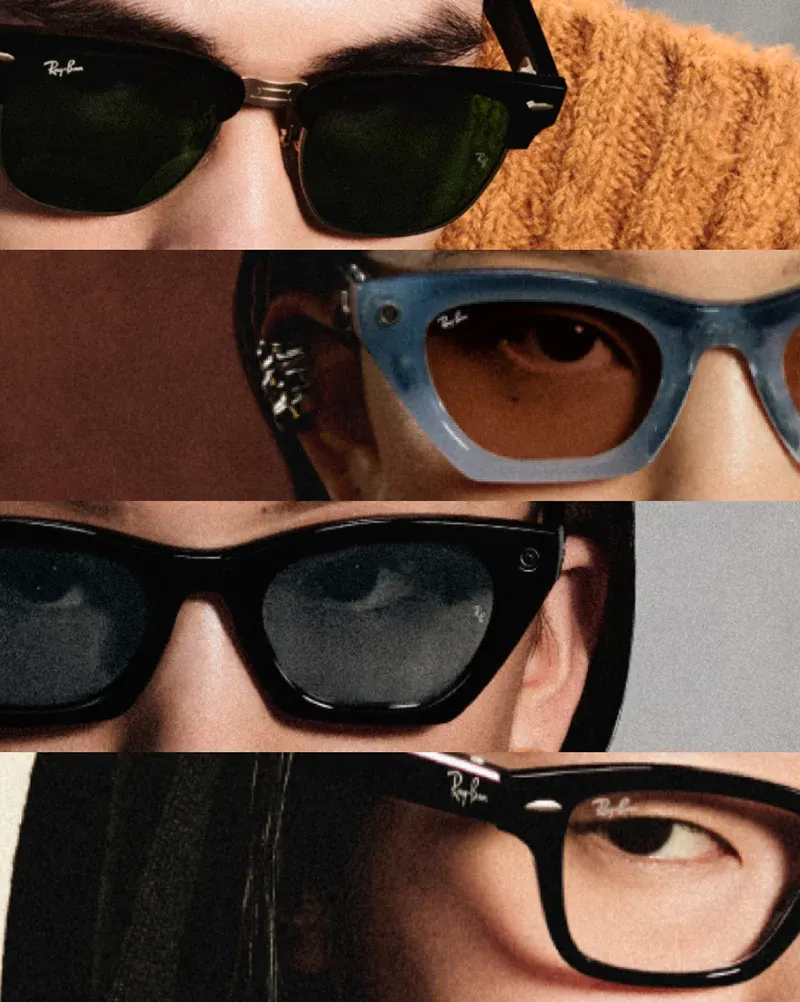
Together, the Charm, the camera-free glasses, the camera glasses, and the $1,299 VR pair are four different answers to the same problem: the phone is still the place most people meet AI, and Meta wants that meeting to happen in more pockets and on more faces.
That is the part that is less nostalgia and more industrial catch-up.
The first dedicated AI gadgets of this decade, pins and pocket rabbits, arrived early and left the room quickly. Phones absorbed the same models. Glasses with cameras absorbed a privacy fight.
Meta's own Muse app climbed to the top of the U.S. App Store and Google Play in the weeks after 8 September, which gave the company a reason to put a body on the agent before the year ended.
Shipping a keychain device in December, before the components are even described as finalized, is an attempt to keep that pace instead of waiting for the spring 2027 glasses that most people will not wear to the grocery store.
The bet is that a face on a two-inch screen will travel farther than a headset, and farther than a chatbot that still asks you to unlock a phone.
In the end, the devices sit in a generation that once mourned a starved pixel pet will now let a similar face book flights and read the room is the test Meta set for the holidays. The company has said the cute device is packed with technology, that the glasses deliver presence in a glasses form for the first time, and that Muse should be reachable without opening an app. The rest sits in the gap between a 1997 toy that died if you forgot it and a 2026 companion that shops if you remember to clip it on.






















































































































































































































































































