South Australia has suffered series of significant blackouts in recent months due to storms and heat, including a state-wide blackout that affected an area the size of France in September 2016.
As the Australian state is looking for ways to fortify its grid, Australian tech company Atlassian founder Mike Cannon-Brookes, challenged Elon Musk on Twitter to find a solution.
The two had a Twitter exchange earlier over the battery which culminated in the $50 million bet over claims by Musk that it could not be completed within 100 days.
Lyndon & @elonmusk - how serious are you about this bet? If I can make the $ happen (& politics), can you guarantee the 100MW in 100 days? https://t.co/av38xcizNo
— Mike Cannon-Brookes (@mcannonbrookes) March 9, 2017
Musk responded:
Tesla will get the system installed and working 100 days from contract signature or it is free. That serious enough for you?
— Elon Musk (@elonmusk) March 10, 2017
The high-profile bet was heard by Australian politicians. Prime Minister Malcolm Turnbull called Musk personally the day after.
However, Australian battery makers said that they could beat or match Tesla's offer on time.
South Australian Premier Jay Weatherill said that they all, including Tesla, would have to compete for access to a A$150 million ($115 million) renewable energy fund for any potential 100MW storage contract.
Tesla won as the project was completed less than two months after the contract was signed on September 29, putting it ahead of schedule. Musk won the bet with about 40 days to spare.
Congratulations to the Tesla crew and South Australian authorities who worked so hard to get this manufactured and installed in record time! https://t.co/M2zKXlIVn3
— Elon Musk (@elonmusk) November 23, 2017
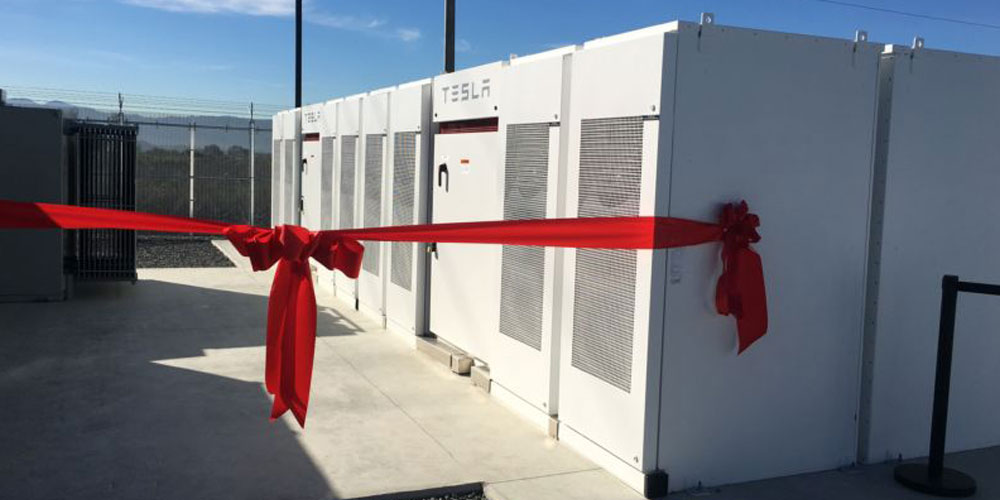
On Friday, the South Australian government announced the completion of the project that is located just outside the South Australian city of Jamestown.
The facility boasts the largest megawatt rating for any grid-connected battery installation in the world at the time. The 100 MW/129 MWh lithium-ion battery array system is made up of Tesla Powerpacks, connected to the 99-turbine Hornsdale wind farm run by French company Neoen.
The wind farm produces 315 megawatts of power, but like any wind farm it's not a steady source of power.
So Tesla's batteries can charge up during periods when the wind farm is producing excess energy, then supply extra power to the grid during periods of peak demand.
At least 70 percent of the stored power will be reserved for use by the government if a shortage occurred in the future.
Musk has said that it would cost Tesla "$50 million or more" if the company failed to meet the deadline.
As for Cannon-Brookes, he said that he had “never been more happy to lose a bet” after Tesla.

























































































































































































































































































