The phrase "F Ukraine" has gained attention on social media, primarily due to escalating geopolitical tensions and influential public figures' statements.
The phrase's prominence is linked to a contentious meeting between former U.S. President Donald Trump and Ukrainian President Volodymyr Zelenskyy. During this encounter, Trump's hostile remarks towards Ukraine were perceived as advantageous to Russian President Vladimir Putin, causing concern among Ukrainians.
This incident led to a surge of memes and discussions on social platforms, reflecting fears of diminished U.S. support for Ukraine.
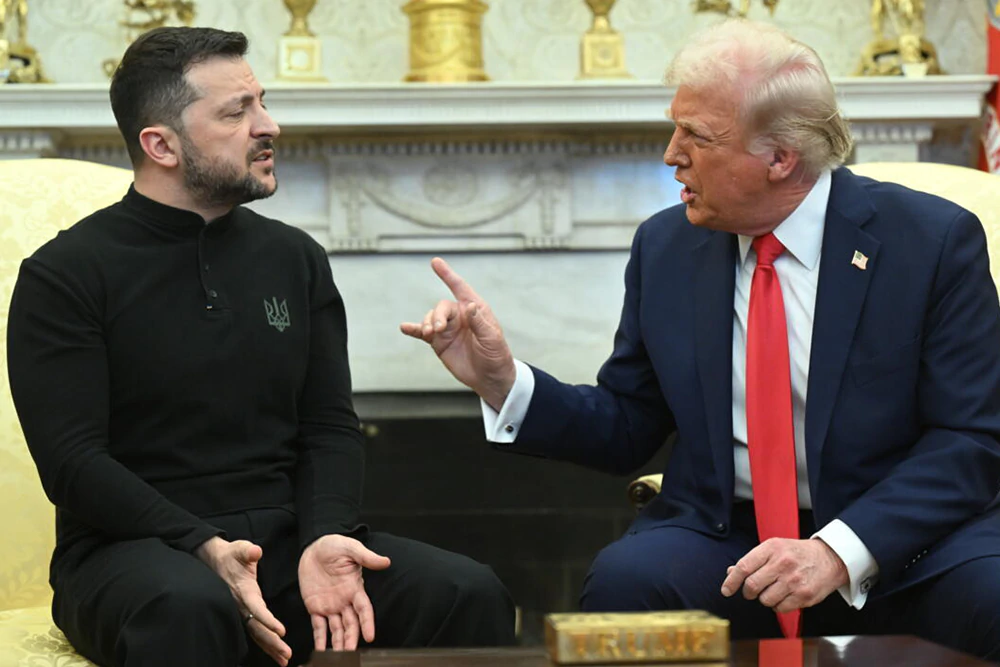
It all began on February 28, 2025, when the highly anticipated meeting took place at the White House between U.S. President Donald Trump and Ukrainian President Volodymyr Zelenskyy.
Zelenskyy visited the White House to discuss securing continued U.S. military and security support against Russian aggression and to finalize a minerals agreement intended to aid Ukraine's reconstruction.
On the other hand, Trump Administration's objectives include advocating immediate ceasefire between Ukraine and Russia, urging Ukraine to make concessions to expedite peace.
And as for economic interests, the administration was interested in securing mineral rights in Ukraine, aligning with U.S. economic and strategic interests.
Tension and anger arise when Trump's call for immediate concessions clashed with Zelenskyy's concerns over Russia's reliability in honoring agreements, leading to a heated exchange.
Things intensified when Vice President JD Vance entered the confrontation by questioning Zelenskyy's gratitude for U.S. support and challenging his commitment to achieving peace.
The exchange escalated, with overlapping arguments and heightened emotions, leading to a chaotic scene.
As the encounter devolved into a contentious exchange, culminating in an abrupt end without any agreements reached, with Trump accusing Zelenskyy of risking global conflict.
Trump accused Zelenskyy of "gambling with world war three" due to his approach to the negotiations, emphasizing the need for Ukraine to pursue peace.
Today, there has been a lot of international work. Our teams are working with the United States as we prepare for negotiations this Friday. The agreement with the U.S. The support of our country and people.
Peace and security guarantees are the key to ensuring that Russia can no… pic.twitter.com/pAoTyYjres— Volodymyr Zelenskyy / Володимир Зеленський (@ZelenskyyUa) February 26, 2025
Важливий візит до Америки. Зустрівся з двопартійною делегацією Сенату США у Вашингтоні.
Продовження військової допомоги нашій державі та відповідні законодавчі ініціативи, зустріч із Президентом Трампом, зусилля для досягнення справедливого й міцного миру, наше бачення… pic.twitter.com/oITgYf8rvN— Volodymyr Zelenskyy / Володимир Зеленський (@ZelenskyyUa) February 28, 2025
The contentious meeting highlighted deep disagreements over conflict resolution strategies and the complexities of international diplomacy.
But what's worth noting here is that, prior to the meeting, tensions were already evident.
First of, the Trump administration advocated for Ukraine to make concessions to Russia to expedite peace, a stance met with skepticism by Zelenskyy's government due to concerns over Russia's commitment to honoring agreements.
Additionally, U.S. officials had requested that Zelenskyy wear a formal suit for the meeting—a departure from his customary wartime attire—which he declined, reportedly offending President Trump.
Then, during the Oval Office encounter, the meeting commenced at 11:00 a.m., with President Trump greeting President Zelenskyy with a remark on his attire, saying, "all dressed up today."
The atmosphere quickly became strained as discussions shifted to Ukraine's stance in the ongoing conflict.
The meeting lasted approximately 45 minutes, with the final 10 minutes marked by a tense exchange among President Trump, Vice President JD Vance, and President Zelenskyy.
The primary objective of the meeting was to finalize a mineral-rights agreement that would involve U.S. investment in Ukraine's rare earth minerals, with proceeds intended for Ukraine's reconstruction efforts.
However, due to the escalating tensions and lack of consensus, the agreement was not signed. Additionally, a planned joint press conference was canceled, and Trump ordered a review of ongoing weapons deliveries to Ukraine, signaling a potential shift in U.S. support.
The abrupt and hostile conclusion of the meeting drew varied reactions globally.
European leaders reaffirmed their support for Ukraine, expressing concern over the strained U.S.-Ukraine relations. Russian officials, conversely, viewed the outcome favorably, perceiving it as advantageous to their interests.
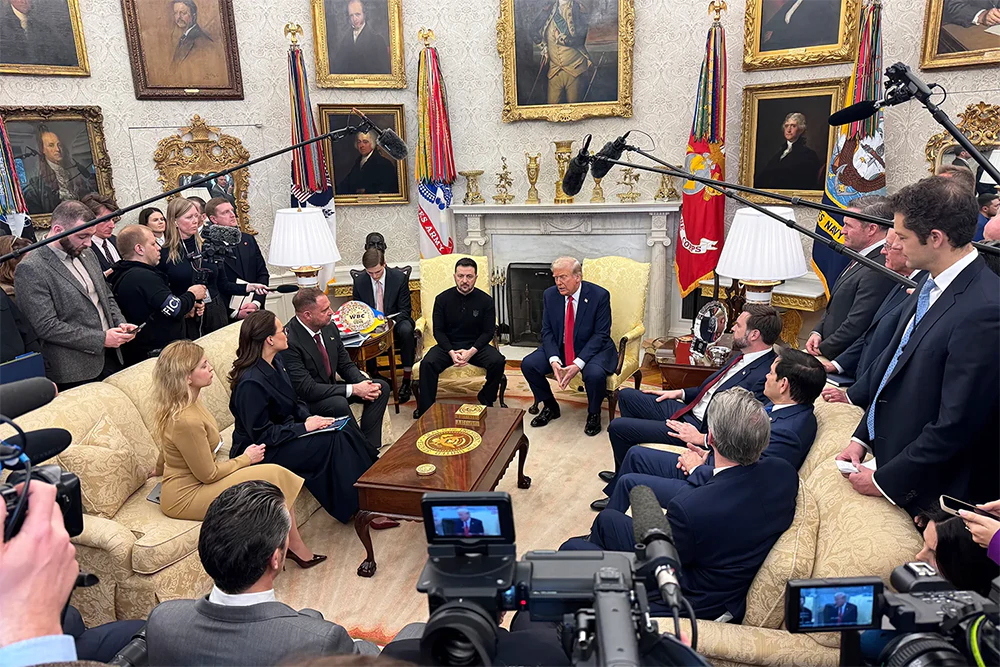
Within the U.S. itself, responses were polarized along partisan lines, with Republicans largely supporting President Trump's stance and Democrats criticizing the administration's approach.
This encounter underscored the complexities of international diplomacy, particularly in the context of ongoing conflicts and geopolitical alliances. The deterioration of the meeting highlighted the challenges faced by nations in navigating support, negotiations, and the pursuit of peace amidst differing political agendas and perspectives.
— Donald J. Trump (@realDonaldTrump) February 28, 2025
Regardless, President Trump said that he's ready when Ukraine is ready.
He said that whenever Zelenskyy can come back "when he is ready for PEACE."
American people helped save our people. Humans and human rights come first. We’re truly thankful. We want only strong relations with America, and I really hope we will have them.
— Volodymyr Zelenskyy / Володимир Зеленський (@ZelenskyyUa) March 1, 2025






















































































































































































































































































