Iran is experiencing a wave of protests over economic hardship and lack of civil liberties.
With Iran's sputtering economy, corruption and rising fuel and food prices, people took the matter to the streets, as well as on the internet where they battle and criticize the Islamic Republic.
Back in 2009 when the previous demonstration of this scale happened, people took their opinions to social media, mainly on Facebook, Twitter and YouTube. But this time, messaging apps are used much more significantly with a higher percentage of the population and the government confronting their opponents on digital media.
After the Stuxnet worm hit Iran's nuclear facilities in 2010, the country invested in cyber capabilities and set up a specialized team known as the Iranian Cyber-Army.
Since then, many senior politicians and activists use a variety of platforms on a daily basis - despite some being officially blocked - and boast hundreds of thousands of followers. One of which, is Telegram. The app has an estimated of 40 million users in Iran, or almost half of the population.
They use social media to share photos and videos of the demonstrations, with the aim of sending their message, as well as inviting more allies.
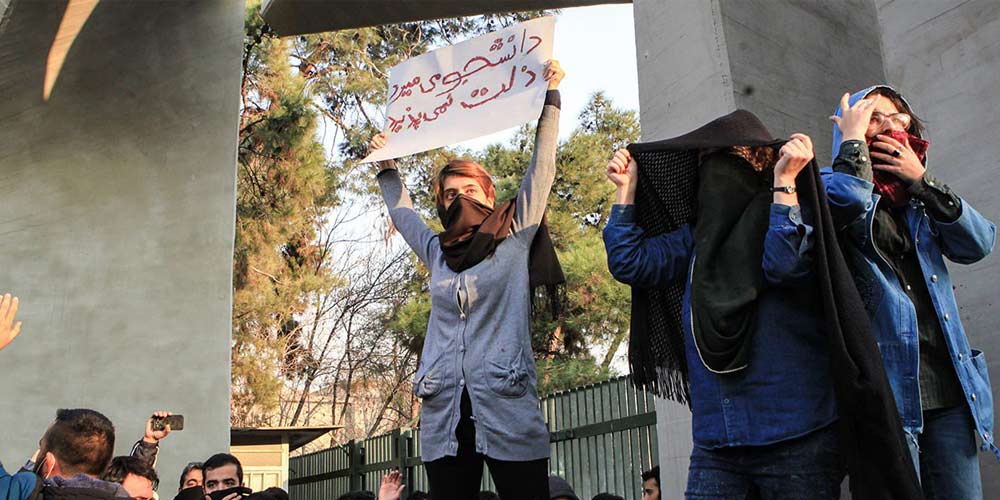
In response to the activists' actions, the government temporarily blocked Telegram, Instagram. Facebook, YouTube and Twitter. But that didn't stop the demonstration from happening.
They shared alleged names and details of security personnel confronting the demonstrators. In a fight back, the officials that have identified the accounts owned by individual protesters, repeatedly reported them to Twitter.
Using social media bots, the activists generated contents and followers to support a wider campaign. In a coordinated campaign, the bot can persuade more people to join the protest, rallying more people. They also use hashtags to initiate enlarged attack.
The Iranian officials blamed the demonstrations on foreign meddling and at the UN when an Iranian envoy Gholamali Khoshroo said Tehran had "hard evidence" that they were "very clearly directed from abroad". These protests challenge the rule of Supreme Leader Ayatollah Ali Khamenei.
Iranians are angry, experts say, because they expected life to get better when severe sanctions were lifted after the 2015's deal between the P5+1 and Iran over its nuclear program. The five permanent members of the UN Security Council - the U.S., the UK, Russia, China and France - and Germany make up the P5+1.
According to the authorities, more than 90 percent of those activists arrested are under the age of 25. They are young and tech-savvy population that wants more freedom and a better economy.